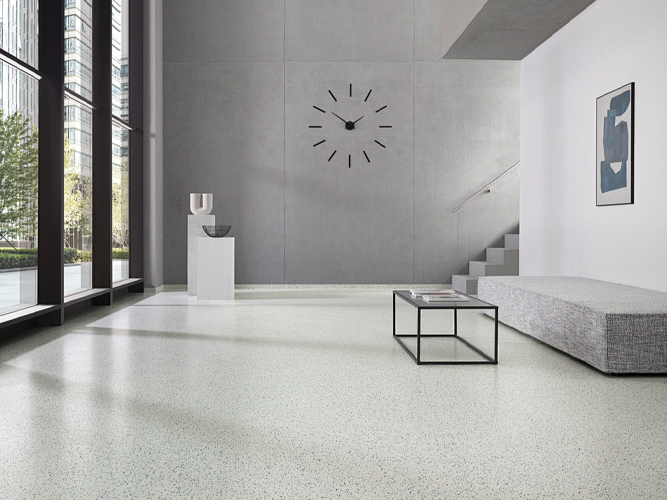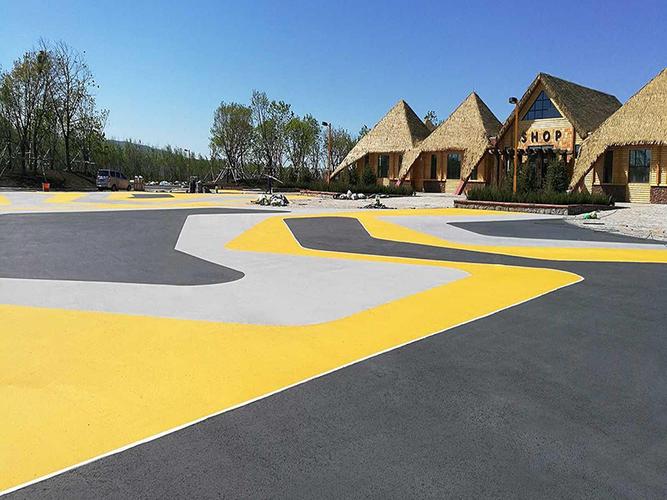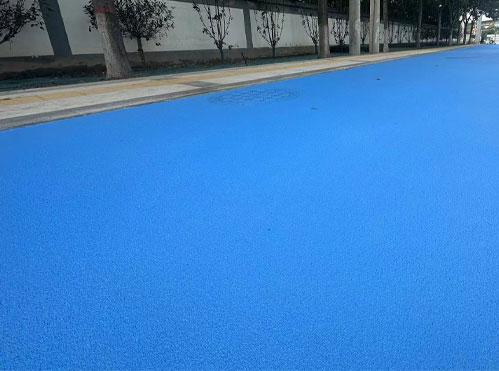
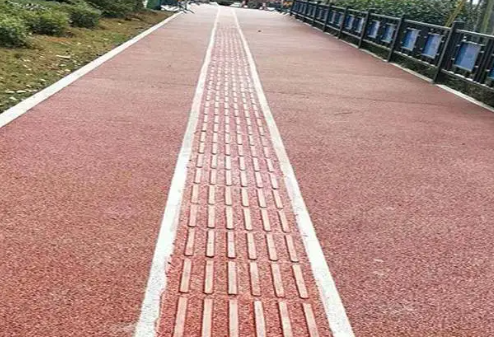
Customized cast-in-place tactile pavement solutions are widely used in public infrastructure projects to create safe, durable, and highly accessible pedestrian environments. Unlike prefabricated tiles, cast-in-place systems are formed directly on-site, allowing precise adaptation to complex layouts, curved pathways, and large-scale urban designs.
These systems are essential for guiding visually impaired pedestrians while also improving overall walkway organization in cities, transit hubs, commercial districts, and public facilities.
Cast-in-place tactile pavement is a continuous surface system formed by pouring and shaping specialized materials—typically resin-modified mortar, polymer concrete, or cementitious mixtures—directly onto prepared substrates.
Tactile patterns such as:
Directional bars (guidance strips)
Warning domes (attention indicators)
are formed using molds or stamping techniques while the material is still in a plastic state.
This method allows seamless integration with surrounding pavement surfaces, eliminating joints and improving long-term durability.
Every infrastructure project has unique spatial, functional, and environmental requirements. Customized tactile systems allow engineers to adapt:
Layout geometry (curves, intersections, ramps)
Traffic flow patterns
Color contrast requirements
Material performance needs
Local accessibility standards
This flexibility is especially valuable in complex environments such as metro stations, airports, and multi-level pedestrian networks.
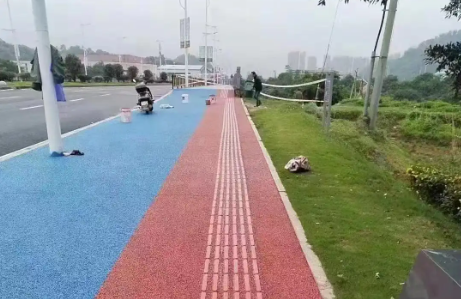
Because the system is installed directly on-site, it bonds strongly with the base surface, reducing the risk of:
Edge lifting
Tile displacement
Joint cracking
Water infiltration
This ensures long-term structural stability.
Cast-in-place tactile surfaces are designed to withstand continuous pedestrian movement, cleaning equipment, and environmental exposure. When properly installed, they offer excellent abrasion resistance and long service life.
Unlike modular tiles, cast-in-place systems can be customized to:
Follow curved walkways
Fit irregular spaces
Integrate with ramps and slopes
Adapt to architectural designs
This makes them ideal for modern urban design projects.
Advanced formulations often include anti-slip aggregates or textured finishes to improve traction, especially in wet or high-traffic conditions. This reduces pedestrian slip hazards while maintaining tactile clarity.
A widely used material that offers strong bonding, good durability, and flexible shaping capabilities during installation.
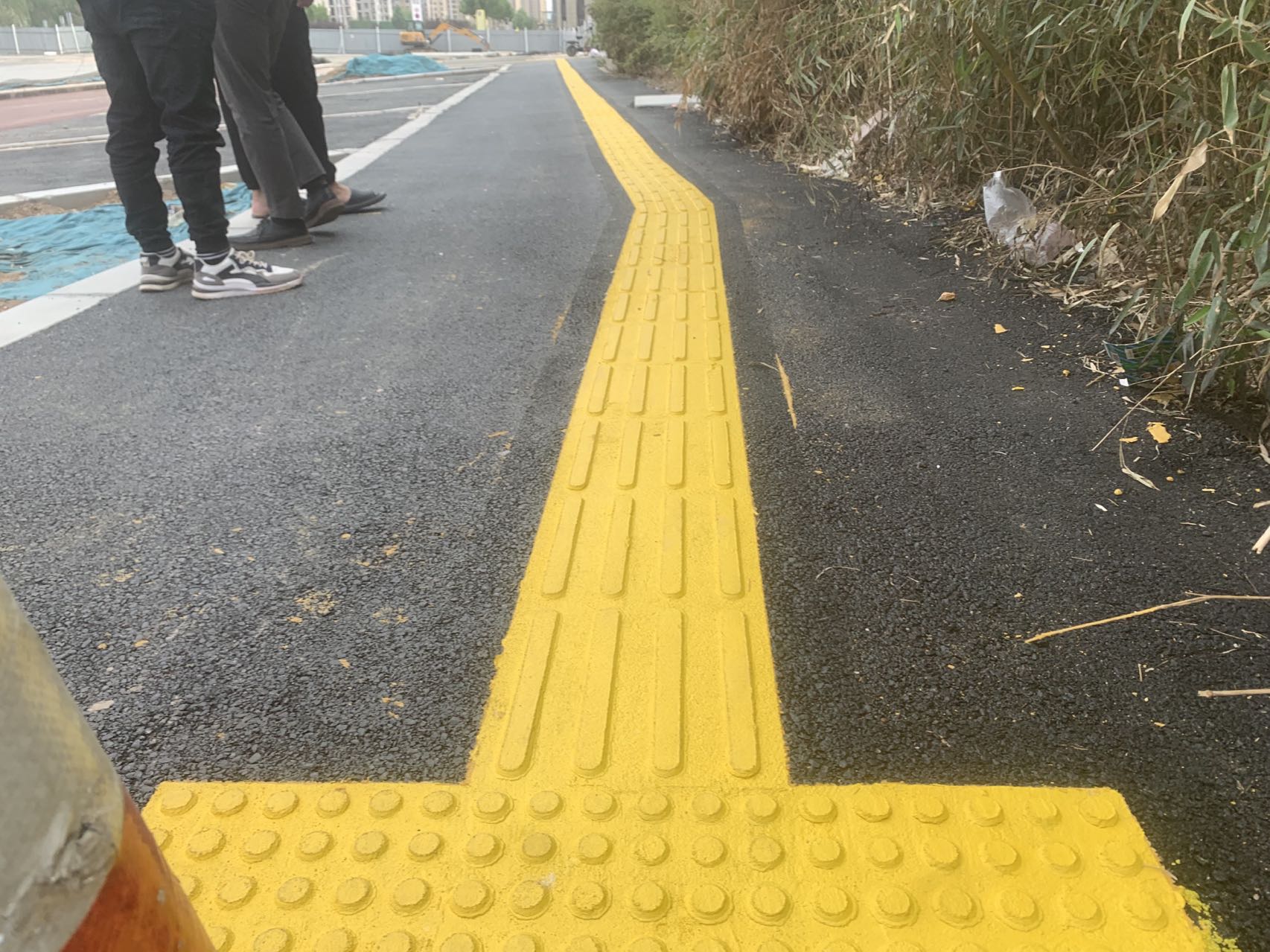
High-performance resin binders provide:
Rapid curing
Strong adhesion
Chemical resistance
High wear resistance
These are often used in airports, transit stations, and commercial zones.
Cost-effective and durable, suitable for large-scale municipal projects with moderate traffic loads.
Used to improve visual contrast, especially for compliance with accessibility standards and urban design aesthetics.
Customized cast-in-place tactile pavement is widely applied in:
Sidewalks and pedestrian streets
Metro and train stations
Bus terminals
Airport terminals and boarding areas
Public squares and plazas
Hospital and school campuses
Bridge walkways and ramps
Commercial complexes and malls
These systems ensure continuous tactile guidance across complex pedestrian networks.
Modern cities increasingly combine tactile pavement systems with other safety technologies such as:
Colored anti-slip surfacing
High-friction pedestrian crossings
Smart lighting systems
Digital navigation support
This integrated approach improves both accessibility and overall pedestrian safety.
Successful cast-in-place tactile pavement requires careful attention to:
Surface preparation and leveling
Material mixing ratios
Molding accuracy
Environmental conditions during curing
Color contrast compliance
Long-term maintenance planning
Proper installation is critical to ensure durability and tactile performance.
As urban accessibility standards continue to evolve, cast-in-place tactile systems are expected to become more advanced through:
Eco-friendly low-VOC materials
Faster-curing resin technologies
Improved wear-resistant formulations
Smart tactile surfaces with embedded sensors
Enhanced visibility for low-light conditions
These innovations will support safer, more inclusive, and more intelligent pedestrian infrastructure in modern cities.
Customized cast-in-place tactile pavement solutions offer a highly flexible and durable approach to building accessible pedestrian environments. Their seamless integration, design adaptability, and long-term performance make them a key component of modern urban infrastructure focused on safety, inclusivity, and smart city development.