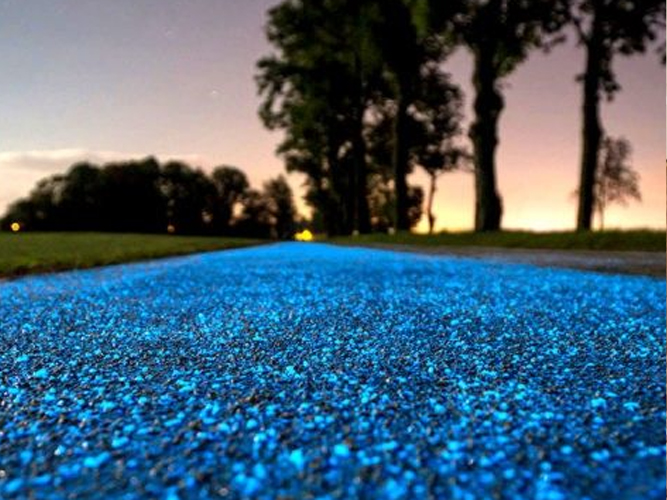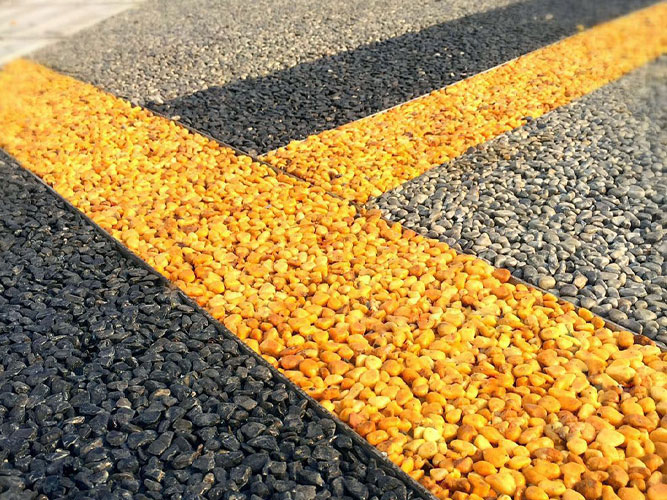
As urban infrastructure evolves, cities and developers are increasingly considering colored pavement as an alternative to traditional asphalt. While both serve the fundamental purpose of providing durable road surfaces, there are several key differences that make colored pavement a preferred choice in modern urban planning.
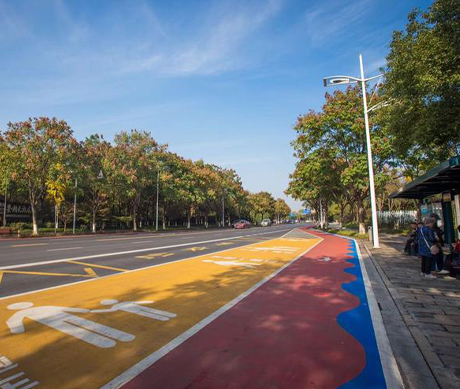
1. Visual Appearance and Aesthetics
Traditional asphalt is typically dark gray or black, offering limited visual variety. Colored pavement, on the other hand, allows for a wide range of vibrant colors such as red, green, blue, or customized shades. This enables urban designers to create visually appealing streets, designate traffic zones, and enhance public spaces with a modern and organized appearance.
2. Safety and Traffic Guidance
Colored pavement provides superior visibility compared to traditional asphalt. By using different colors for bike lanes, pedestrian crossings, bus lanes, and restricted zones, road users can quickly recognize traffic patterns and navigate safely. Traditional asphalt often requires additional markings or signs to achieve the same level of traffic guidance, which can be less intuitive for drivers and pedestrians.
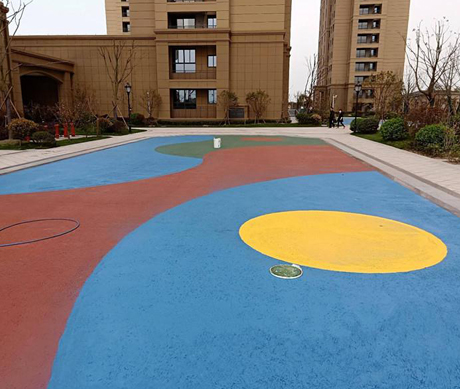
3. Anti-Slip Performance
Many colored pavement systems incorporate high-friction aggregates, resin coatings, or ceramic particles that improve skid resistance. This feature enhances safety, particularly on ramps, intersections, curves, and areas prone to wet conditions. Standard asphalt generally offers lower friction unless supplemented with additional anti-skid treatments.
4. Durability and Maintenance
Modern colored pavement materials, such as MMA resin, water-based coatings, and ceramic aggregate surfaces, are designed to resist heavy traffic, harsh weather, and UV exposure while maintaining their color and performance over time. Traditional asphalt can deteriorate more quickly under similar conditions, often requiring periodic resurfacing, sealing, or repainting.
5. Environmental and Sustainability Benefits
Many colored pavement systems use eco-friendly, low-VOC, or reflective materials that reduce heat absorption and contribute to lower urban heat islands. Standard asphalt absorbs more heat and may contribute to higher surface temperatures, impacting urban microclimates.

6. Application and Versatility
Colored pavement can be applied to a wide variety of surfaces, including city streets, highways, ramps, pedestrian areas, and scenic roads. Its adaptability allows for integration into both new construction and maintenance projects. Traditional asphalt is versatile as well but lacks the visual and functional benefits provided by colored surfaces.
Conclusion
While traditional asphalt remains a reliable and cost-effective road surface, colored pavement offers significant advantages in terms of safety, aesthetics, durability, and environmental performance. For modern urban streets, highways, and public spaces, colored pavement is increasingly seen as a smart investment that enhances traffic management, protects road users, and elevates the overall quality of urban infrastructure.