Colored Anti-Skid Road Surfacing for Bicycle Lane Infrastructure Design
Colored anti-skid road surfacing has become a key material in modern bicycle lane infrastructure design, supporting safer, more organized, and more efficient urban mobility systems. It is widely applied in dedicated cycling lanes, shared streets, urban corridors, park routes, and transportation networks where cyclist safety and visibility are critical.
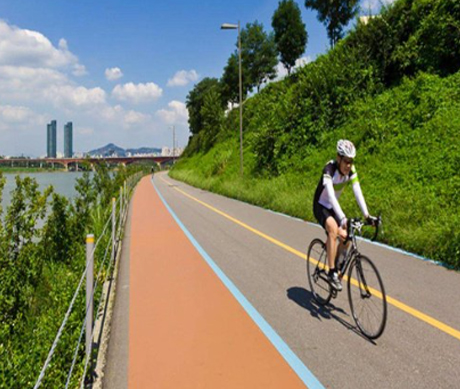
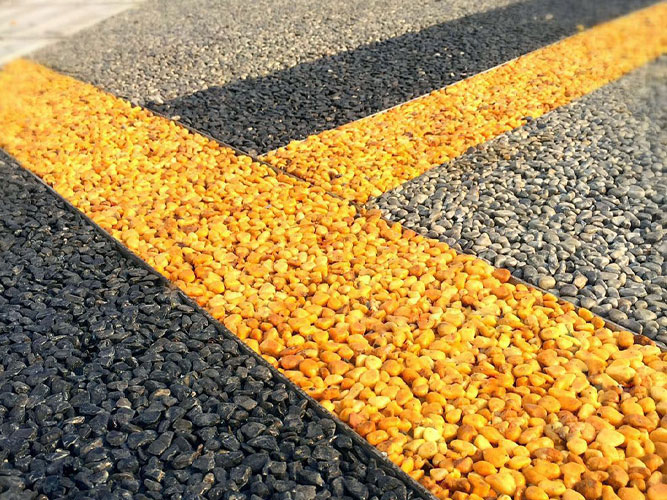
One of the most important functions of colored anti-skid surfacing in bicycle lanes is improving traction. Bicycle tires require consistent surface grip, especially in wet or slippery conditions. By using high-friction aggregates such as ceramic particles or mineral stones embedded in durable binders, the surface creates a textured structure that significantly reduces slipping risks and improves riding stability.
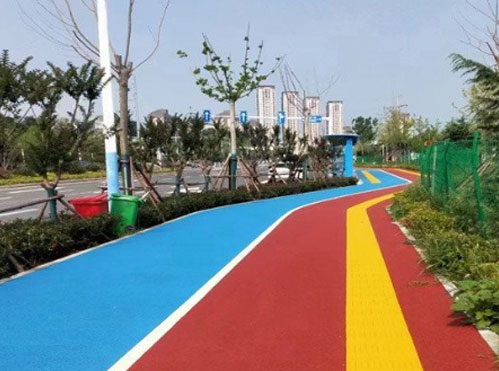
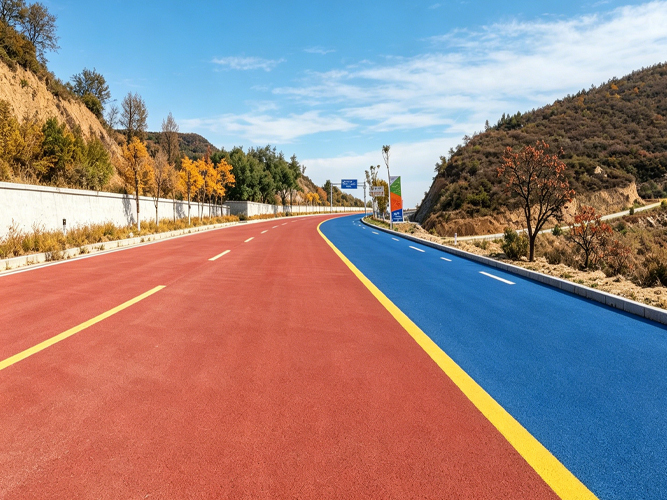
Equally important is the visual separation function. Colored surfacing clearly distinguishes bicycle lanes from vehicle lanes and pedestrian areas. This visual guidance helps reduce conflicts between different road users, improves traffic awareness, and ensures cyclists can navigate urban environments more safely. Bright and consistent coloring also increases lane visibility at night or during poor weather conditions.

In bicycle infrastructure design, intersections and crossing points are high-risk areas. Colored anti-skid surfacing provides both enhanced friction and clear visual warning zones, helping cyclists and drivers react earlier and reducing accident potential. This is especially important in mixed-traffic environments where bicycles interact frequently with motor vehicles.
Modern systems such as Colored Anti-Skid Bicycle Lane Surfacing System are engineered for durability under continuous dynamic loads. Bicycle lanes experience not only regular cycling traffic but also occasional maintenance vehicles, weather exposure, and UV radiation. High-quality materials maintain both skid resistance and color stability over long service periods.
Another key advantage is adaptability. Colored anti-skid surfacing can be applied on asphalt, concrete, and existing pavement surfaces, making it suitable for both new bicycle lane construction and urban road retrofitting projects. This flexibility allows cities to expand cycling infrastructure without full road reconstruction.
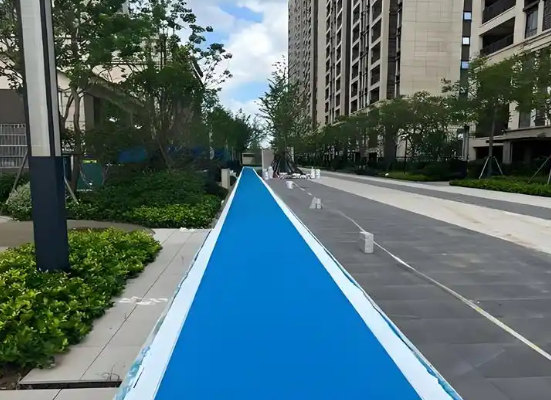
Fast installation and curing properties are also highly beneficial in urban cycling projects. Many modern resin-based or MMA systems allow quick application and rapid reopening, minimizing disruption to surrounding traffic and encouraging faster expansion of cycling networks.
Environmental sustainability is another important factor. Low-VOC and eco-friendly formulations are increasingly used to support green transportation policies and reduce environmental impact during installation, aligning with the global shift toward low-carbon urban mobility.
Overall, colored anti-skid road surfacing plays a vital role in bicycle lane infrastructure design. It enhances rider safety, improves visibility, strengthens traffic separation, and supports sustainable urban transport development, making it an essential component of modern cycling-friendly cities.