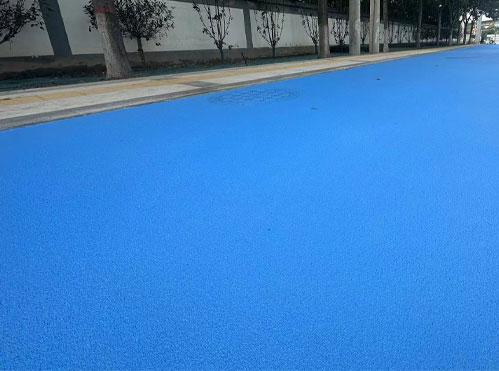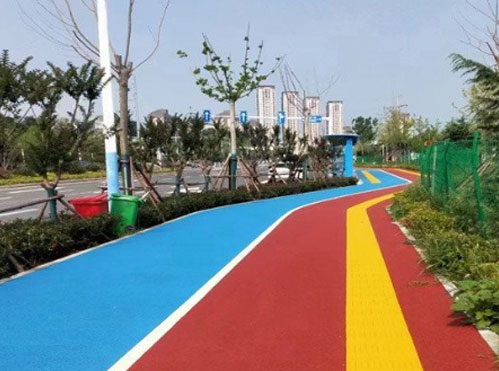
Colored Polymer Slurry Surfacing is a modern pavement treatment system designed to improve road durability, enhance surface appearance, and increase traffic safety. The system combines polymer-modified emulsions, mineral fillers, pigments, and fine aggregates to create a seamless, durable, and skid-resistant colored surface layer.
Widely used for urban roads, bicycle lanes, pedestrian pathways, parks, residential communities, and decorative pavement projects, colored polymer slurry surfacing offers both functional and aesthetic advantages while extending pavement service life.
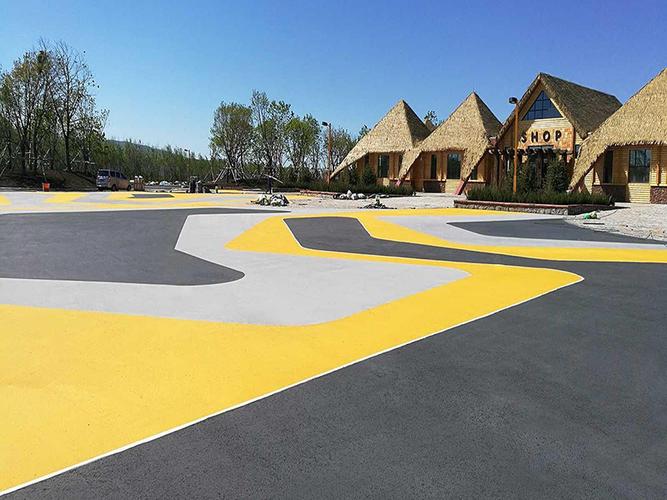
Colored polymer slurry surfacing provides a clean, uniform, and decorative finish that improves the visual quality of roads and public spaces. Multiple color options allow municipalities and designers to create attractive and organized traffic environments.
Common colors include:
Red
Green
Blue
Yellow
Gray
The colored surface also helps define different traffic zones and improve urban landscape design.
The textured slurry surface increases pavement friction and improves anti-skid performance, especially during rainy or wet conditions.
Benefits include:
Improved vehicle braking performance
Reduced slipping risks
Enhanced pedestrian safety
Better bicycle lane traction
This makes the system highly suitable for safety-sensitive areas such as intersections, school zones, and pedestrian crossings.
Polymer-modified slurry systems offer strong resistance to:
Abrasion
Traffic wear
Water penetration
Surface aging
The protective layer helps extend the lifespan of existing asphalt pavements and reduces surface deterioration.
Colored polymer slurry surfacing effectively seals small cracks and prevents water infiltration into the pavement structure. This helps minimize:
Moisture damage
Oxidation
Freeze-thaw deterioration
Pothole formation
By protecting the pavement base, the system lowers long-term maintenance requirements.
Compared with full pavement reconstruction, slurry surfacing is a more economical preventive maintenance treatment.
Advantages include:
Lower material costs
Faster construction
Reduced labor expenses
Extended pavement service life
It is widely used as a cost-efficient pavement preservation method.
The slurry surfacing process is relatively simple and allows rapid installation with minimal disruption to traffic.
Construction benefits include:
Cold-mix application
Energy-saving process
Quick curing
Reduced road closure time
Large pavement areas can be completed efficiently.
Colored polymer slurry surfacing is considered an eco-friendly pavement solution due to:
Low energy consumption
Water-based materials
Reduced VOC emissions
Lower material waste
The cold application process also reduces carbon emissions compared with hot asphalt paving.
The polymer-modified system bonds well to existing asphalt surfaces and maintains flexibility under temperature changes, helping resist cracking and surface separation.
Colored polymer slurry surfacing is commonly applied in:
Bicycle lanes
Bus lanes
Pedestrian walkways
Residential roads
Parking lots
Parks and recreational trails
School zones
Urban decorative pavements
| Feature | Colored Polymer Slurry Surfacing | Conventional Surface Treatment |
|---|---|---|
| Decorative Appearance | Excellent | Limited |
| Skid Resistance | High | Moderate |
| Waterproof Performance | Excellent | Standard |
| Construction Speed | Fast | Slower |
| Environmental Impact | Low | Higher |
| Maintenance Cost | Lower | Higher |
Colored Polymer Slurry Surfacing is an effective and economical pavement solution that combines durability, skid resistance, waterproof protection, and decorative performance. Its environmental advantages, fast construction process, and long-term pavement preservation benefits make it an ideal choice for modern urban infrastructure and road maintenance projects.