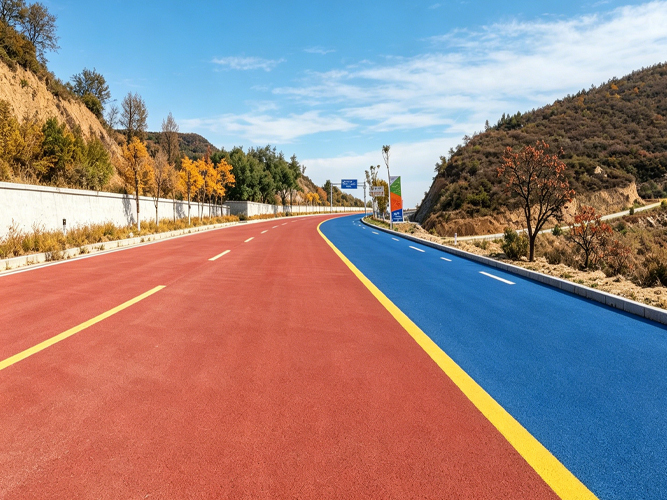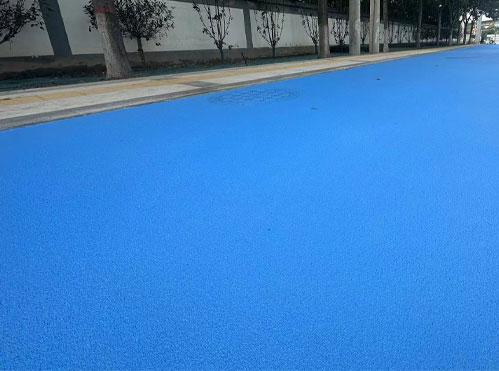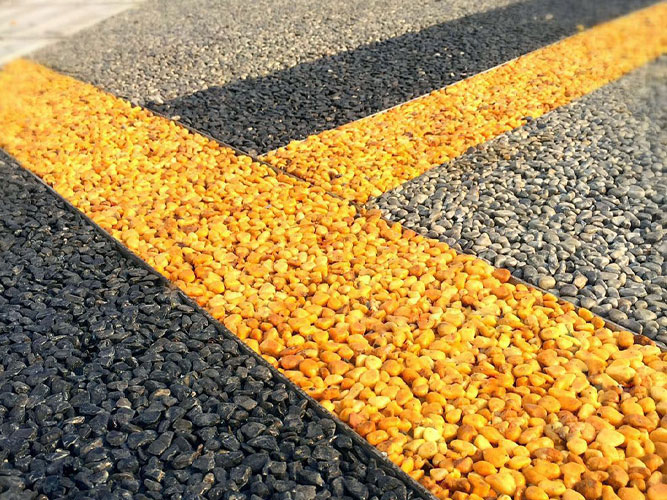
Colored pavement has evolved from purely decorative surfaces into high-performance systems that actively reduce accidents and define urban space. As of 2026, five material categories dominate, each optimized for a specific safety or design function.
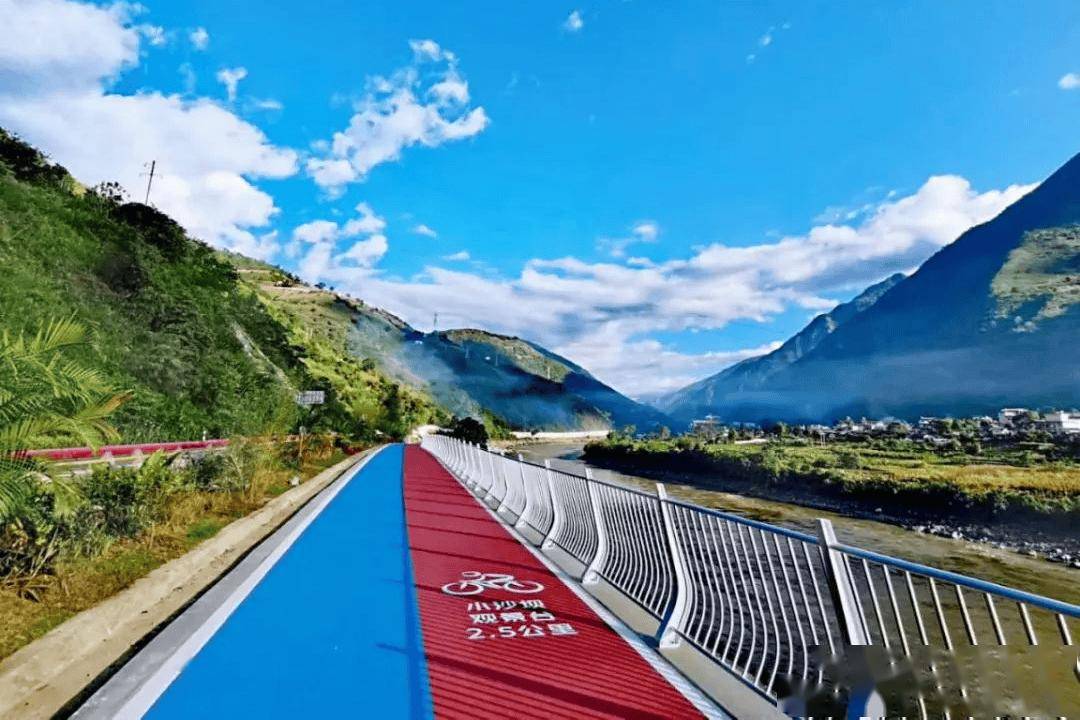
MMA Colored Anti-Skid Surfacing — The All-Rounder
Best for bus lanes, bridges, tunnels, school zones, and slope warnings. MMA uses methyl methacrylate as a dual-component, solvent-free binder that cures in about one hour at ambient temperature. Its anti-skid value reaches BPN 75 or higher, delivering roughly 33 percent shorter wet braking distance compared to standard pavement. It works across a wide temperature range from minus 30 to 40 degrees Celsius. VOC emissions are near zero with imported resin. Service life spans 6 to 10 years with minimal maintenance. MMA is the fastest-growing segment in 2026 because it cures quickly, needs no specialized vehicles, and bonds to both asphalt and concrete. Major deployments include Tianjin's S102 Jinglu Line and Beijing Miyun intersections.
Polyurethane (PU) Colored Surfacing — The Premium Choice
Best for plazas, pedestrian zones, bike lanes, and high-end residential streets. PU offers the best balance of flexibility, UV resistance, and adhesion. It resists yellowing far better than epoxy and handles freeze-thaw cycles without cracking. Color retention exceeds 8 years. The main drawback is higher material cost, roughly 30 to 50 percent more than MMA. It is the material of choice for projects where appearance and longevity matter equally.
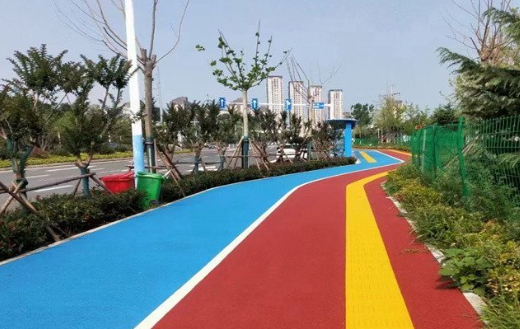
Colored Ceramic Particle Surfacing — The Durability King
Best for high-traffic intersections, hospital entrances, and fire lanes. Color is fired into ceramic particles at over 1200 degrees Celsius, so fading is virtually nonexistent. Mohs hardness reaches 6 or higher, meaning the surface stays anti-skid for years. Bond strength must meet JT/T 712-2008 standard. Service life is 10 to 15 years, the longest of any colored pavement option. The trade-off is higher installation cost and labor intensity.
Colored Asphalt — The Budget Workhorse
Best for bike lanes, crosswalks, and traffic calming zones. Pigments are mixed directly into the asphalt batch. Installation is identical to standard paving, so cost is low. The weakness is UV fading, typically noticeable within 2 to 3 years. It works well where budget is tight and repainting is acceptable.
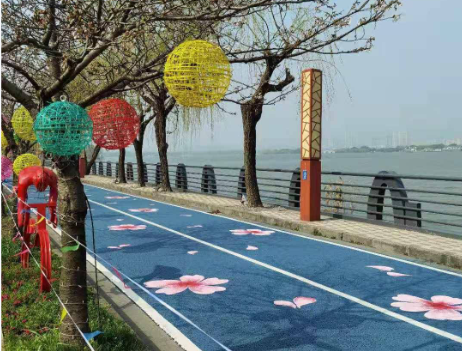
Colored Concrete with Exposed Aggregate — The Architectural Option
Best for sidewalks, driveways, and landscape features. Offers rich texture and color depth but is prone to cracking without proper reinforcement. Limited color customization compared to resin-bonded systems. Best suited for low-traffic, design-focused applications.
Bottom line: MMA wins for speed and all-weather performance. PU wins for premium appearance. Ceramic particles win for maximum durability. Colored asphalt wins for budget. Choose based on what your project actually needs, not just what looks good in a sample book.