The Future of Sustainable Colored Pavement
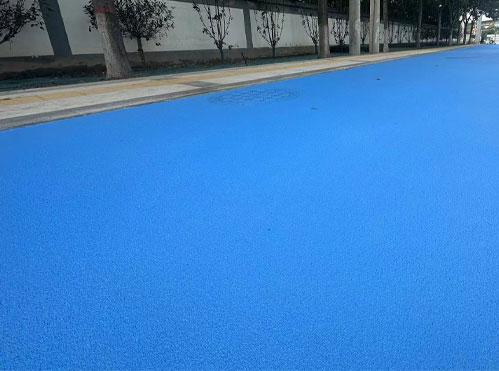
As cities worldwide face rising traffic demand, climate challenges, and stricter environmental goals, road engineering is moving toward solutions that are not only safer and more durable, but also more sustainable. Among the most promising developments is sustainable colored pavement—a new generation of road surfacing that combines environmental performance with safety and functional design.
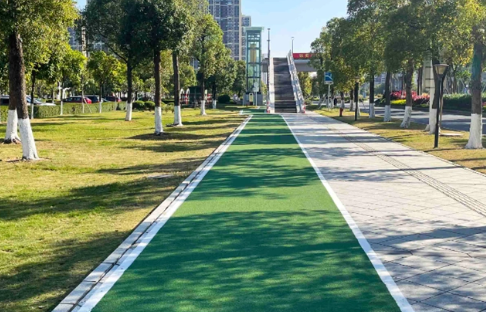
Unlike traditional asphalt, which is primarily designed for structural strength and heat resistance, sustainable colored pavement is engineered to serve multiple roles at once: reduce environmental impact, improve road safety, and enhance urban mobility. This shift reflects a broader transformation in infrastructure thinking—from “build to last” to “build to perform intelligently.”
One of the most important elements of this evolution is the use of environmentally friendly materials. Many modern systems rely on water-based or low-VOC binders, which significantly reduce emissions during construction and curing. These formulations help minimize air pollution and worker exposure compared to traditional solvent-based coatings. At the same time, they maintain strong adhesion and durability under real traffic conditions.
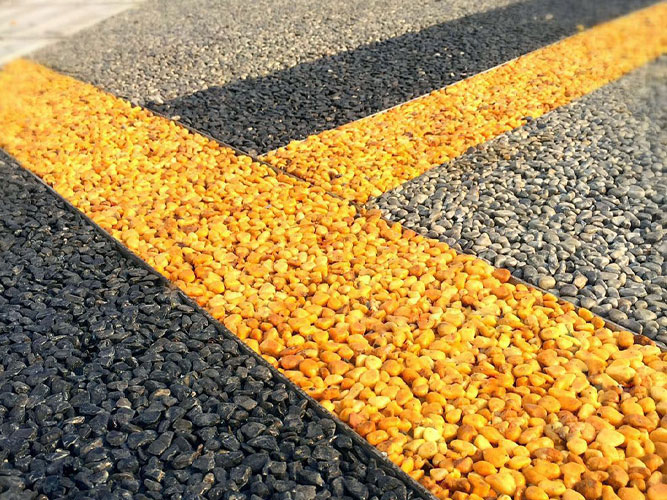
Another key direction is the integration of high-performance safety surfaces such as High Friction Surfacing. These systems enhance tire grip through engineered aggregates that maintain texture even under heavy wear and wet weather. When combined with colored pavement, they create surfaces that are both visually clear and physically safer—reducing accidents while maintaining long service life.
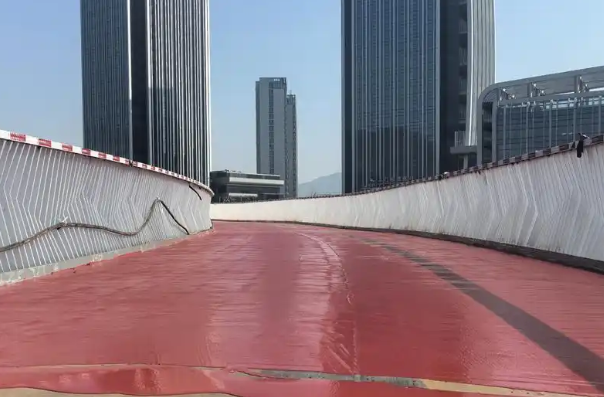
Sustainability is also closely tied to temperature management in urban environments. Traditional black asphalt absorbs large amounts of solar radiation, contributing to the urban heat island effect. In contrast, many colored pavement systems use lighter pigments and reflective materials that reduce surface heat absorption. This helps lower ambient temperatures in dense city areas, improving comfort and reducing energy demand for cooling nearby buildings.
From a construction perspective, efficiency is another major sustainability factor. Technologies such as Color Emulsified Micro-Surfacing allow engineers to resurface and upgrade roads in a single process. This reduces material waste, shortens construction time, and minimizes traffic disruption. Faster project completion also means lower fuel consumption from construction equipment and reduced congestion-related emissions.
Durability plays an equally important role in sustainability. A longer-lasting road surface means fewer repairs, less material consumption, and reduced maintenance-related emissions over time. Modern colored pavement systems are designed to resist UV degradation, abrasion, and weathering, ensuring that both color and performance remain stable throughout their lifecycle.
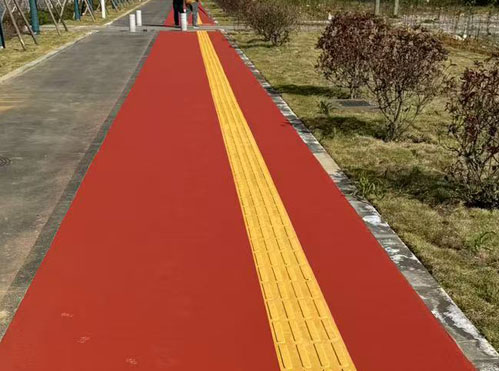
Beyond materials and engineering, sustainable colored pavement also represents a shift in urban design philosophy. Roads are no longer viewed only as transport corridors—they are becoming multifunctional systems that integrate safety, environmental performance, and visual communication. Colored zones can define pedestrian areas, bicycle lanes, and public spaces, reducing conflict between different road users and promoting more efficient traffic flow.
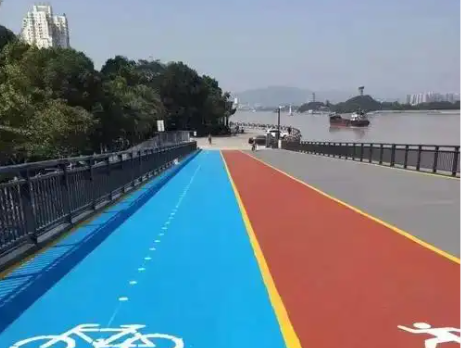
In future smart cities, this type of pavement is expected to play an even larger role. Combined with sensors, intelligent traffic systems, and data-driven urban planning, road surfaces may contribute to real-time traffic management and safety monitoring. While still evolving, this direction points toward roads that are not only sustainable but also responsive.
In conclusion, the future of sustainable colored pavement lies in its ability to balance three priorities: environmental responsibility, long-term durability, and active safety performance. By reducing emissions, improving thermal behavior, extending lifespan, and enhancing road safety at the same time, it represents a key step toward greener and smarter infrastructure systems worldwide.