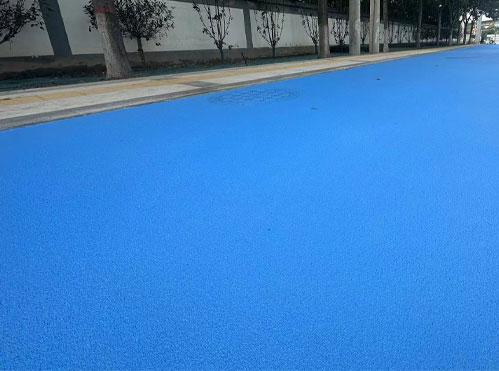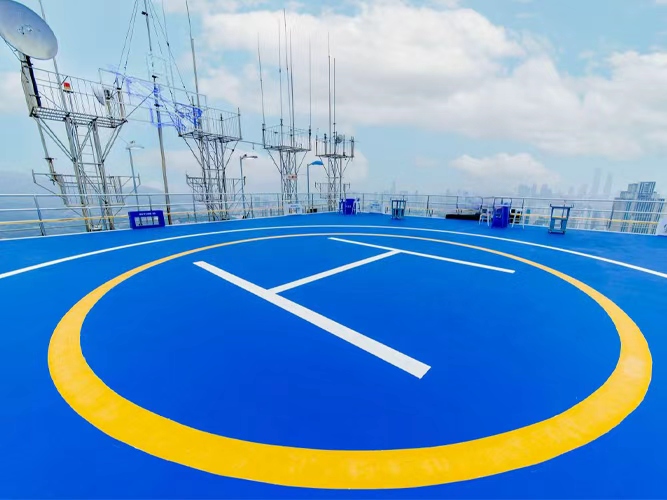
Traffic accidents are often the result of a combination of factors, including poor visibility, unclear road guidance, insufficient surface friction, and driver reaction delays. Colored pavement has emerged as an effective infrastructure solution that directly addresses these issues by improving both visual communication and surface safety performance.
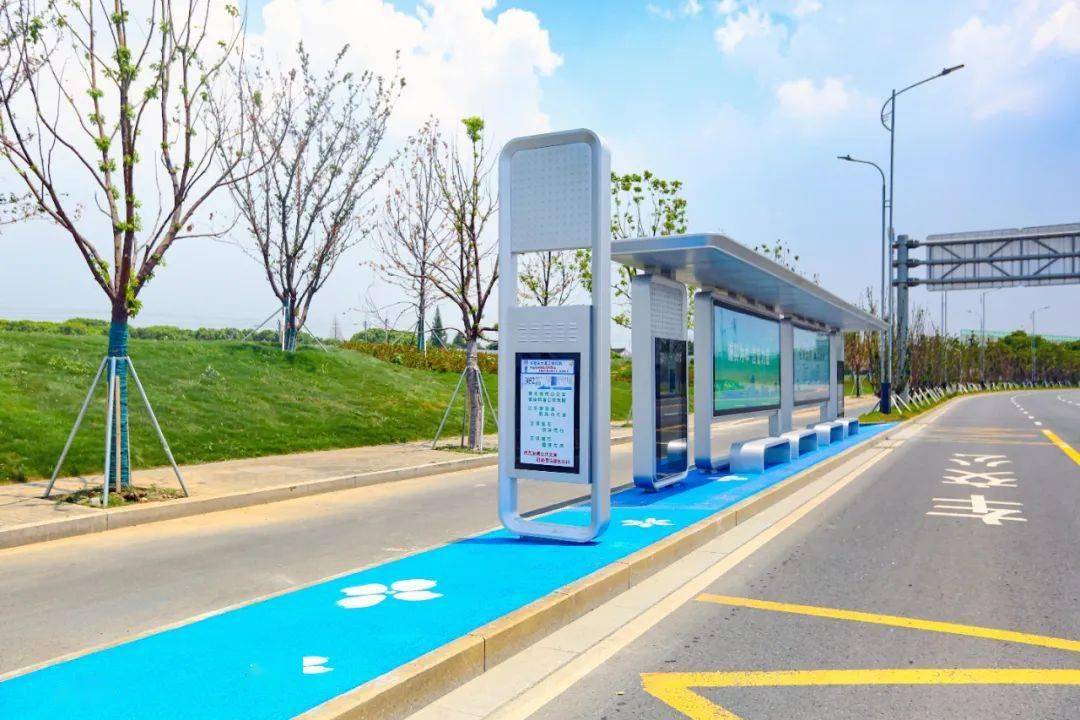
One of the primary ways colored pavement reduces accidents is by enhancing road visibility. Bright, clearly differentiated surfaces help drivers quickly identify lanes, intersections, crossings, and hazard zones. This is especially important in complex urban environments where multiple traffic streams intersect. When drivers can instantly recognize road functions, reaction time improves and the likelihood of confusion-related accidents decreases.
Beyond visual improvements, modern colored pavement systems are engineered with anti-skid properties. The textured surface created by high-friction aggregates increases tire grip, particularly in wet or slippery conditions. This reduces the risk of vehicles skidding during braking, turning, or sudden maneuvers. High-friction zones are especially effective in accident-prone areas such as ramps, curves, intersections, and pedestrian crossings.
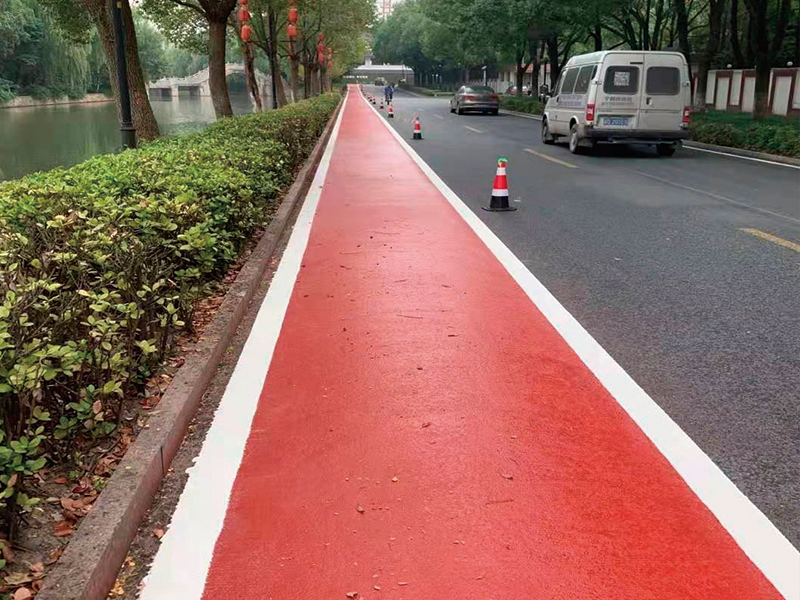
Colored pavement allows different areas of the road to be visually separated based on function. For example, vehicle lanes, bicycle paths, pedestrian crossings, bus lanes, and loading zones can each be assigned distinct colors. This structured visual system reduces lane confusion and helps ensure that each road user stays within their designated area, lowering the chance of collisions.
Cities and transportation agencies often apply colored pavement in locations with historically high accident rates. These include sharp bends, downhill slopes, roundabouts, tunnel entrances, and school zones. By combining high visibility with enhanced friction, these critical areas become significantly safer for both drivers and pedestrians.
Colored pavement acts as a visual guidance system that supports faster and more accurate decision-making. When road conditions are clearly marked, drivers do not need to rely solely on signage or road markings that may be less visible in poor weather or low-light conditions. This reduces cognitive load and improves overall driving behavior.
Colored pavement is not only beneficial for vehicle traffic but also plays an important role in protecting vulnerable road users. Clearly marked pedestrian crossings and bicycle lanes improve separation between different types of traffic, reducing the risk of accidents involving pedestrians and cyclists.
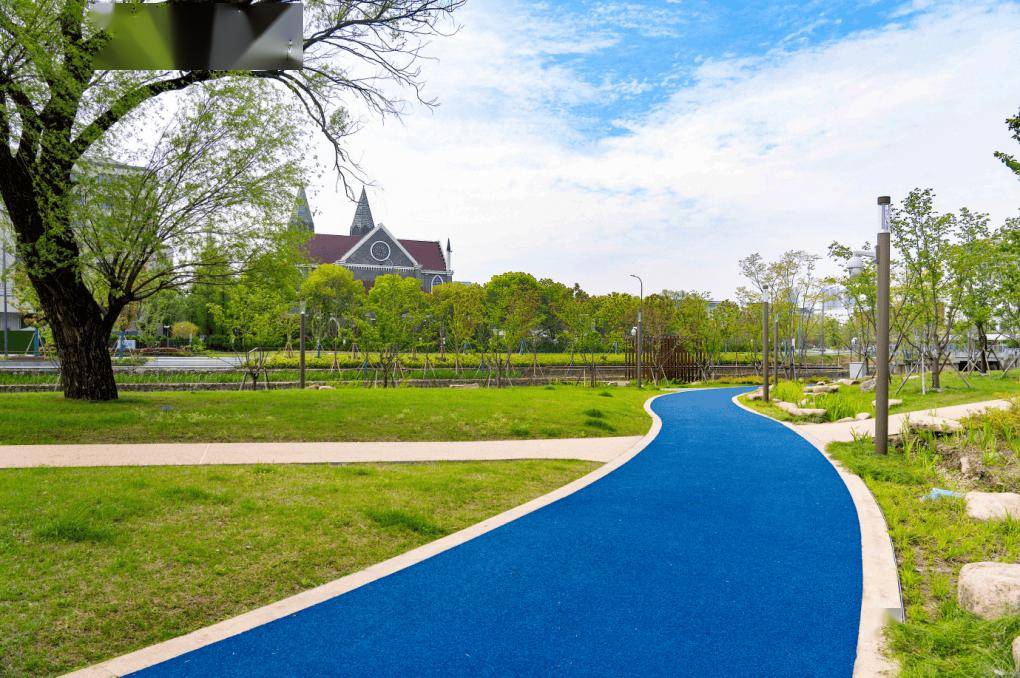
Rain, fog, and nighttime conditions can significantly reduce road visibility. Colored pavement with reflective and high-contrast properties improves guidance even under poor weather conditions. Combined with anti-skid performance, it helps maintain safer driving conditions when accidents are most likely to occur.
Colored pavement reduces traffic accidents by combining two critical safety functions: enhanced visual communication and improved surface friction. By clearly defining road spaces, increasing driver awareness, and improving tire grip, it provides a practical and highly effective solution for modern traffic safety challenges. As cities continue to grow and traffic complexity increases, colored pavement is becoming an essential tool for reducing accidents and improving overall road safety.