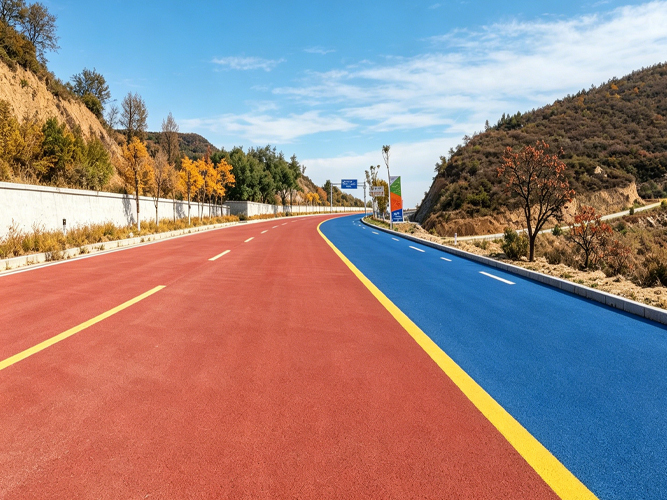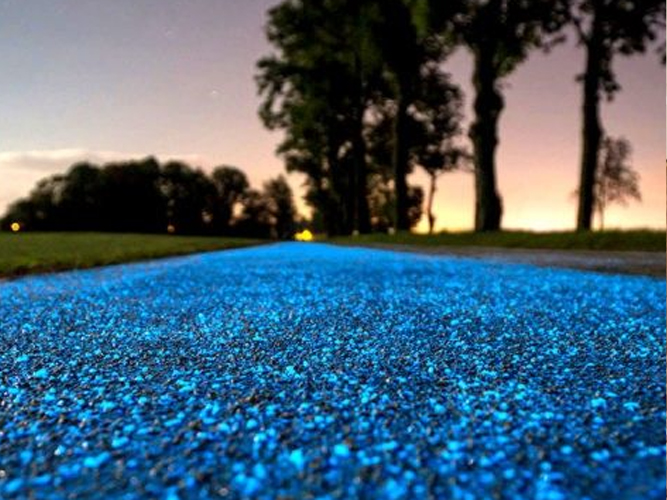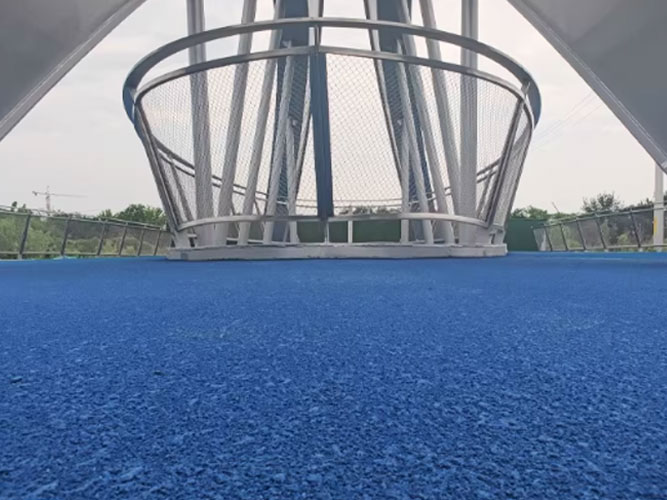
With the growing demand for sustainable and safe urban infrastructure, water-based colored pavement systems are becoming an increasingly popular choice for road construction and renewal projects. These systems combine environmental advantages, attractive appearance, and anti-slip performance, making them suitable for bicycle lanes, parks, pedestrian areas, and urban roads.
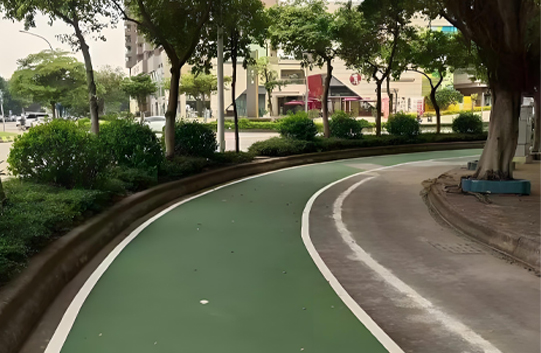
Water-based colored pavement is a surface coating system that uses water as the main dispersion medium, combined with polymer binders, pigments, and anti-skid aggregates.
Compared with traditional solvent-based coatings, water-based systems offer a cleaner construction process with lower odor and reduced environmental impact.
One of the biggest advantages of water-based pavement is its environmental performance. The low-VOC formulation helps reduce harmful emissions and supports greener construction practices.
It is an ideal choice for:
• Sustainable urban projects
• Parks and public spaces
• Green transportation infrastructure
Water-based colored pavement can incorporate anti-skid aggregates to improve surface friction. This helps provide better grip for vehicles, bicycles, and pedestrians.
Benefits include:
• Reduced slipping risks
• Better traction in wet conditions
• Improved user safety
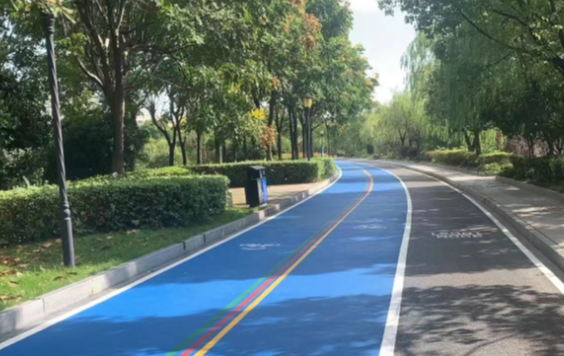
The bright and durable colors improve road recognition and traffic organization.
Common applications include:
• Bicycle lanes
• Pedestrian crossings
• Bus lanes
• School safety zones
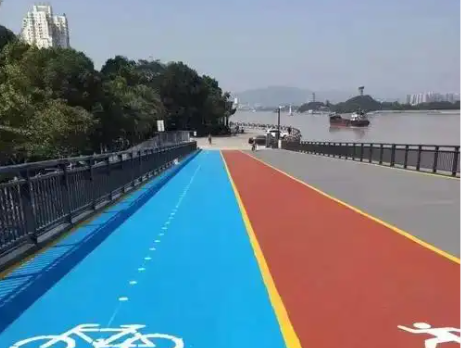
Colored pavement helps transform traditional asphalt surfaces into visually appealing public spaces. Different colors can be used to define functional areas and improve the overall city environment.
Water-based systems are generally easy to apply and suitable for various pavement surfaces, including asphalt and concrete.
Advantages include:
• Simple construction process
• Fast application
• Convenient maintenance
• Suitable for renovation projects
High-quality water-based colored pavement provides reliable performance against outdoor conditions, including:
• UV exposure
• Rainfall
• Temperature changes
• Daily traffic wear
Water-based colored pavement is widely used in:
• Bicycle paths
• Urban greenways
• Parks and scenic areas
• Residential communities
• Pedestrian streets
• Public squares
• Commercial areas
As cities focus on smart transportation and sustainable development, water-based colored pavement technology continues to improve. Future systems will focus on longer service life, stronger friction performance, improved color durability, and more environmentally friendly materials.
Water-based colored pavement provides a balanced solution for safety, aesthetics, and sustainability. With excellent visibility, anti-slip performance, and environmental advantages, it has become an ideal material for modern urban roads, bicycle lanes, and public infrastructure projects.