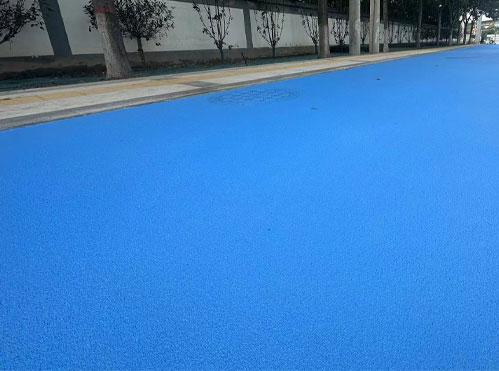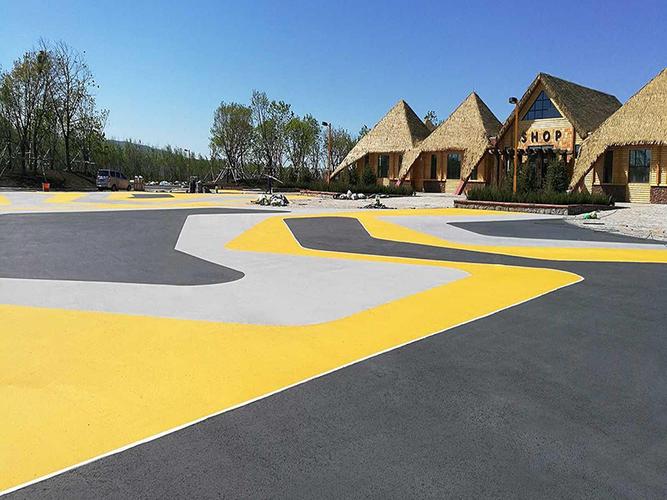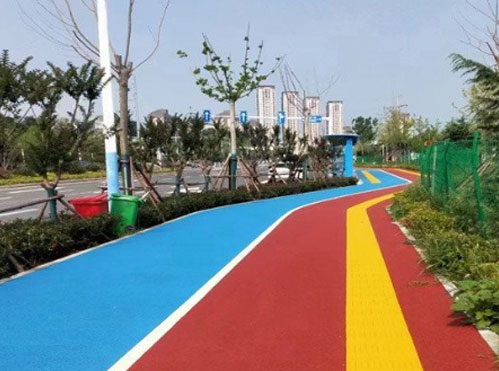
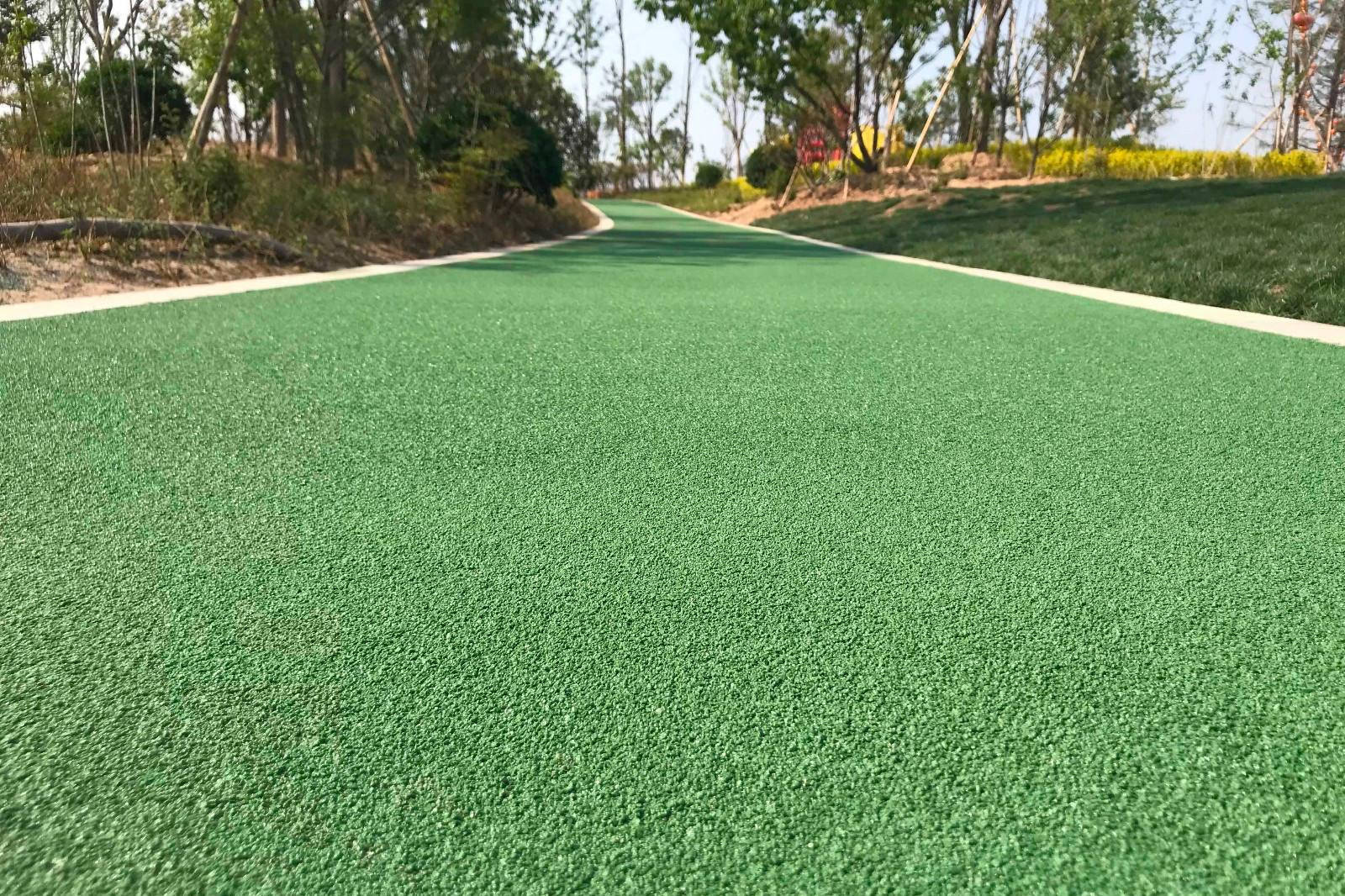
Eco-friendly colored ceramic aggregate surfacing is a high-performance pavement solution designed to improve road safety, durability, and environmental sustainability. It uses specially processed ceramic aggregates combined with colored resin binders to create a highly skid-resistant and visually distinctive surface.
This system is widely applied in urban roads, bicycle lanes, pedestrian crossings, ramps, intersections, and high-risk traffic zones where both safety and long service life are required.
Colored ceramic aggregate surfacing is a thin bonded pavement layer made of:
High-strength ceramic aggregates (colored, fired, and graded)
Resin binders (such as MMA, epoxy, or polyurethane systems)
Anti-skid surface structure
Optional colored pigments for enhanced visibility
The ceramic particles are embedded into the binder to form a rough, durable surface with strong friction and long-lasting color stability.
One of the main advantages of ceramic aggregate surfacing is its extremely high skid resistance. The rough surface texture significantly improves tire grip and reduces braking distance.
It is especially effective in:
Sharp curves
Highway ramps
Intersections
Wet-weather roads
Bicycle lanes
Pedestrian crossings
This greatly reduces the risk of skidding and traffic accidents.
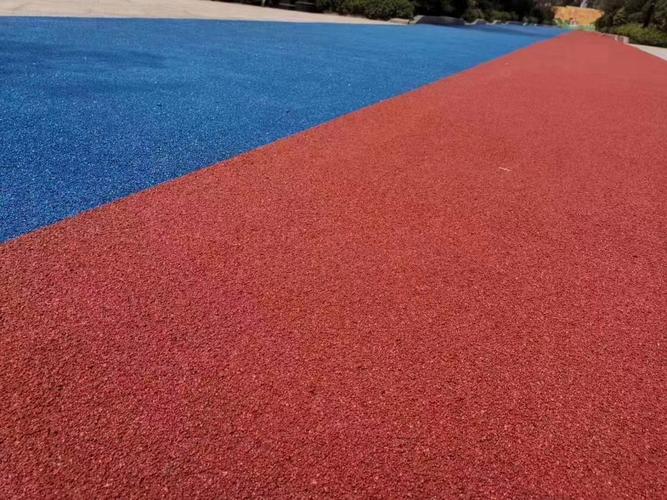
Ceramic aggregates are manufactured through high-temperature firing, giving them exceptional hardness and durability. Combined with strong resin binders, the system resists:
Heavy traffic wear
Abrasion from tires
UV exposure
Freeze-thaw cycles
Water damage
This ensures stable performance even under continuous high-load traffic conditions.
Eco-friendly ceramic aggregate systems are designed to support sustainable infrastructure development. Key environmental benefits include:
Long service life reduces maintenance frequency and material waste
Water-based or low-VOC resin options reduce emissions
Recyclable aggregates in some system designs
Reduced need for full pavement reconstruction
This makes it suitable for green city and low-carbon infrastructure projects.
Colored ceramic aggregate surfaces provide strong visual contrast, helping improve traffic organization and road user awareness.
They are commonly used to:
Highlight bicycle lanes
Mark pedestrian crossings
Define bus lanes
Warn drivers in hazardous zones
Improve nighttime visibility with reflective texture
This enhances both daytime and nighttime safety.
The system performs well in various environmental conditions, including:
Heavy rainfall
High temperatures
UV exposure
Cold weather and freeze-thaw cycles
Its color stability and structural integrity remain consistent over long periods of service.
Depending on the resin system used (such as MMA), ceramic aggregate surfacing can be installed quickly and reopened to traffic in a short time. This is especially important for urban maintenance and high-traffic road sections.
Advantages include:
Rapid curing (in resin-based systems)
Short construction downtime
Reduced traffic disruption
Efficient road upgrading process
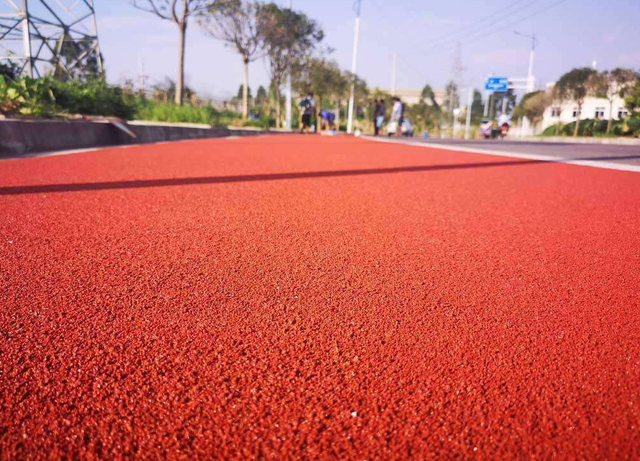
Eco-friendly colored ceramic aggregate surfacing is widely used in:
Urban bicycle lanes
Crosswalks
Bus rapid transit lanes
Highway ramps
Tunnel entrances
Bridge decks
Parking facilities
Industrial roads
Public squares and plazas
It is especially suitable for high-risk or high-visibility traffic zones.
This surfacing system supports modern urban development goals by combining:
Traffic safety improvement
Environmental sustainability
Visual urban design
Long-term cost efficiency
It plays an important role in building safer, greener, and more organized transportation networks.
Eco-friendly colored ceramic aggregate surfacing is a durable, high-friction, and environmentally responsible pavement solution. With its excellent skid resistance, long service life, and strong visual guidance function, it is widely used in modern urban infrastructure to improve both safety and sustainability.
As cities continue advancing toward green construction and intelligent traffic systems, ceramic aggregate surfacing will remain a key technology for future road safety engineering.