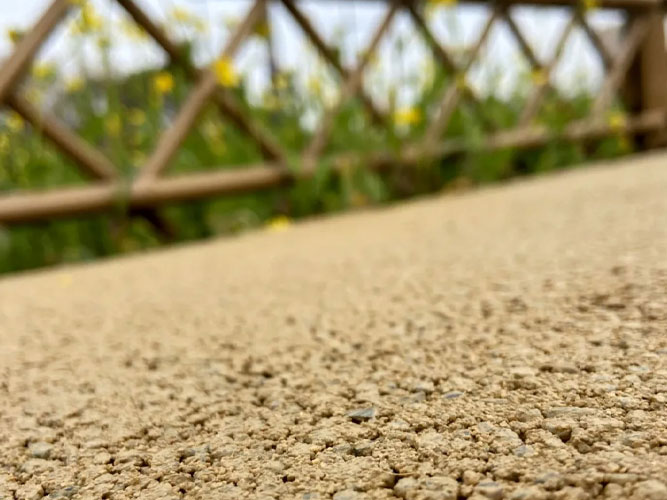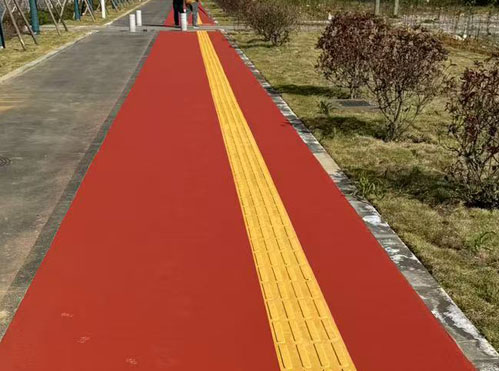
Colored pavement has become an important part of modern urban infrastructure, helping improve safety, traffic organization, and visual appeal. Among the most popular options are colored concrete and colored asphalt. While both provide attractive and functional surfaces, they differ significantly in cost, performance, installation, and maintenance. Understanding these differences can help project owners choose the right solution for their specific needs.
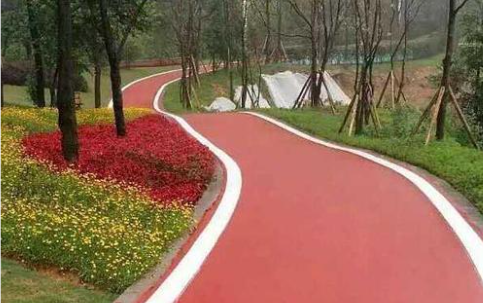
Colored concrete is produced by adding pigments directly into the concrete mix or applying color hardeners and stains to the surface. The color becomes an integral part of the concrete structure, creating a long-lasting decorative pavement solution.
Colored concrete is commonly used in plazas, sidewalks, parks, public squares, commercial developments, and landscape projects where appearance is a primary consideration.
Colored asphalt is created using colored binders, pigments, or surface coating systems applied to asphalt pavements. It is widely used for bicycle lanes, bus lanes, pedestrian crossings, school zones, and traffic-calming areas.
Many colored asphalt systems also incorporate anti-slip aggregates to enhance skid resistance and road safety.
Both materials offer a wide range of color options. However, colored concrete generally provides greater design flexibility. It can be stamped, textured, polished, or exposed to create decorative patterns that mimic stone, brick, or other architectural finishes.
Colored asphalt typically focuses on functionality and traffic guidance. While it provides vibrant and uniform colors, its decorative possibilities are more limited than concrete.
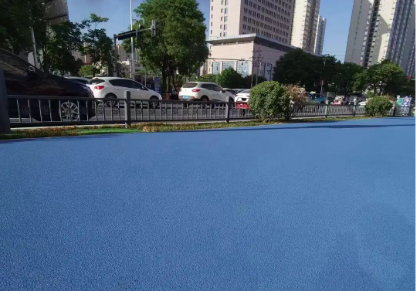
Advantage: Colored Concrete
Colored asphalt can be installed quickly and often allows traffic to resume within a short period. Fast-curing resin-based systems are especially useful for busy urban roads where minimizing downtime is important.
Colored concrete requires more curing time before it reaches full strength and can be opened to traffic. This can increase project duration and traffic disruption.
Advantage: Colored Asphalt
Colored asphalt is frequently used for road safety applications because its bright colors clearly define bicycle lanes, pedestrian areas, and vehicle zones. High-friction aggregates can also be added to improve skid resistance.
Colored concrete can also improve visibility, but it is less commonly used for dedicated traffic management applications.
Advantage: Colored Asphalt
Colored concrete offers excellent structural strength and can withstand heavy loads and harsh weather conditions for many years. The color is often integrated throughout the material, reducing concerns about surface wear.
Colored asphalt is durable as well, especially when modern polymer and resin technologies are used. However, some surface coating systems may require periodic renewal in high-traffic areas.
Advantage: Colored Concrete
Colored asphalt is generally easier and less expensive to repair. Damaged sections can often be resurfaced or recoated without replacing the entire pavement.
Concrete repairs may be more complex and can result in visible color differences between old and new sections.
Advantage: Colored Asphalt
Installation costs vary by region and project type, but colored asphalt is usually more cost-effective for large pavement areas. It requires less material and can be installed more quickly.
Colored concrete typically has higher material and labor costs, especially when decorative finishes are included.
Advantage: Colored Asphalt
Public plazas
Decorative sidewalks
Commercial landscapes
Parks and recreational spaces
Architectural projects
Residential developments
Bicycle lanes
Bus lanes
Pedestrian crossings
School zones
Traffic calming areas
Urban roads
Scenic routes
Parking facilities
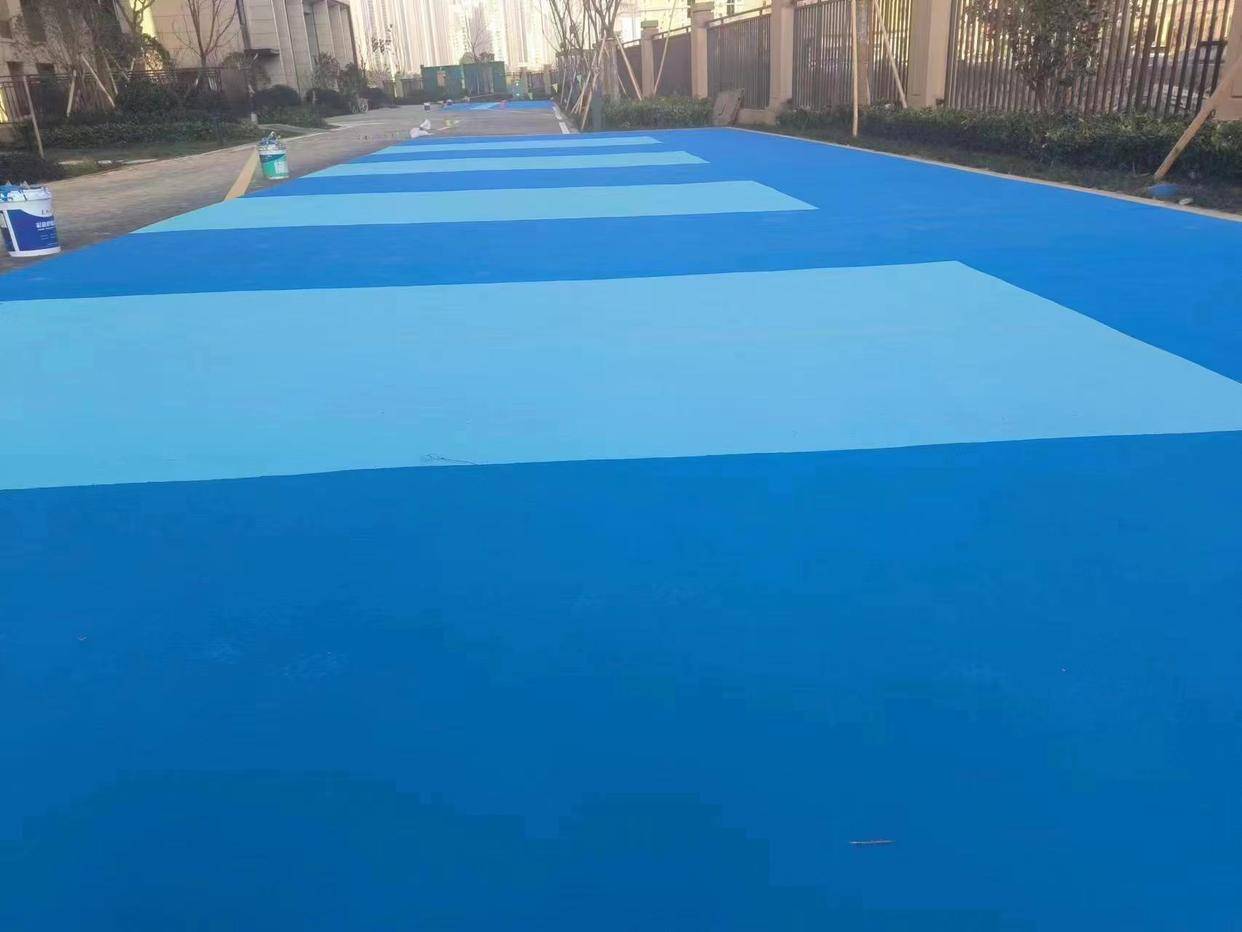
The choice between colored concrete and colored asphalt depends on project priorities.
If the goal is long-term durability, decorative appearance, and architectural value, colored concrete is often the preferred option.
If the project focuses on traffic safety, rapid installation, cost efficiency, and functional road applications, colored asphalt is usually the better solution.
Both colored concrete and colored asphalt offer significant advantages over traditional pavement surfaces. Colored concrete excels in aesthetics, strength, and long-term durability, while colored asphalt stands out for safety, affordability, ease of maintenance, and fast construction. For modern transportation infrastructure, colored asphalt is often the preferred choice, while colored concrete remains an excellent solution for decorative and public-space applications. Selecting the right material depends on balancing performance, budget, appearance, and project requirements.