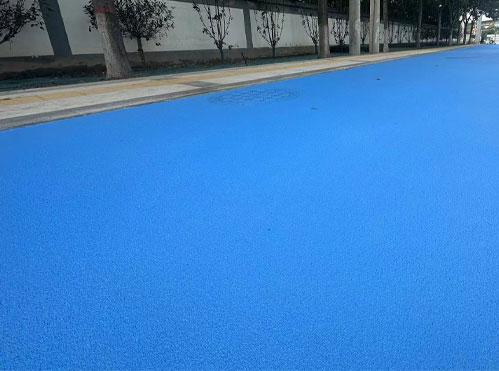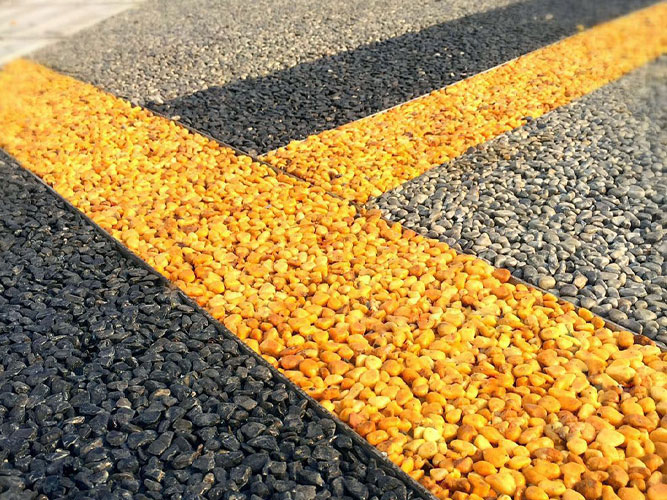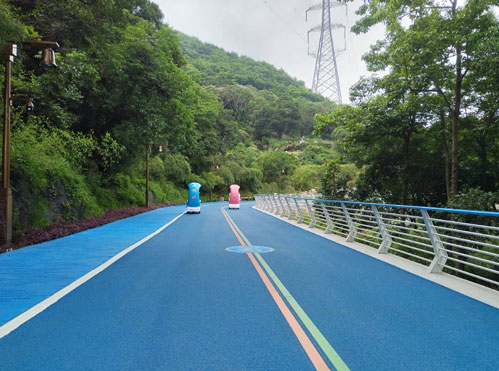
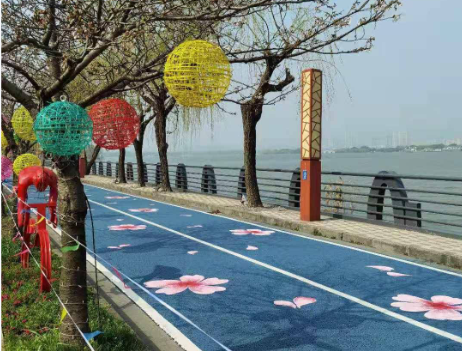
Colored anti-skid road coating technology is rapidly evolving as cities prioritize safer, smarter, and more sustainable transportation systems. These coatings combine high-friction surface performance with durable colored layers to improve road safety, traffic guidance, and urban aesthetics.
In the future, this technology will move beyond basic road marking functions and become an integrated part of intelligent transportation infrastructure.
Colored anti-skid coatings are thin surface layers applied to asphalt or concrete to:
Increase surface friction (anti-skid performance)
Provide high-visibility color zoning
Improve traffic guidance and safety awareness
Common systems include:
MMA resin coatings
Water-based polymer coatings
Epoxy anti-skid surfacing
Ceramic aggregate coatings
Slurry-based colored systems
Future colored coatings will not only provide safety but also integrate with smart city systems. Emerging trends include:
Embedded sensors for traffic monitoring
Smart road condition detection
Data collection for traffic flow analysis
Integration with autonomous driving systems
Road surfaces will become “data platforms” rather than passive infrastructure.
New-generation coatings will use advanced aggregates and nano-modified resins to improve durability and friction performance.
Expected improvements:
Longer service life under heavy traffic
Better wet-weather skid resistance
Improved wear and abrasion resistance
Stable friction under extreme temperatures
This will significantly reduce accident risks in high-traffic areas.

Environmental requirements are driving innovation in coating materials. Future systems will focus on:
Water-based and low-VOC formulations
Recyclable raw materials
Reduced energy consumption during production
Longer life cycles to reduce maintenance waste
Sustainability will become a core design requirement.
Colored anti-skid coatings will play a bigger role in urban design by improving visual communication on roads.
Applications will expand to:
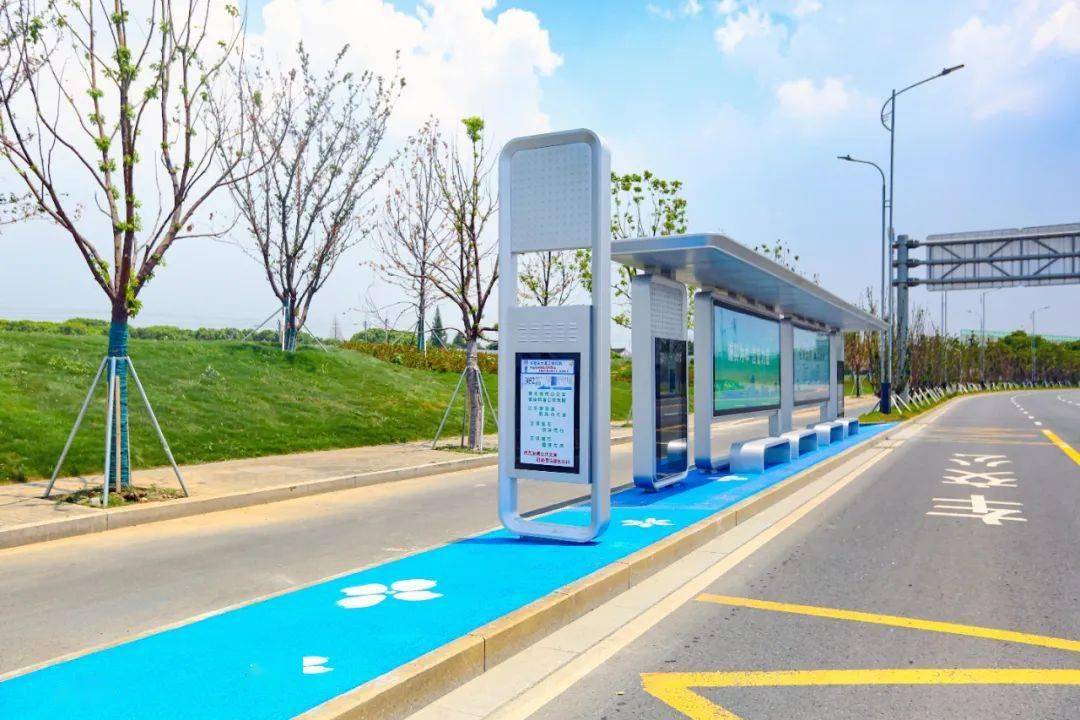
Smart bicycle corridors
Pedestrian priority zones
Public transport lanes
Emergency vehicle pathways
School safety corridors
Color will be used as a functional traffic language.
Future coating technologies will focus on rapid installation and minimal traffic disruption.
Innovations may include:
Quick-curing resin systems (especially MMA)
Pre-mixed modular application kits
Automated spraying and paving equipment
Nighttime rapid road rehabilitation systems
This will greatly improve urban construction efficiency.
As autonomous vehicles become more common, road surfaces must provide clearer and more reliable visual and physical cues.
Colored anti-skid coatings will support:
Lane recognition systems
High-contrast navigation paths
Machine-readable road markings
Enhanced road consistency for sensors and cameras
This will improve safety and reliability for both human-driven and autonomous vehicles.
Cities are increasingly investing in cycling and pedestrian infrastructure. Colored anti-skid coatings will become essential in:
Bicycle superhighways
Shared streets
Pedestrian plazas
School zones and campus roads
This supports safer, more active urban mobility.
Future coating systems will be designed for extended durability, reducing lifecycle costs for municipalities.
Key improvements:
Reduced repainting frequency
Higher resistance to surface wear
Self-cleaning or dust-resistant properties (emerging research)
Stronger bonding to existing pavement layers
The future of colored anti-skid road coating technology is moving toward smarter, greener, and more durable solutions. These systems will not only improve road safety and visibility but also integrate with digital transportation networks and sustainable urban design strategies.
As cities continue to grow and traffic systems become more complex, colored anti-skid coatings will play an increasingly important role in building safer, more efficient, and more intelligent road environments.