Why Traditional Asphalt Is Failing and What’s Replacing It
For decades, traditional asphalt has been the backbone of global road construction. It is widely used, relatively inexpensive, and easy to apply. However, modern transportation demands have exposed its limitations. As traffic becomes heavier, speeds increase, and urban environments grow more complex, asphalt alone is no longer sufficient to meet today’s safety, durability, and performance expectations.
One of the main weaknesses of traditional asphalt is its limited skid resistance under real-world conditions. While asphalt performs adequately in dry environments, its friction level drops significantly in rain, oil contamination, or heavy braking zones. Over time, surface polishing caused by traffic further reduces grip. This increases the risk of skidding accidents, especially at intersections, curves, ramps, and pedestrian crossings where braking and turning forces are high.
Another critical issue is poor functional visibility. Standard asphalt is visually uniform and provides minimal guidance beyond painted lines. Road markings fade over time, especially under UV exposure and heavy traffic wear. In complex urban environments with mixed traffic—cars, bicycles, scooters, and pedestrians—this lack of clear visual separation increases confusion and accident risk. Asphalt, in its traditional form, does not communicate effectively with road users.
Durability and maintenance are also major concerns. Asphalt surfaces are prone to rutting, cracking, and pothole formation due to temperature changes, water infiltration, and continuous loading. Frequent maintenance is required, leading to traffic disruptions and high long-term costs. In many cities, road maintenance budgets are increasingly strained by the need for repeated resurfacing and repairs.
Environmental limitations further highlight its shortcomings. Traditional asphalt absorbs large amounts of heat, contributing to the urban heat island effect. In addition, older production and application methods can generate emissions and environmental pollutants. As cities move toward greener infrastructure, these drawbacks are becoming more significant in material selection decisions.
Because of these challenges, engineers are turning to more advanced alternatives that address multiple weaknesses at once. One of the most important replacements is high-performance surface engineering, especially systems designed for both safety and functionality rather than just structural strength.
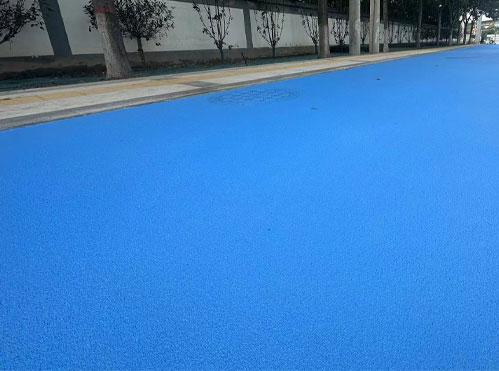
A key technology leading this shift is High Friction Surfacing. Unlike traditional asphalt, which relies mainly on bulk material properties, this system enhances surface-level grip using high-strength aggregates such as ceramic or mineral particles. These materials are bonded to the pavement surface, creating a durable micro-texture that significantly improves skid resistance in both dry and wet conditions. This directly addresses one of asphalt’s most serious safety weaknesses.
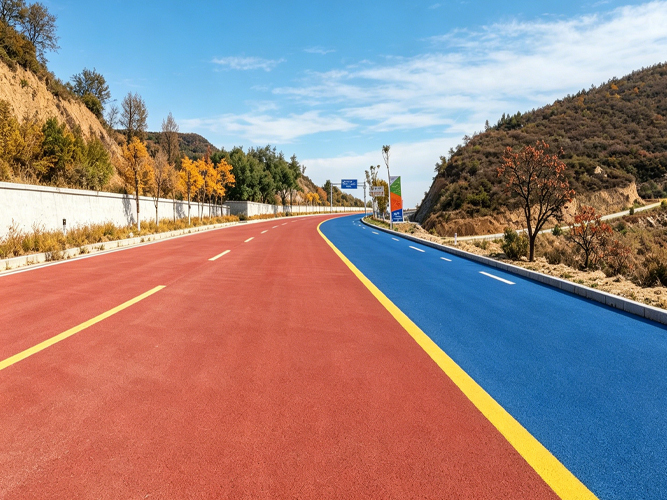
Another major replacement technology is Color Emulsified Micro-Surfacing. This system not only restores worn road surfaces but also adds functional color and improved friction in a single application. It is widely used in urban maintenance projects where minimizing traffic disruption is essential. Compared to traditional asphalt resurfacing, it offers faster curing, better surface uniformity, and enhanced visual road organization.
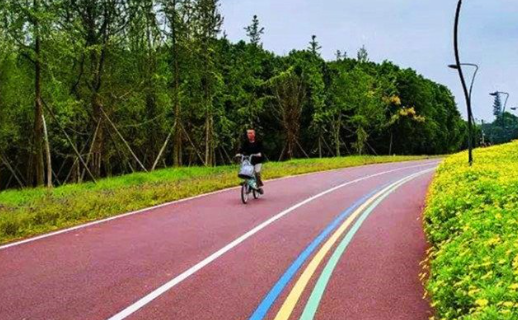
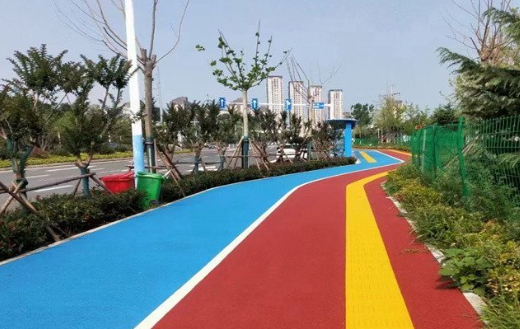
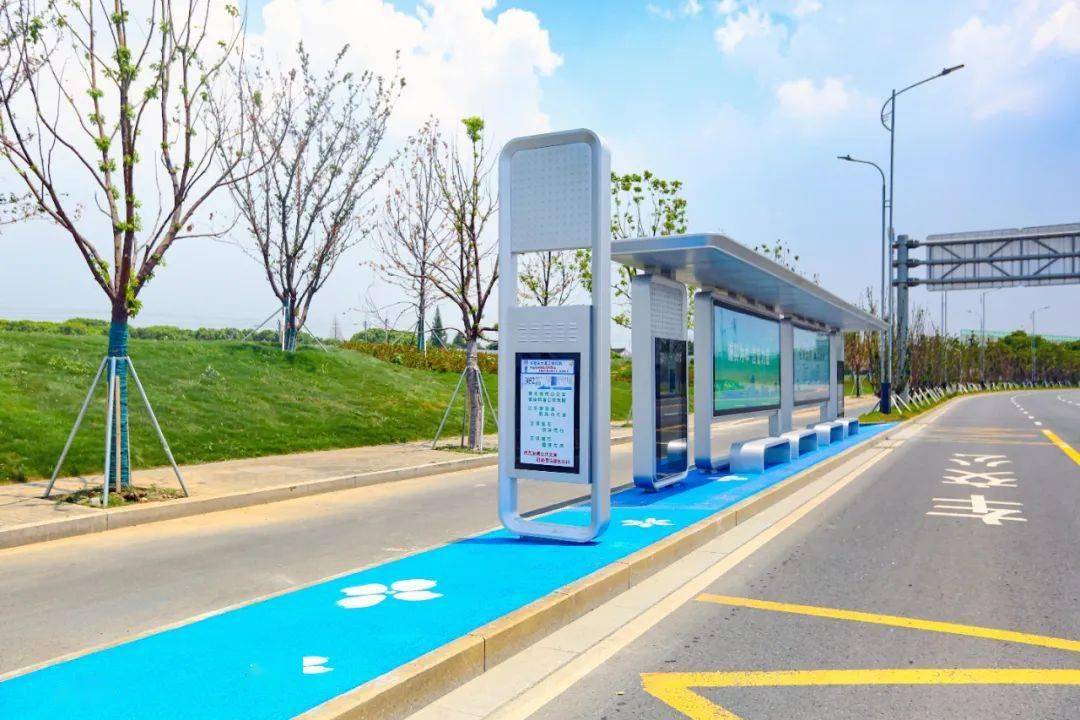
In addition to these, resin-based colored anti-skid systems and water-based EAU colored coatings are increasingly used in high-risk zones. These modern materials combine durability, fast installation, and improved environmental performance, making them suitable for intersections, ramps, bus lanes, bicycle paths, and pedestrian areas.
What is replacing traditional asphalt is not a single material, but a new philosophy of road construction. Instead of focusing only on structural strength, modern road systems prioritize multi-functionality: safety, visibility, friction control, sustainability, and traffic guidance—all integrated into the surface layer itself.
In conclusion, traditional asphalt is failing not because it is obsolete, but because it was never designed for today’s traffic complexity. It cannot fully meet modern demands for safety, communication, and environmental performance. In its place, advanced surfacing technologies are emerging that transform roads from passive structures into intelligent, safety-driven systems. This shift marks a fundamental evolution in how the world builds and experiences roads.