
Colored pavement improves road safety by combining physical skid resistance with strong visual communication, helping drivers, cyclists, and pedestrians react faster and behave more predictably in complex traffic environments.
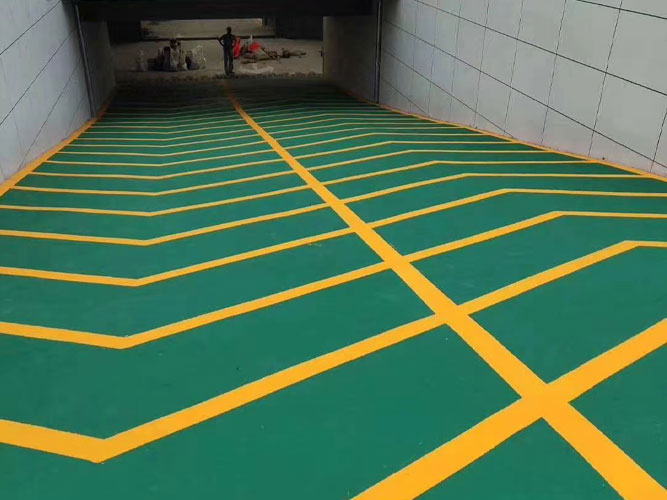
Many colored pavement systems use textured aggregates and high-performance binders that significantly improve grip between tires and the road surface.
This enhanced friction helps reduce skidding on wet, oily, or sloped roads and improves braking stability in emergencies, especially at intersections, ramps, and sharp curves.
Color acts as a fast, intuitive warning system for road users. Unlike signs that require reading and interpretation, colored surfaces communicate instantly.
Bright or contrasting colors alert drivers to hazards, speed changes, or special zones, improving reaction time and reducing sudden driving errors.
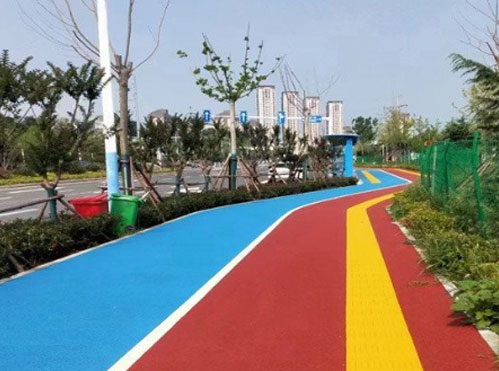
Colored pavement clearly defines different functional road areas, making traffic organization more intuitive.
It helps separate vehicle lanes, bicycle lanes, and pedestrian zones, reducing confusion in complex intersections and lowering the risk of accidental lane violations.
Vulnerable road users benefit greatly from colored anti-slip surfaces.
They improve visibility at crosswalks, increase bicycle traction in wet conditions, and create safer movement zones in school areas, parks, and shared urban spaces.

Clear color coding simplifies decision-making for drivers.
Instead of relying only on signs and markings, drivers can quickly recognize road functions through color, reducing mental workload and improving driving consistency in busy environments.
Colored pavement often provides better contrast than standard asphalt, especially under low light or rain.
This helps road users detect lane boundaries, hazards, and directional changes more clearly, reducing nighttime and weather-related accidents.

Modern cities use colored pavement as part of broader traffic calming and smart city strategies.
It is commonly applied in high-friction surfacing systems for intersections, bus lanes, and cycle tracks, helping create more predictable and safer traffic environments.
Colored pavement improves road safety by combining high friction performance, strong visual guidance, and better traffic organization. It reduces accidents by making roads more readable, more predictable, and more stable for all users—drivers, cyclists, and pedestrians alike.