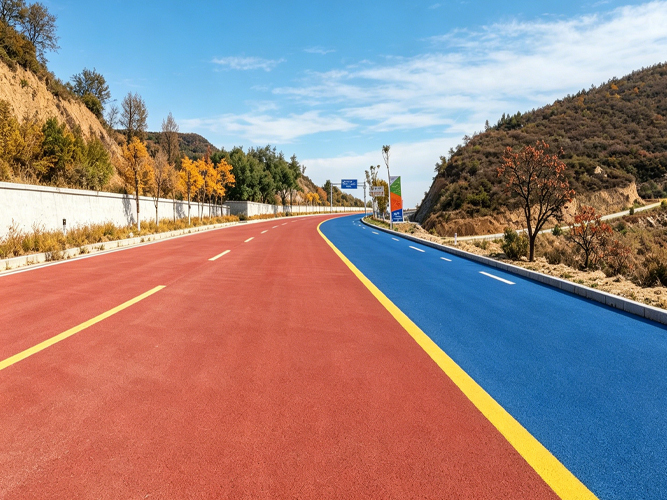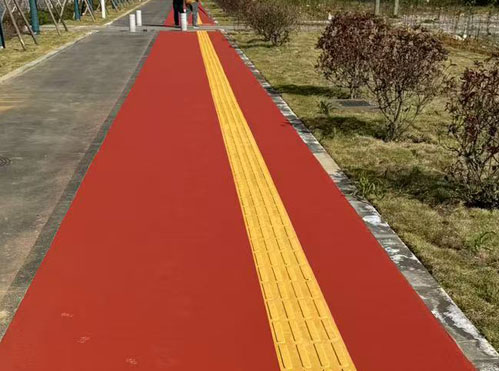
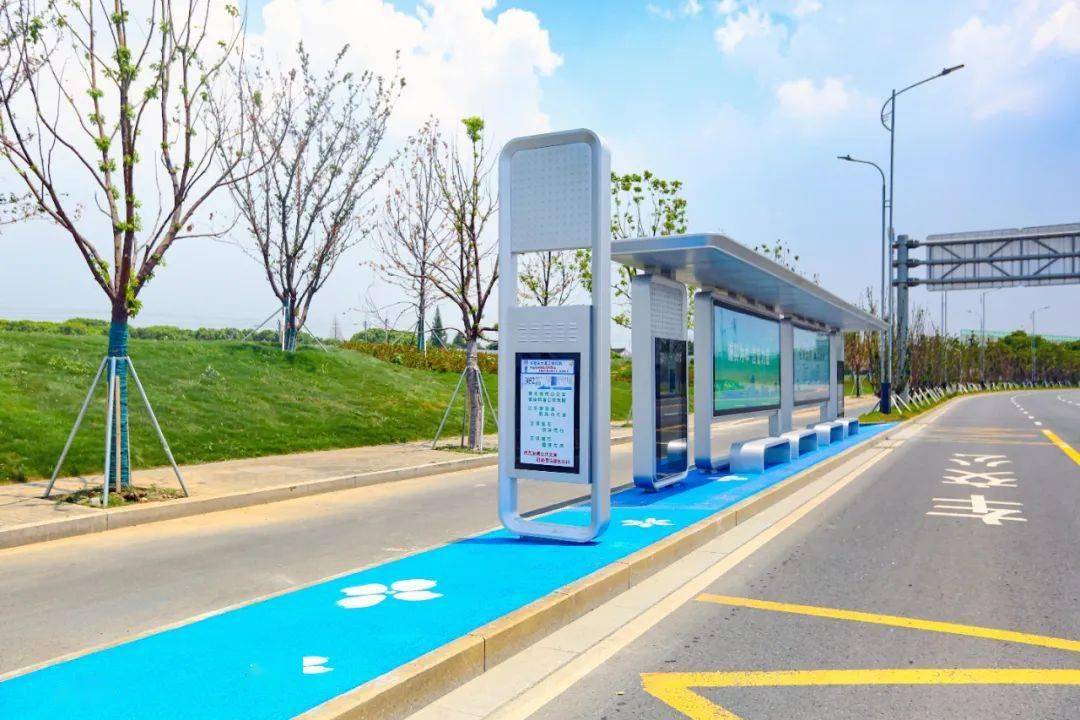
High visibility colored pavement systems are advanced road surfacing solutions designed to improve traffic recognition, enhance safety, and create clear visual guidance in complex transportation environments. These systems are widely used in urban roads, intersections, pedestrian zones, bicycle lanes, highways, and public infrastructure projects where visibility and safety are critical.
High visibility colored pavement systems combine durable resin binders with specially selected pigments and anti-skid aggregates to create a bright, textured surface. Unlike standard asphalt or concrete, these pavements are engineered to stand out visually while maintaining strong friction performance.
Typical system components include:
Colored resin binders (such as epoxy, polyurethane, or MMA-based systems)
UV-stable pigments for long-lasting color clarity
Anti-slip aggregates like ceramic granules or quartz sand
Protective sealing layers for durability
These materials work together to produce a surface that is both visually striking and functionally safe.
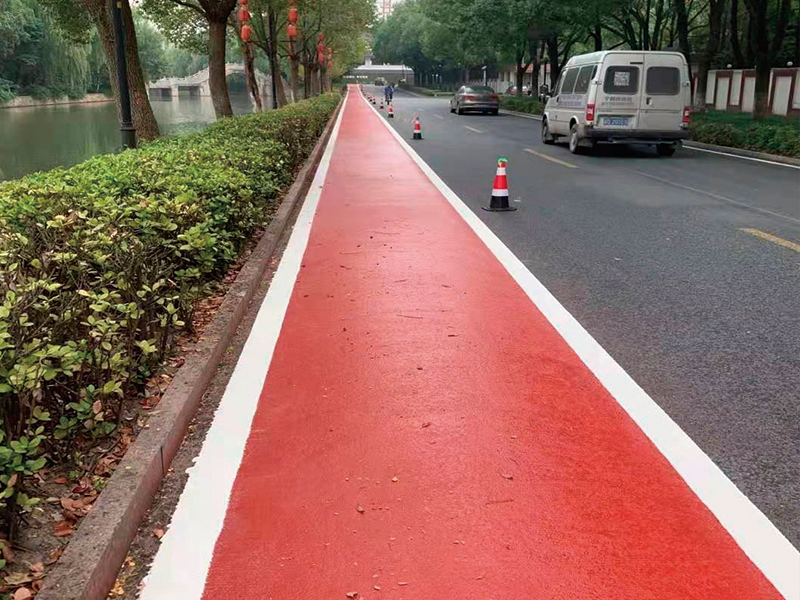
High visibility surfaces help drivers and pedestrians quickly recognize important road zones. This reduces reaction time and improves overall traffic safety, especially in busy or high-risk areas.
Key safety improvements include:
Better lane recognition in complex intersections
Enhanced visibility in low-light or rainy conditions
Reduced accident risk at pedestrian crossings
Clear separation of traffic functions
In addition to visibility, these systems are designed with anti-slip properties that improve traction. The textured surface helps vehicles maintain control during braking, turning, and wet weather conditions.
High-quality colored pavement systems are designed to resist fading caused by UV exposure, traffic wear, and weather conditions. This ensures that the visual guidance remains effective over time.
High visibility colored pavement systems are commonly used in:
City intersections and roundabouts
Pedestrian crossings and school zones
Bicycle lanes and shared mobility corridors
Bus lanes and transit priority routes
Highway ramps and tunnel entrances
Parking areas and logistics facilities
These applications rely on clear visual communication to guide road users efficiently and safely.
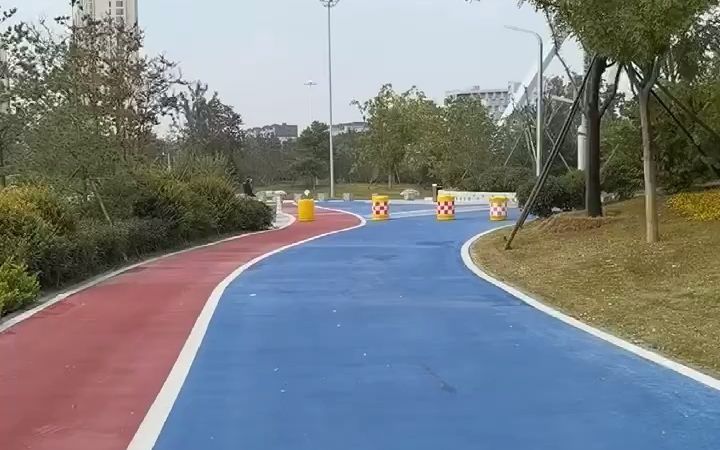
Modern cities increasingly use pavement color as part of their visual language. High visibility systems help organize urban space by creating clear functional zones without relying solely on signage.
For example:
Red for transit priority lanes
Green for cycling networks
Blue for pedestrian-friendly zones
Yellow for warning or conflict areas
This visual coding improves navigation and supports smarter urban planning.
High visibility pavement systems are designed for long-term performance under heavy traffic conditions. They resist:
Abrasion and surface wear
UV radiation and fading
Water penetration and weather damage
Many systems also feature fast-curing technology, allowing quick installation and minimal disruption to traffic flow.
High visibility colored pavement systems play a vital role in modern transportation infrastructure by combining safety, durability, and clear visual communication. They help reduce accidents, improve traffic organization, and enhance the overall functionality of urban and highway environments.
As cities continue to develop smarter and safer road networks, high visibility pavement systems will remain an essential component of modern infrastructure design.