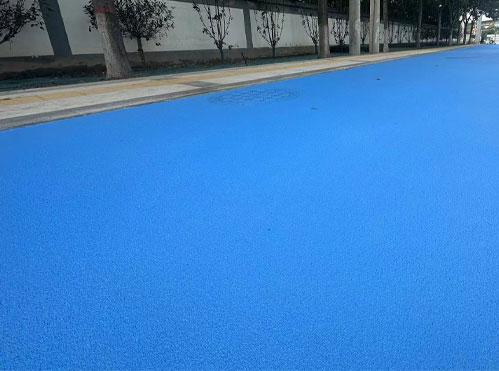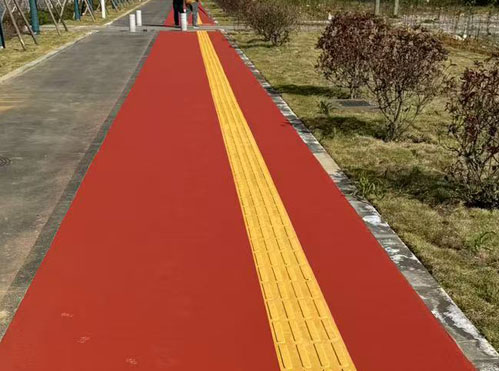
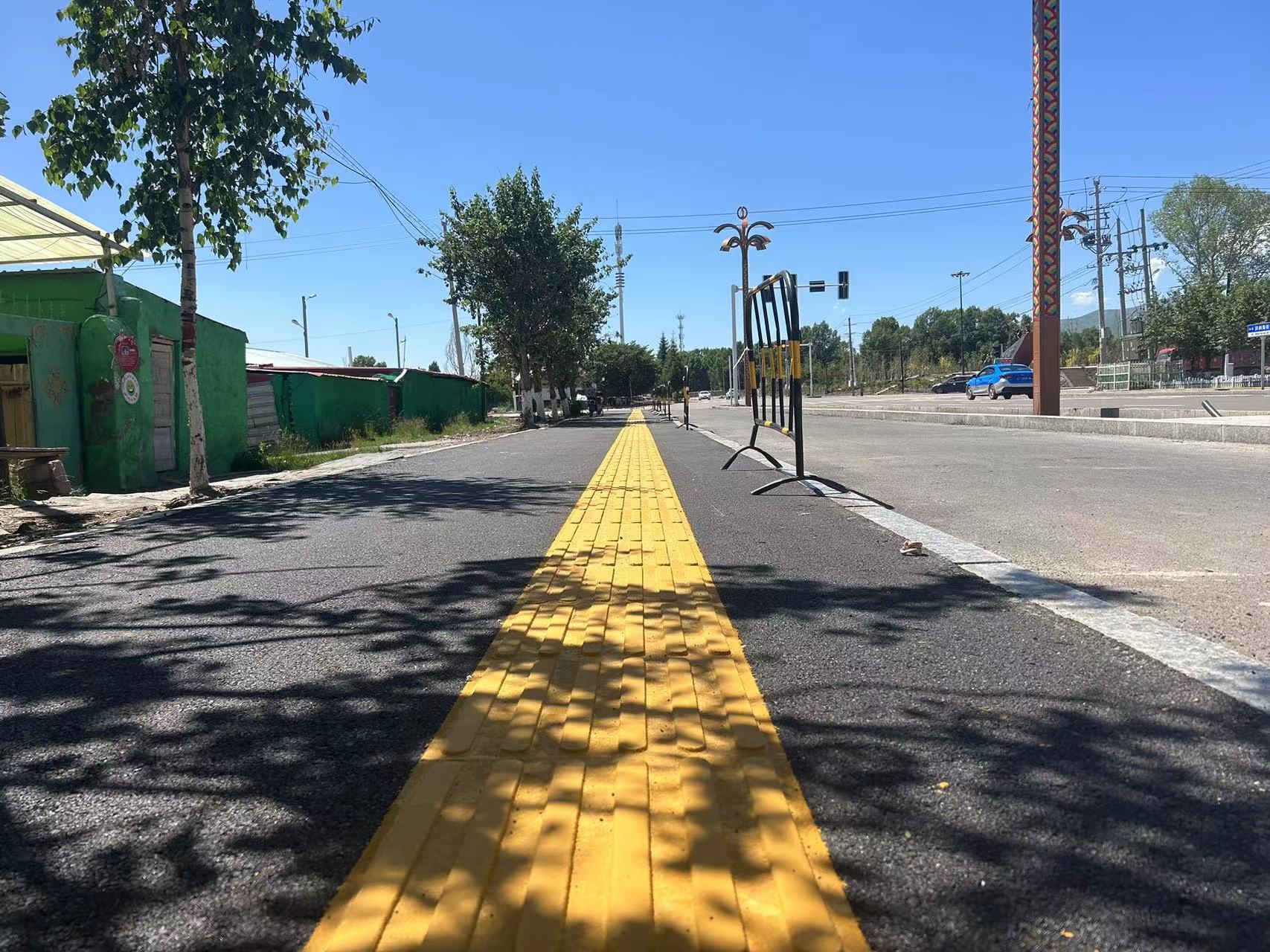
Cast-in-place tactile pavement solutions are widely adopted in modern urban infrastructure to improve accessibility, safety, and long-term durability for visually impaired pedestrians. Unlike prefabricated tiles, these systems are installed directly on-site using durable resin or polymer-modified materials, forming a seamless and integrated tactile surface.
Cast-in-place tactile pavement is a surface guidance system created by forming tactile patterns (such as blister or directional bars) directly on existing concrete or asphalt surfaces. It is typically made using:
High-strength resin binders (epoxy, polyurethane, or MMA systems)
Colored anti-slip aggregates
UV-stable pigments
Wear-resistant additives
Once cured, the surface becomes a permanent, textured guidance system embedded into the pavement structure.
Cities choose cast-in-place systems because they offer significantly better durability compared to traditional tile-based tactile blocks.
Key durability advantages:
Strong bond to substrate (no detachment or lifting)
Resistance to heavy pedestrian traffic
Reduced damage from weather cycles
High abrasion resistance in public areas
This makes them ideal for high-traffic urban environments such as sidewalks, stations, and crossings.
The primary purpose of tactile pavement is to provide directional and warning cues for visually impaired pedestrians. Cast-in-place systems deliver clearer and more consistent tactile feedback.
Benefits include:
Strong and uniform tactile patterns
Better slip resistance in wet conditions
Consistent guidance across long pathways
Reduced tripping hazards compared to loose tiles
This improves accessibility compliance and pedestrian safety.
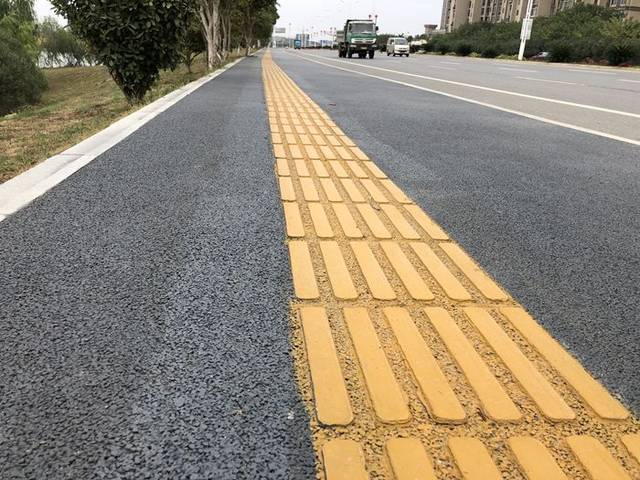
Unlike prefabricated tiles that can create uneven joints, cast-in-place systems form a continuous surface.
Advantages:
No gaps or loose edges
Smooth transition with surrounding pavement
Reduced maintenance issues
Better overall aesthetic integration
This is especially important in modern city design where visual continuity matters.
Cast-in-place tactile pavement systems require minimal maintenance after installation.
Reasons include:
No individual tile replacement needed
High resistance to cracking and displacement
Long service life under continuous use
Easy surface cleaning and upkeep
This reduces long-term maintenance costs for municipalities.
Modern resin-based systems allow relatively fast installation and curing, minimizing disruption in busy urban areas.
Installation benefits:
On-site forming without prefabrication delays
Rapid curing (especially MMA-based systems)
Suitable for nighttime or phased construction
Adaptable to complex urban layouts
Urban pavements are exposed to rain, UV radiation, de-icing salts, and pollution. Cast-in-place systems are engineered to withstand these conditions.
They resist:
UV degradation and color fading
Water infiltration and freeze-thaw cycles
Chemical exposure from cleaning agents or salts
Surface wear from continuous foot traffic
Cities adopt cast-in-place tactile systems to meet international accessibility regulations and universal design standards.
They support:
Safer navigation for visually impaired pedestrians
Standardized tactile patterns for consistency
Inclusive urban mobility planning
Improved public infrastructure compliance
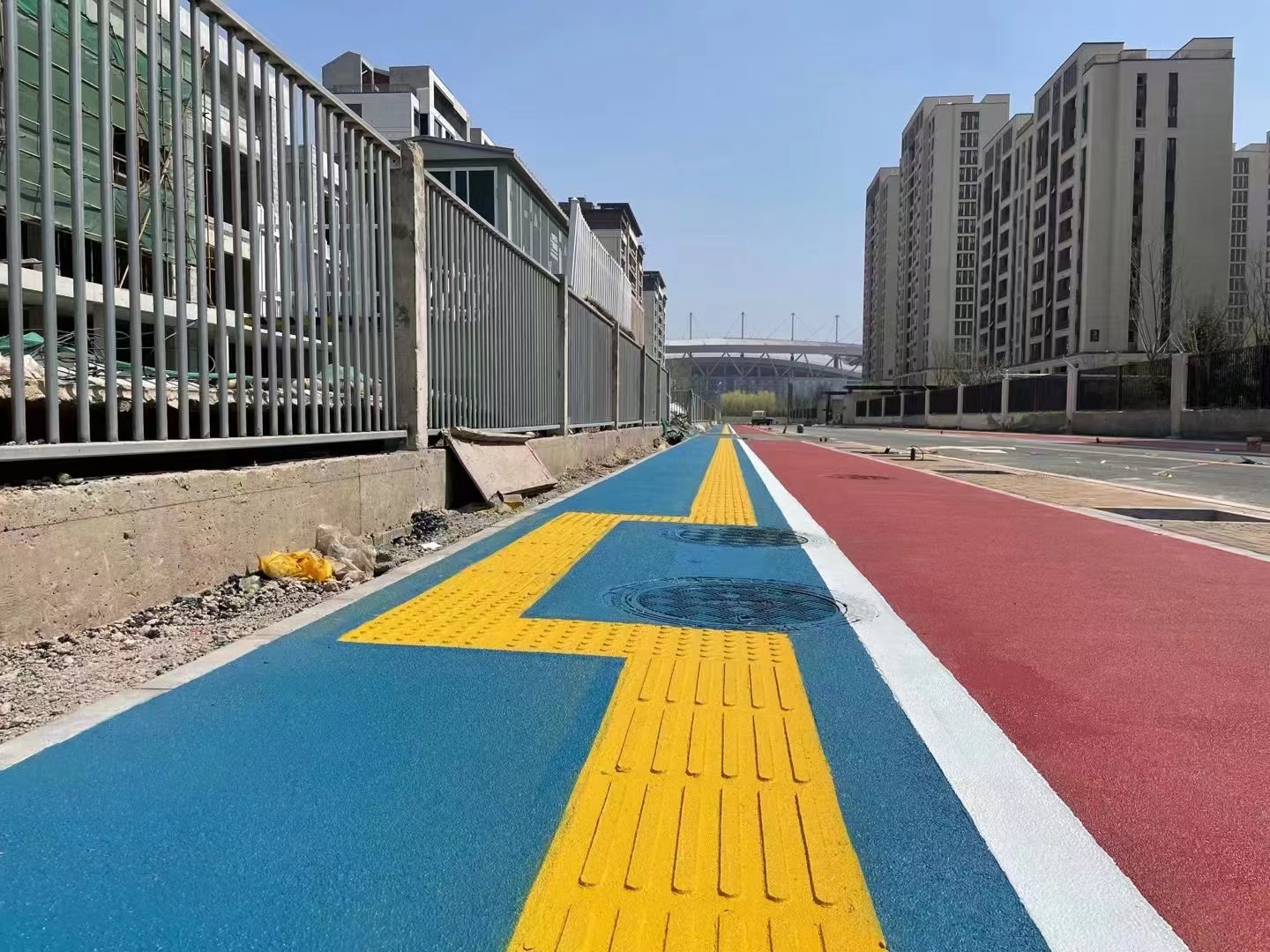
Because they are formed directly on-site, these systems can easily adapt to irregular shapes and complex street designs.
Common applications include:
Transit stations and platforms
Busy intersections and crossings
Public plazas and civic spaces
Curved walkways and ramps
Cities choose cast-in-place tactile pavement solutions because they offer a durable, seamless, low-maintenance, and highly accessible surface system that enhances urban inclusivity and pedestrian safety. Their strong performance under heavy use and harsh environmental conditions makes them a preferred choice for modern urban infrastructure development.
As cities continue to prioritize accessibility and smart urban design, cast-in-place tactile systems are becoming an essential component of inclusive and sustainable public space planning.