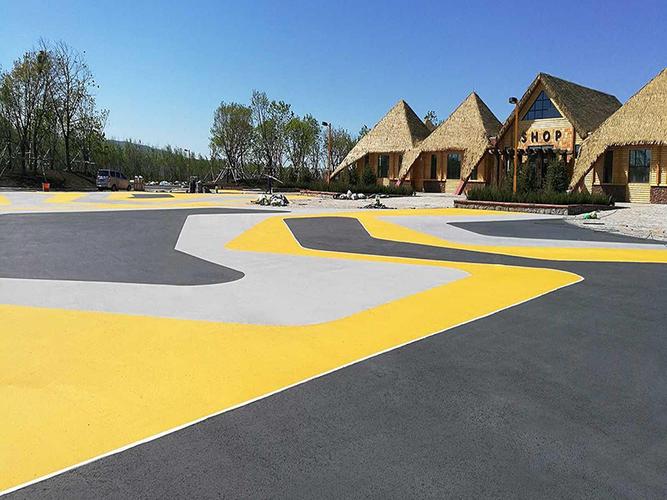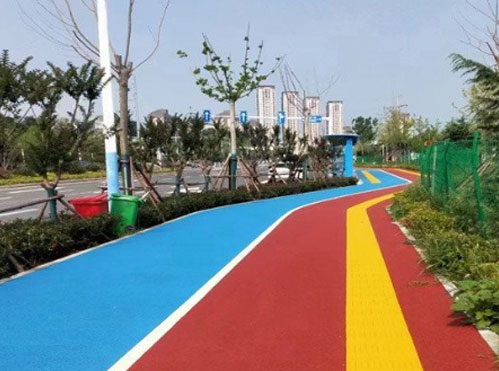

Water-based EAU pavement is an advanced road surfacing system designed to improve traffic safety, enhance skid resistance, and support sustainable infrastructure development. As cities focus more on reducing road accidents and improving mobility efficiency, high-friction surfacing technologies like EAU pavement are becoming widely used in urban roads, bicycle lanes, pedestrian crossings, ramps, and bridges.
This system combines waterborne resin technology with high-performance aggregates to create a durable colored anti-skid surface that improves both visibility and driving safety.
Water-based EAU pavement is a type of waterborne anti-skid surfacing material applied to existing asphalt or concrete roads. It uses a water-based polymer binder combined with mineral or ceramic aggregates to form a rough, high-friction surface layer.
Once applied, it creates a strong bonding layer that enhances tire grip and reduces the risk of skidding, especially in wet or high-traffic conditions.
Compared with traditional solvent-based coatings, water-based EAU systems are more environmentally friendly and produce lower emissions during installation.
The system works by increasing surface texture and micro-roughness on the road. The key mechanism includes:
Water-based resin binds strongly to the pavement surface
High-friction aggregates are embedded into the coating
Surface texture increases tire-road contact grip
Water dispersion reduces environmental impact during application
This combination results in a durable anti-skid layer that improves both safety and performance.
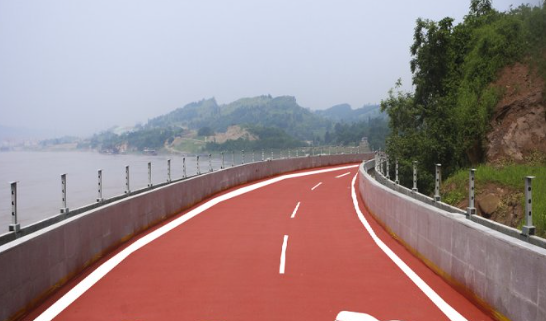
One of the main advantages is its excellent skid resistance. The textured surface significantly improves tire grip, helping reduce braking distance and lowering accident risks in:
Wet road conditions
Sharp curves
Intersections
Slopes and ramps
Because the system can be produced in different colors, it enhances road recognition and traffic zoning. This helps drivers and pedestrians clearly identify:
Bicycle lanes
Pedestrian crossings
Bus lanes
Safety warning zones
Water-based EAU pavement uses water as the dispersion medium, which reduces VOC emissions and supports sustainable construction practices. It is suitable for green city development and environmentally regulated projects.
The system can be quickly applied with minimal road closure time. It is ideal for urban environments where traffic disruption must be minimized.
The combination of polymer binders and high-quality aggregates ensures strong resistance to:
UV exposure
Heavy traffic wear
Weather changes
Water and moisture damage
Water-based EAU anti-skid pavement is widely used in modern infrastructure projects, including:
Urban intersections and crossroads
Bicycle lanes and cycling networks
Pedestrian crossings and sidewalks
Bridge decks and ramps
Parking areas and access roads
School and hospital zones
Bus priority lanes
These applications help improve safety in both vehicle and pedestrian traffic environments.
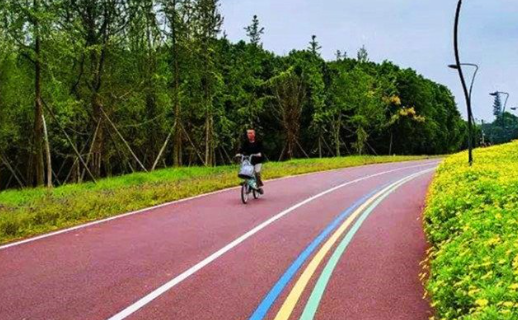
Urban planners and transportation departments are increasingly adopting water-based EAU pavement because it offers a combination of:
Road safety improvement
Environmental compliance
Cost-effective maintenance
Visual traffic guidance
Long service life
It is especially effective in areas with high accident risk or heavy traffic flow.
As road engineering continues to evolve, water-based EAU pavement technology is expected to improve in several areas:
Higher durability formulations
Faster curing materials
Better color stability under UV exposure
Enhanced anti-skid performance
Greater adaptability to extreme climates
These improvements will further strengthen its role in smart and sustainable city infrastructure.
Water-based EAU pavement is a high-performance anti-skid surfacing solution that combines safety, durability, and environmental benefits. Its ability to improve road friction, enhance visibility, and support sustainable construction makes it an important material for modern traffic safety systems.
As demand for safer and greener infrastructure continues to grow, EAU pavement systems will play a key role in shaping the future of urban road design.