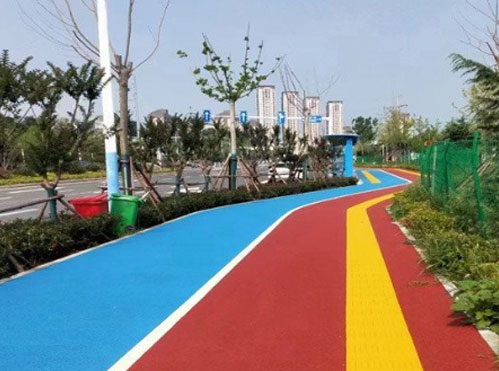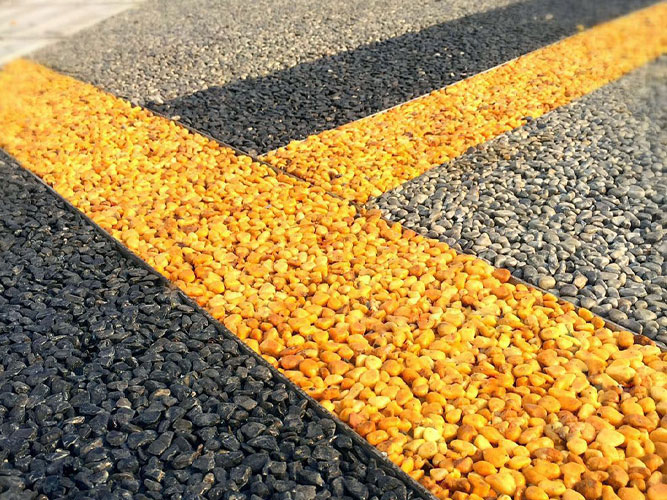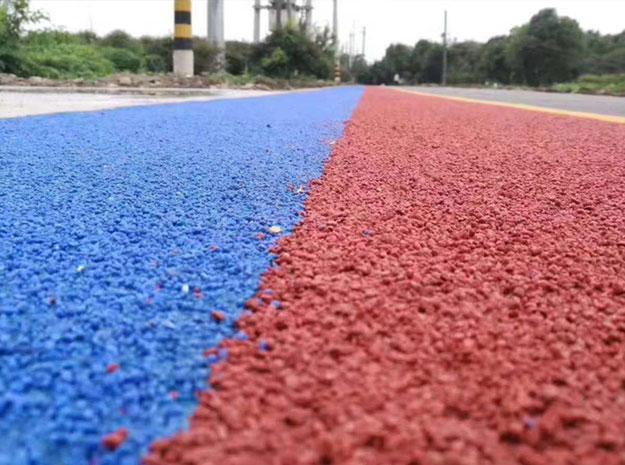
Colored pavement plays an increasingly important role in modern urban infrastructure projects. As cities continue to expand and traffic density increases, governments and engineers are looking for safer, more durable, and visually effective road surface solutions. Colored pavement systems provide both functional and aesthetic advantages, making them widely used in urban roads, pedestrian areas, bicycle lanes, parking facilities, and public transportation systems.
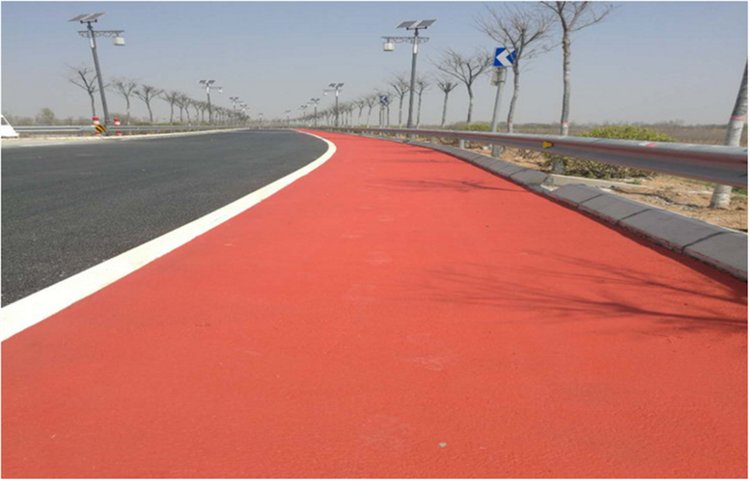
One of the key benefits of colored pavement is improved traffic safety. Bright and highly visible surfaces help drivers, cyclists, and pedestrians quickly identify different traffic zones. For example, red or green pavement is commonly used for bicycle lanes, while yellow or textured surfaces are often applied at pedestrian crossings, school zones, and bus stops. These visual distinctions improve traffic guidance and reduce the risk of accidents.
Colored pavement also enhances skid resistance. Many systems incorporate high-friction aggregates such as ceramic particles or quartz sand, which improve vehicle traction in wet or high-traffic conditions. This makes colored anti-slip pavement especially suitable for ramps, intersections, bridges, tunnels, and curved roads where braking performance is critical.

In addition to safety, colored pavement contributes to urban beautification and smart city development. Decorative road surfaces create cleaner and more organized public spaces while improving the overall appearance of urban infrastructure. Modern materials such as MMA resin, epoxy coatings, and water-based environmentally friendly binders offer strong durability, UV resistance, and weather stability, ensuring long service life with minimal maintenance.
Another major advantage is construction efficiency. Many colored pavement systems feature rapid curing and fast installation, minimizing traffic disruption during road maintenance projects. This is particularly important in busy urban environments where reducing downtime is essential.
As sustainable transportation and urban safety become global priorities, colored pavement continues to gain popularity in infrastructure engineering. Its combination of visibility, durability, anti-slip performance, and environmental adaptability makes it an ideal solution for modern cities seeking safer and smarter transportation networks.