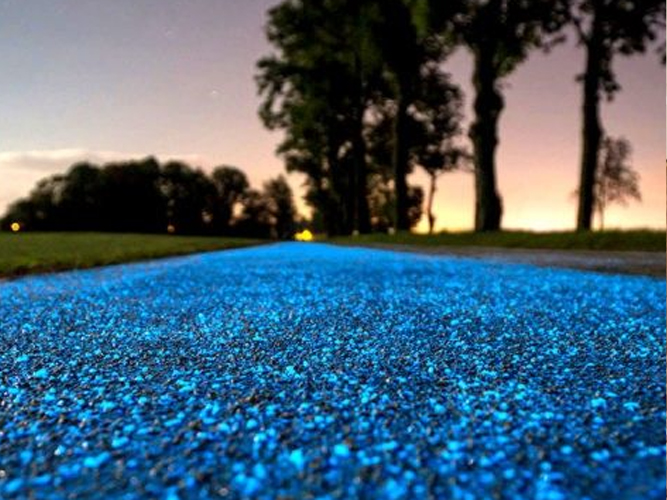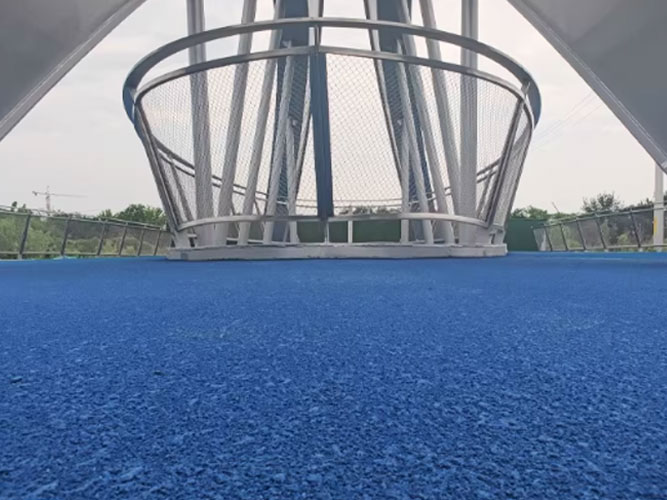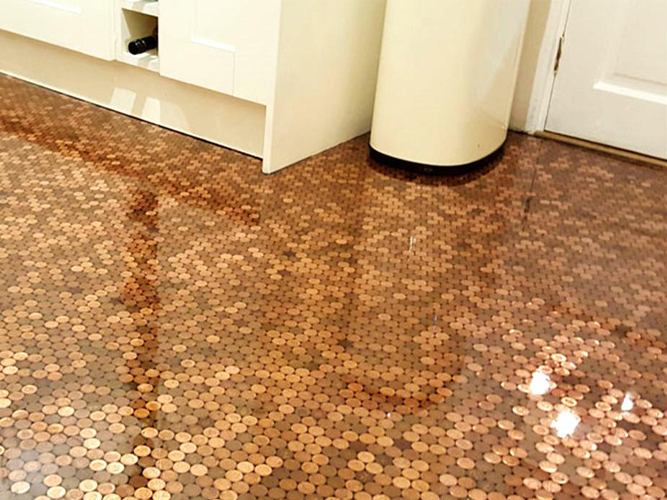
Colored anti-slip pavement solutions are advanced surface systems designed to improve road safety, enhance visual guidance, and provide long-lasting skid resistance in urban and traffic environments. They are widely used on highways, intersections, bicycle lanes, pedestrian crossings, ramps, bridges, parking areas, and public spaces where both safety and visibility are important.
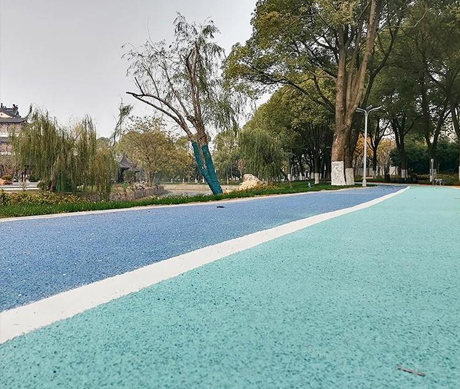
The core function of colored anti-slip pavement is to increase surface friction while adding clear color identification. By using high-performance resin binders combined with anti-skid aggregates such as ceramic particles, quartz sand, or silica, the pavement forms a rough textured surface that improves tire grip and reduces the risk of slipping or skidding, especially in wet or rainy conditions.
Color is a key advantage of these solutions. Different colors such as red, green, blue, and yellow are used to define traffic zones and guide road users. For example, green is often applied to bicycle lanes, red to bus lanes or danger zones, and yellow to warning or slow-down areas. This visual differentiation helps improve driver awareness and reduces traffic confusion in complex urban environments.
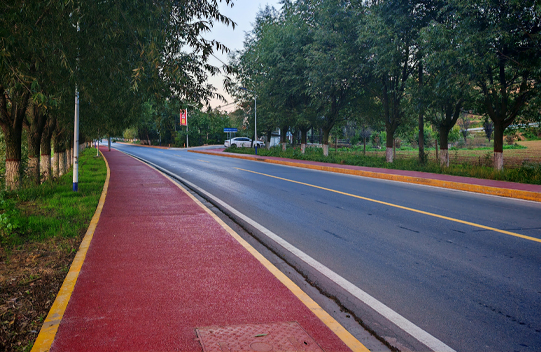
Another important benefit is durability. Modern colored anti-slip systems use advanced materials such as MMA, epoxy, or polyurethane resins, which provide strong adhesion, UV resistance, and long-term wear performance. Even under heavy traffic and harsh weather conditions, the surface maintains both its color and anti-slip properties.
These systems also support fast construction and quick curing, allowing roads to reopen shortly after application. This reduces traffic disruption and makes them suitable for busy city maintenance projects. In addition, water-based and low-emission formulations are increasingly used to support environmentally friendly construction practices.
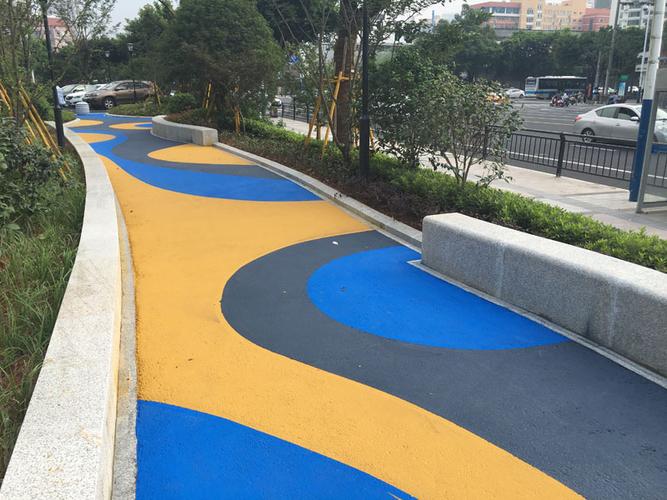
Colored anti-slip pavement solutions also contribute to accident prevention. By combining high friction with clear visual signals, they improve braking performance, guide traffic flow, and enhance pedestrian safety. This is especially important in intersections, school zones, and high-risk urban areas.
Overall, colored anti-slip pavement solutions provide a comprehensive approach to modern road safety, combining functionality, durability, and visual communication. They are an effective and sustainable choice for improving transportation infrastructure and creating safer urban environments.