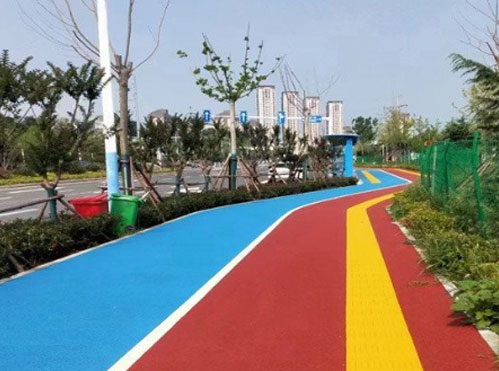
Cast-in-place tactile paving is an important accessibility solution used in modern urban infrastructure to assist visually impaired pedestrians and improve public safety. Installed directly into concrete surfaces during construction, this tactile system creates raised patterns that provide detectable guidance and warning signals through foot contact or the use of a cane.
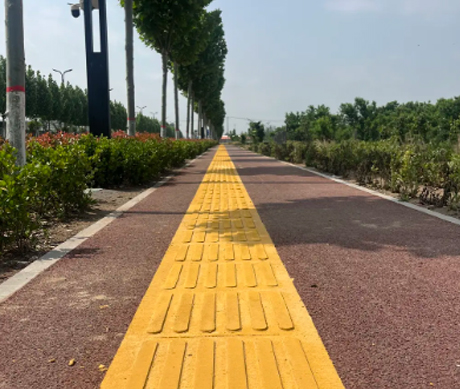
Unlike surface-applied tactile tiles, cast-in-place tactile paving becomes an integrated part of the pavement structure. This provides stronger durability, improved bonding strength, and long-term resistance to wear, weather, and heavy pedestrian traffic. Because the tactile indicators are embedded into the concrete, they are less likely to loosen, crack, or detach over time.
The two most common tactile patterns are warning dots and directional bars. Warning dots are typically installed at pedestrian crossings, platform edges, stairs, and curb ramps to alert pedestrians of potential hazards or changes in walking conditions. Directional bars guide users along safe travel paths in public areas such as sidewalks, transportation hubs, parks, and commercial districts.
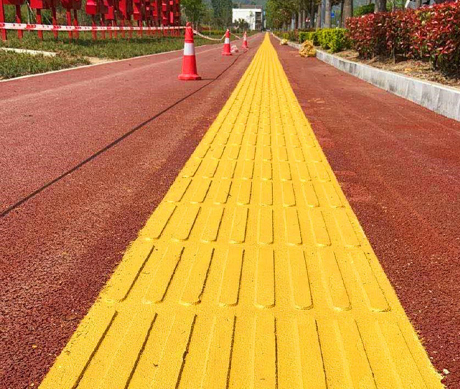
Cast-in-place tactile paving is widely used in accessible urban projects, including railway stations, airports, bus terminals, schools, hospitals, shopping centers, and public walkways. It plays a critical role in helping cities comply with accessibility standards and universal design principles while creating safer and more inclusive public environments.
Durability is one of the major advantages of cast-in-place systems. Materials commonly used include stainless steel, polyurethane, thermoplastic compounds, and reinforced concrete components. These materials offer excellent resistance to UV exposure, moisture, temperature changes, and continuous pedestrian use.
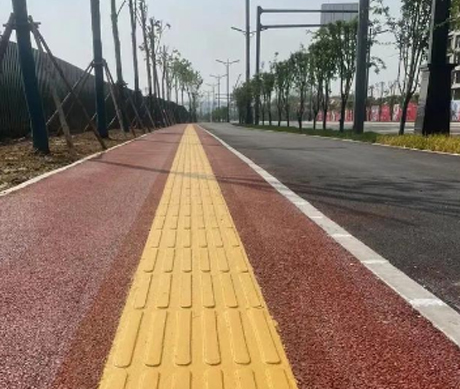
In addition to functionality, tactile paving can also contribute to urban aesthetics. Modern systems are available in various colors and finishes that integrate with surrounding pavement designs while maintaining strong visual contrast for partially sighted users.
As cities continue to focus on inclusive design and barrier-free infrastructure, cast-in-place tactile paving remains a reliable and long-lasting solution for improving accessibility, pedestrian guidance, and public safety in modern urban environments.