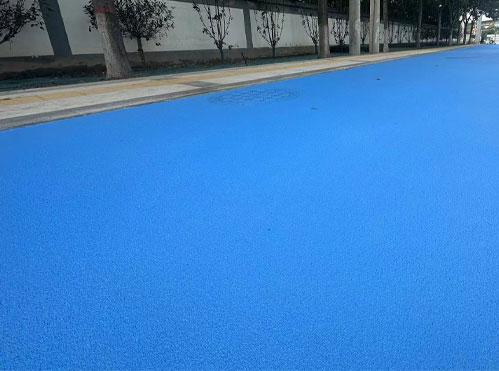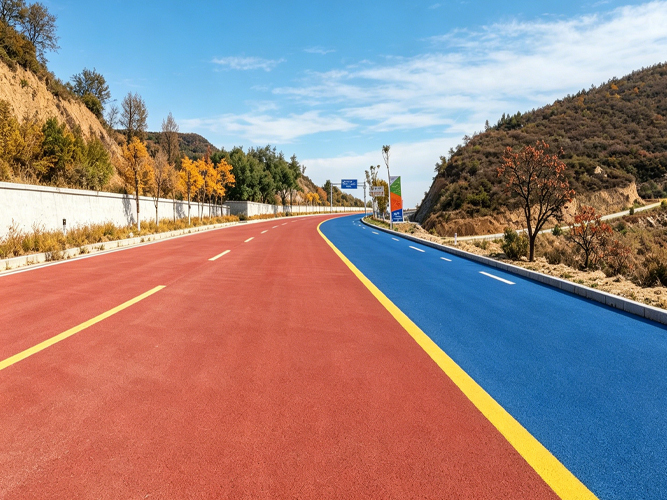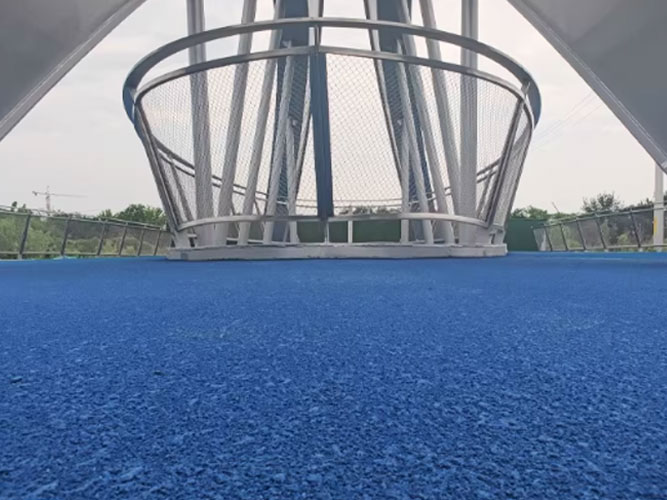
Colored pavement solutions are advanced surfacing systems designed to improve safety, traffic organization, durability, and visual identity in modern infrastructure. They are widely used in urban roads and bridges where traffic density is high and clear guidance is essential for reducing accidents and improving mobility efficiency.
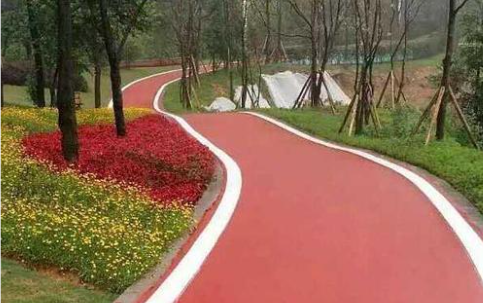
These systems typically use resin-based binders (such as MMA, epoxy, or polyurethane), high-friction aggregates, and UV-resistant pigments to create long-lasting colored and anti-slip surfaces.
In cities, roads must handle multiple types of users—cars, buses, bicycles, and pedestrians. Colored pavement helps separate and define these traffic zones clearly.
Key safety benefits include:
Improved visibility of lanes and crossings
Better driver awareness in complex intersections
Reduced confusion in multi-lane urban environments
Clear separation of vehicle and non-vehicle zones
Bright color coding (such as red, green, and blue) helps drivers instantly recognize road functions, reducing reaction time and improving overall safety.
Many colored pavement systems are designed with anti-skid aggregates that significantly improve surface friction. This is especially important in urban roads where sudden stops, turns, and congestion are common.
High-friction surfaces help:
Reduce braking distance
Improve tire grip in wet conditions
Prevent skidding on curves and intersections
Increase control on downhill or sloped roads
This makes colored pavement an important tool for reducing urban traffic accidents.
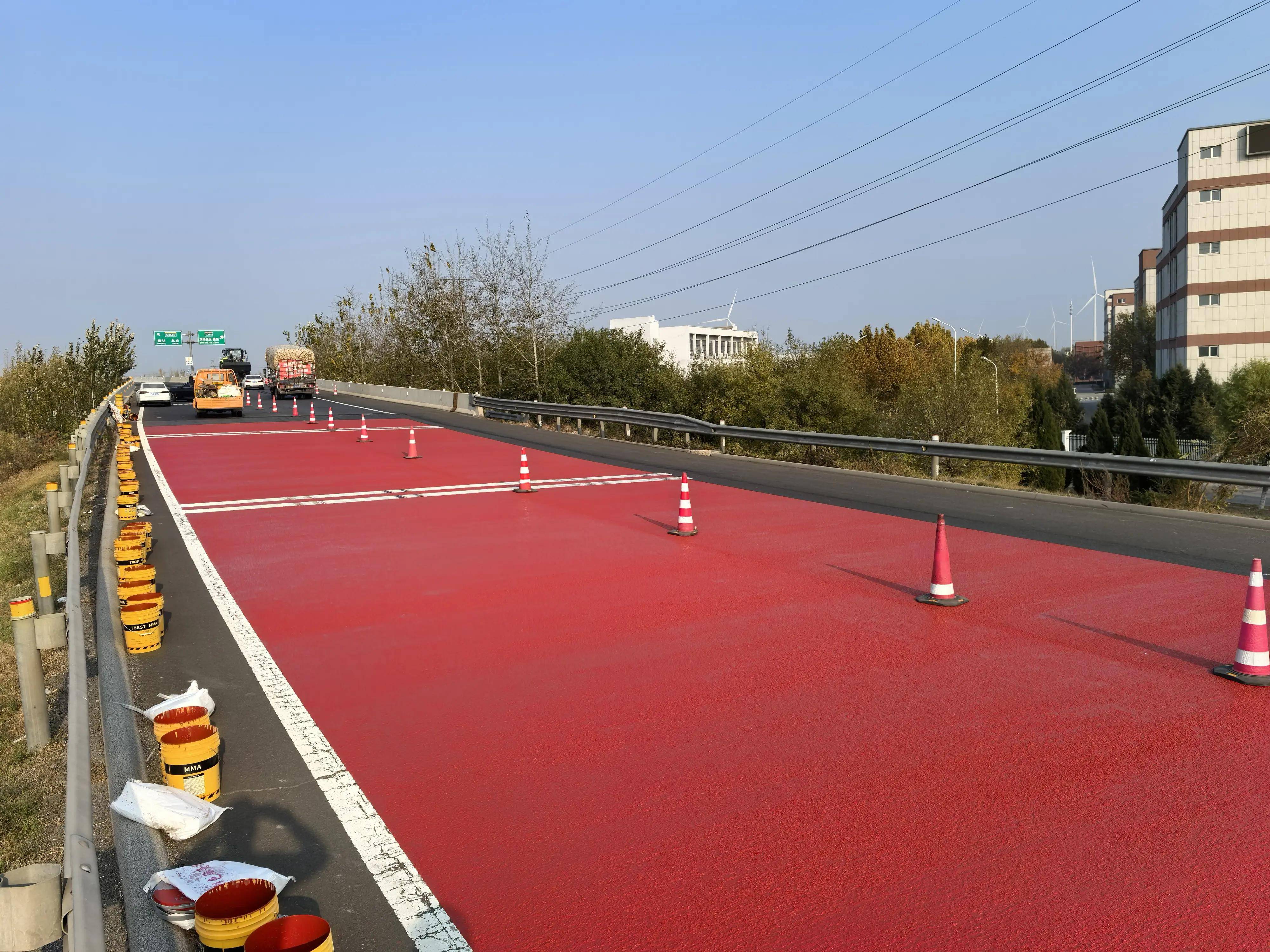
Bridges present unique challenges because they are exposed to wind, moisture, temperature changes, and constant vibration from traffic. Colored pavement solutions are particularly effective in these environments.
On bridges, they provide:
Strong anti-skid performance for wet conditions
Clear lane visibility in fog, rain, or low light
Protection against surface wear and water penetration
Improved driver guidance on elevated structures
They are commonly applied on bridge decks, ramps, and expansion joint zones where safety risks are higher.
Modern cities use colored pavement as part of smart traffic management systems. It helps organize transportation flow and improve infrastructure readability.
Common applications include:
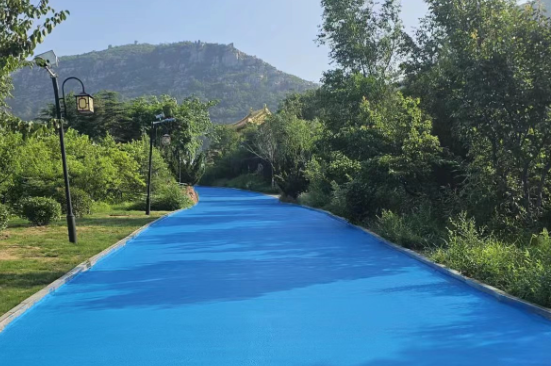
Bicycle lanes (green/red colored surfaces)
Bus priority lanes
Pedestrian crossings and safety zones
Roundabouts and conflict areas
Smart city corridor markings
This visual structure helps create a more intuitive and efficient transportation network.
Colored pavement systems are designed to withstand heavy traffic and environmental stress. Using polymer-modified binders and durable aggregates, they maintain performance over time.
Key durability features:
Resistance to UV fading
Strong adhesion to asphalt and concrete
High wear resistance under heavy loads
Stability under temperature changes
This ensures long service life with reduced maintenance requirements.
Many modern colored pavement systems, especially MMA-based solutions, offer fast curing times. This allows roads and bridges to reopen quickly after application.
Advantages include:
Short construction downtime
Night-time installation capability
Reduced traffic disruption
Efficient maintenance operations
This is particularly important for busy urban highways and bridge corridors.
Colored pavement supports sustainable infrastructure development by:
Extending pavement service life
Reducing need for full reconstruction
Using low-VOC or water-based systems
Lowering long-term maintenance resource consumption
These benefits align with green city and low-carbon transportation goals.
Colored pavement solutions for urban roads and bridges provide a powerful combination of safety enhancement, traffic organization, durability, and visual clarity. By improving skid resistance and clearly defining road functions, they help reduce accidents and improve mobility efficiency. At the same time, their durability and design flexibility make them an essential component of modern urban infrastructure and smart city development.