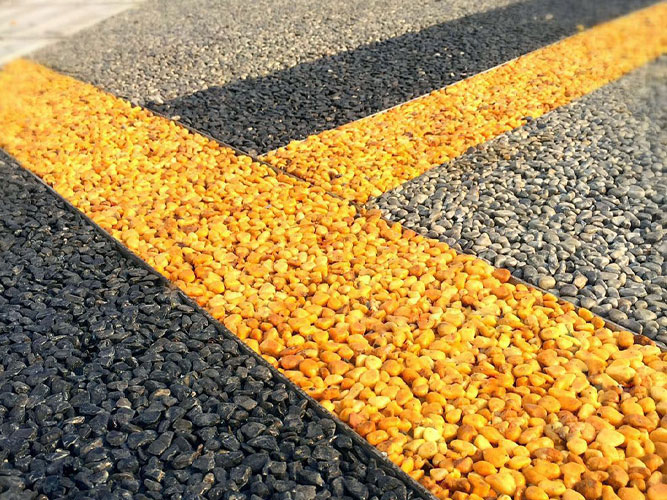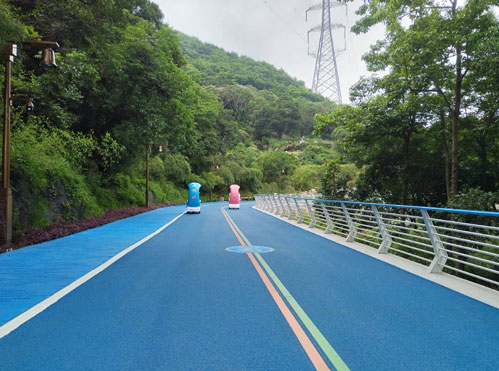
Cast-in-place tactile pavement is a widely used solution in modern urban infrastructure designed to improve accessibility, safety, and navigation for visually impaired pedestrians. Unlike preformed tiles, this system is installed directly on-site using specialized materials that are poured, formed, and textured in place, allowing seamless integration with surrounding pavement surfaces.
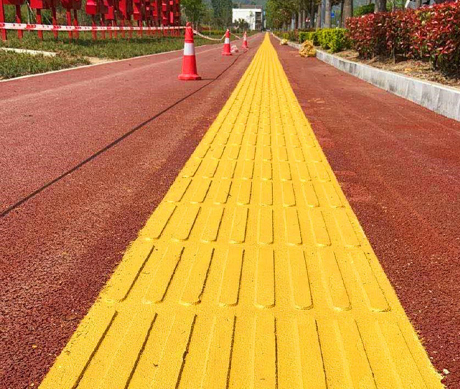
It is commonly used in public areas such as sidewalks, crosswalks, transit stations, plazas, and building entrances where durability and precision are essential.
Cast-in-place tactile pavement is a surface system created by applying a liquid or semi-liquid base material (often resin-based or modified concrete) directly onto prepared pavement. While still workable, tactile patterns are formed using molds or stamping tools to create raised warning or directional textures.
Common materials include:
MMA resin systems
Polyurethane or epoxy binders
Modified cementitious compounds
Colored aggregates and pigments
This method ensures a strong bond with the base surface and a long-lasting tactile structure.
Because it is installed directly on-site, cast-in-place tactile pavement:
Eliminates gaps or loose edges
Provides a smooth transition with surrounding surfaces
Reduces trip hazards for pedestrians
Improves overall visual uniformity
This makes it ideal for high-traffic public environments.
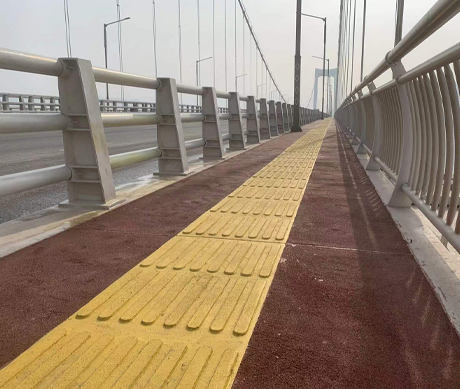
Cast-in-place systems are designed to withstand continuous pedestrian movement and outdoor exposure.
Performance benefits include:
Strong adhesion to concrete and asphalt
Resistance to cracking and peeling
High abrasion resistance under heavy foot traffic
Long service life with minimal maintenance
Modern formulations are engineered to perform in various climates:
UV resistance for long-term outdoor use
Water resistance to prevent surface degradation
Stability under temperature changes
Resistance to freeze-thaw cycles in colder regions
Cast-in-place tactile pavement typically includes two main patterns:
These linear raised strips guide pedestrians along safe routes, commonly used in:
Sidewalk pathways
Transit corridors
Large public plazas
Dome or blister-shaped textures indicate hazards such as:
Road crossings
Platform edges
Stairways
Sudden level changes
The existing surface is cleaned and repaired to ensure proper adhesion. Dust, oil, and loose materials must be removed.
A bonding primer is applied to improve adhesion between the substrate and tactile material.
The cast material (resin or modified compound) is poured and evenly spread over the designated area.
Special molds or stamping tools are used to form tactile patterns while the material is still workable.
The surface is left to cure. In fast-curing systems like MMA, this may take only a few hours before reopening to pedestrians.
Cast-in-place tactile pavement is widely used in:
Urban sidewalks and pedestrian walkways
Crosswalks and intersection approaches
Bus stops and transit stations
Metro and train platforms
Public squares and commercial areas
Government and institutional buildings
This system plays a critical role in universal accessibility by:
Helping visually impaired pedestrians navigate independently
Providing clear warnings of hazards and boundaries
Improving pedestrian safety in crowded environments
Supporting inclusive urban design standards
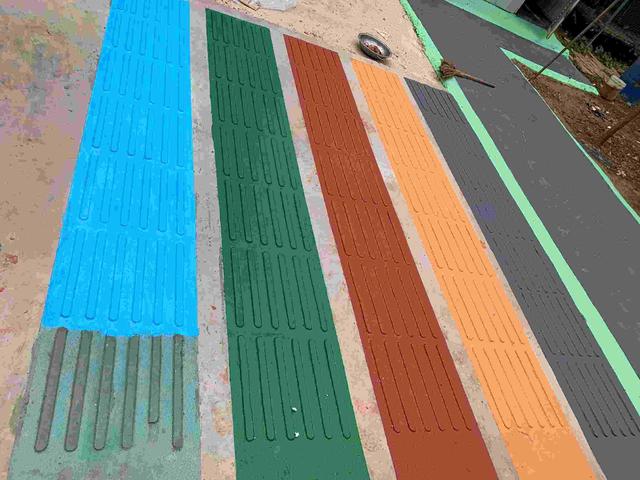
Compared with pre-made tactile tiles, cast-in-place systems offer:
Better surface continuity
Stronger bonding with substrate
Fewer edge failures or displacement issues
Greater design flexibility for complex layouts
Improved durability in high-traffic zones
Cast-in-place tactile pavement is an essential solution for creating safe, accessible, and inclusive public environments. Its seamless installation, high durability, and strong tactile performance make it ideal for modern urban infrastructure. As cities continue to prioritize universal accessibility, this system plays a key role in ensuring that public spaces are safe and navigable for all users.