Construction Technology of Color Emulsified Micro-surfacing
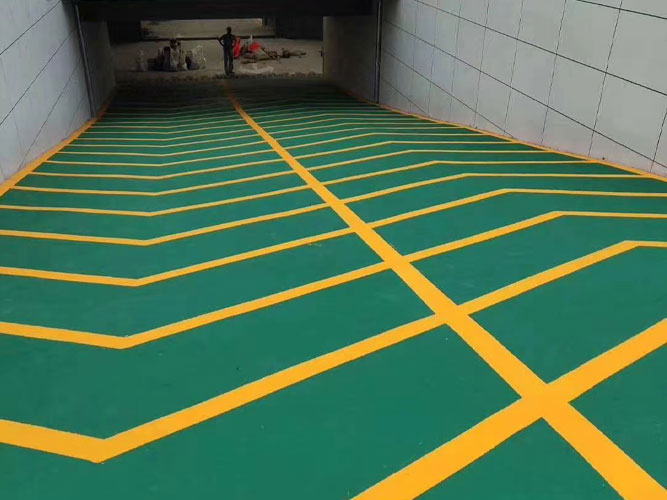
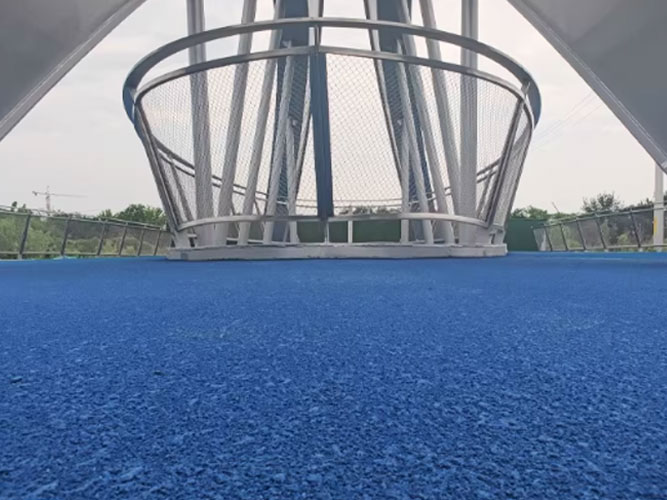
Color emulsified micro-surfacing is a cold-applied, fast-curing pavement technology used for road maintenance, anti-skid improvement, and functional color zoning. Its construction process requires strict control of materials, equipment, and environmental conditions to ensure durability, uniform color, and long-term performance.
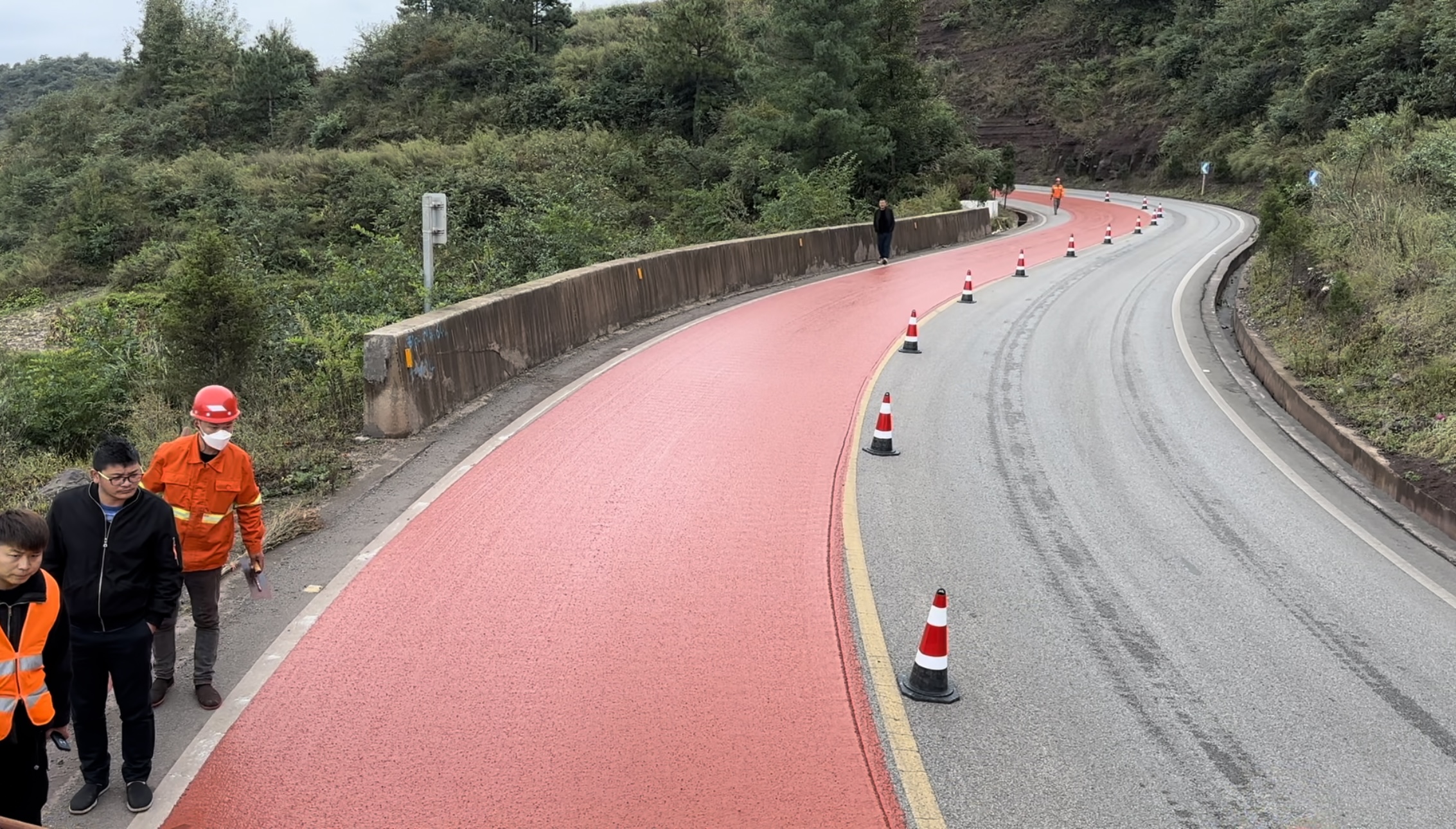
Before construction, the existing pavement must be properly prepared to ensure good bonding.
Clean dust, oil stains, loose particles, and debris
Repair potholes, cracks, and damaged areas
Ensure the surface is dry and structurally stable
Apply tack coat if needed to improve adhesion
A clean and firm base is essential for preventing peeling and early failure.
The performance of the system depends on a well-balanced mix design.
Main components include polymer-modified asphalt emulsion, high-quality aggregates, mineral filler, water, pigments, and additives.
The formulation must achieve good workability, fast setting, strong adhesion, high friction, and stable color performance. UV-resistant pigments are typically used to reduce fading.
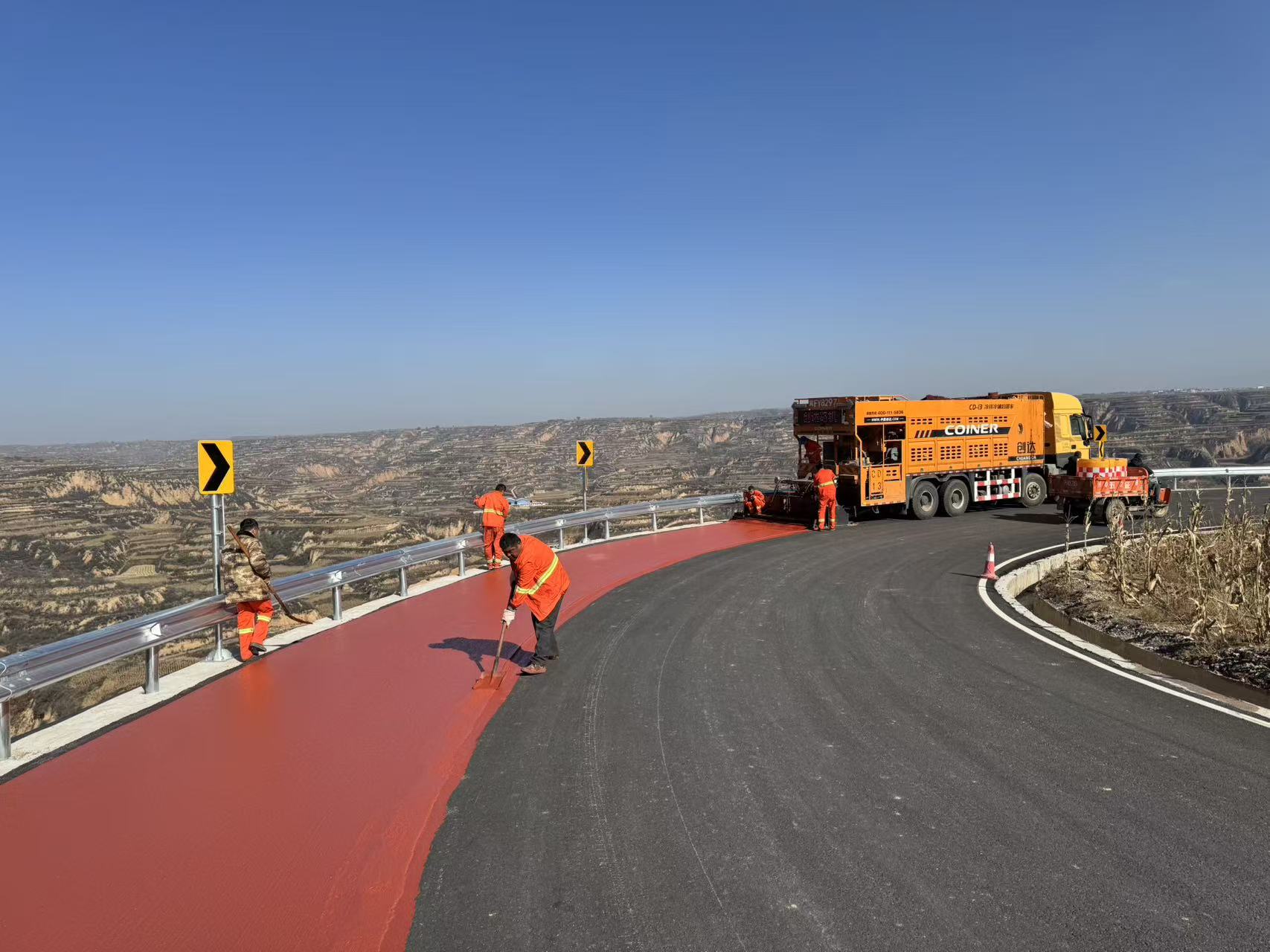
Specialized micro-surfacing pavers are used for construction. Before operation, all systems must be calibrated.
Aggregate and emulsion flow rates
Water and filler proportion control
Mixing consistency in the blending chamber
Spreader box width and leveling accuracy
Proper calibration ensures uniform thickness and consistent surface texture.
The construction is carried out in a continuous process.
Aggregates, emulsion, water, filler, and pigments are fed into the mixer at controlled ratios. The mixture is fully blended and immediately discharged into the spreader box. It is then evenly distributed onto the pavement to form a thin wearing layer, usually 5–15 mm thick depending on design requirements.
After application, the emulsion breaks and begins to cure. Water evaporates and the mixture gradually transforms into a solid layer. Initial setting occurs relatively quickly, allowing traffic reopening within a short period under suitable weather conditions.
As curing continues, a rough micro-textured surface is formed. Aggregates become partially exposed, creating strong anti-skid performance. At the same time, the color layer becomes integrated into the surface, ensuring both functionality and visual guidance.
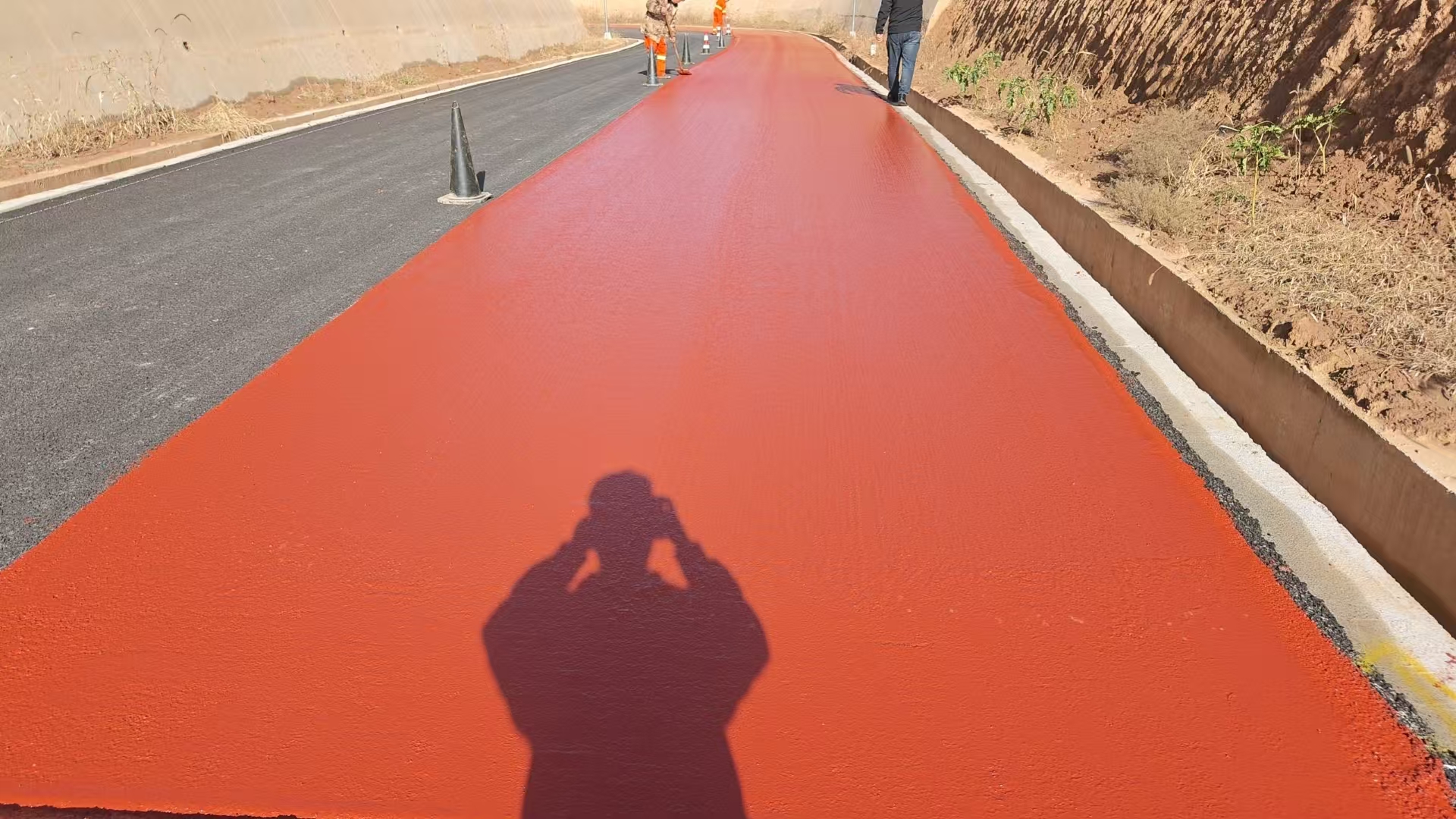
After construction, the surface quality must be checked carefully.
Uniformity of surface and color
Absence of segregation or streaking
Skid resistance performance
Bond strength with existing pavement
Smoothness and ride quality
Any defects should be corrected promptly.
Traffic is allowed once the surface reaches sufficient strength. Light traffic can usually resume after initial setting, while full traffic is allowed after complete curing. Regular maintenance includes surface cleaning, monitoring wear areas, and preventing excessive early damage.
The construction of color emulsified micro-surfacing is a precise engineering process that integrates material formulation, mechanical equipment, and on-site control. Proper execution ensures a durable, wear-resistant, anti-skid, and visually functional pavement that significantly improves road safety and extends service life.