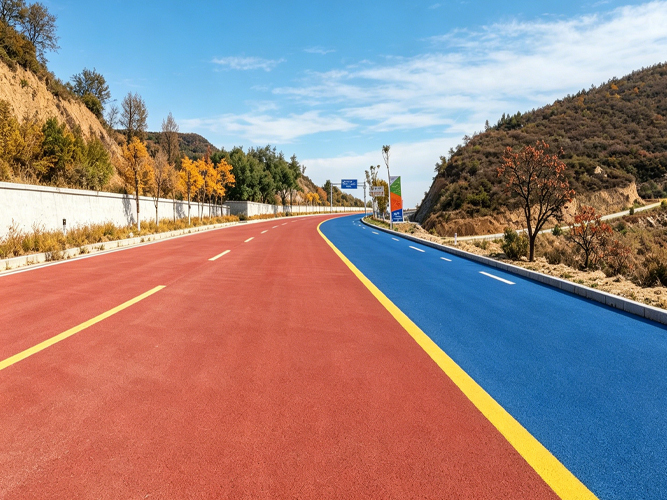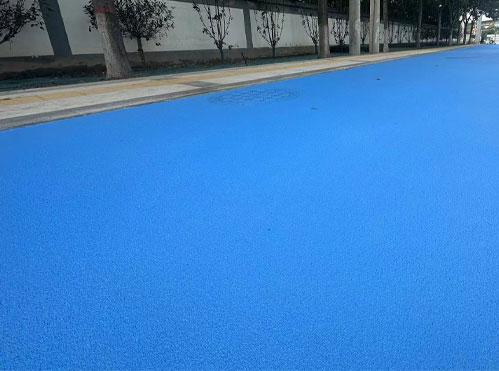
Road safety is a critical concern for cities, transportation agencies, and road users. As traffic volumes continue to increase, innovative solutions are needed to reduce accidents and improve traffic management. Colored pavement has emerged as an effective tool for enhancing road safety and visibility while also improving the appearance of urban environments.
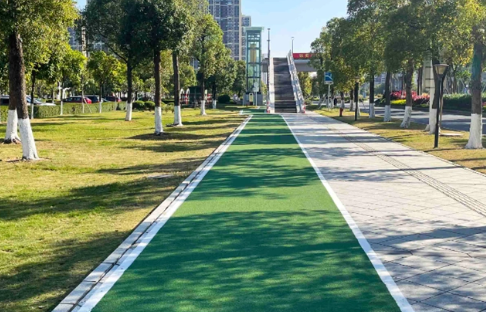
One of the primary benefits of colored pavement is its ability to increase visibility. Traditional asphalt surfaces can make it difficult for drivers, cyclists, and pedestrians to distinguish between different traffic zones. Colored pavement creates clear visual contrasts that help identify bike lanes, bus lanes, pedestrian crossings, school zones, and other designated areas. This improved visibility enables road users to recognize traffic patterns more quickly and respond appropriately.
Colored pavement also plays an important role in guiding traffic flow. Brightly colored surfaces provide intuitive visual cues that help drivers stay within designated lanes and avoid restricted areas. In busy urban environments, these visual indicators contribute to smoother traffic movement and reduce confusion at intersections, crossings, and shared-use pathways.
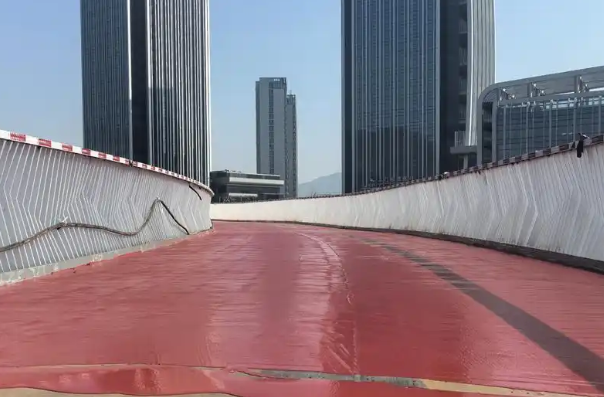
Another significant advantage is its anti-slip performance. Many colored pavement systems incorporate high-friction aggregates, ceramic particles, or specialized anti-skid coatings. These materials increase surface traction and reduce the risk of skidding during rain, snow, or other adverse weather conditions. High-friction colored pavement is particularly effective on sharp curves, steep ramps, intersections, and accident-prone locations where vehicle control is essential.
Pedestrian and cyclist safety can also be greatly improved through the use of colored pavement. Clearly marked bicycle lanes help separate cyclists from motor vehicle traffic, while colored pedestrian crossings increase driver awareness and encourage safer crossing behavior. This enhanced separation reduces potential conflicts between different road users and creates a safer transportation environment.
In addition to improving safety, colored pavement supports better visibility during both daytime and nighttime conditions. Vibrant surface colors remain highly noticeable even in low-light environments, helping drivers identify critical road features and navigate more confidently. When combined with reflective road markings, colored pavement can further enhance roadway recognition and traffic guidance.

Durability is another reason why colored pavement is increasingly used for safety applications. Modern systems such as MMA resin colored pavement, water-based anti-slip coatings, colored micro-surfacing, and ceramic aggregate surfacing are designed to maintain their color and skid resistance over extended periods. This ensures that safety benefits remain effective even under heavy traffic and challenging environmental conditions.
As cities continue to prioritize safer and smarter transportation networks, colored pavement is becoming an essential part of modern road infrastructure. By improving visibility, enhancing traffic guidance, increasing skid resistance, and protecting vulnerable road users, colored pavement provides a practical and long-lasting solution for creating safer roads and public spaces.