Colored Pavement for Parks and Recreational Areas
Parks and recreational areas are becoming increasingly important as cities focus on improving quality of life, environmental beauty, and public wellbeing. In this context, colored pavement has emerged as a key material for creating safer, more organized, and visually appealing outdoor spaces.
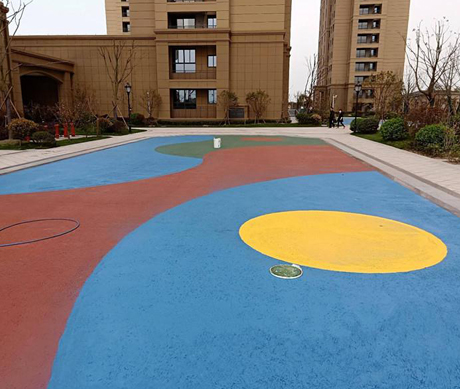
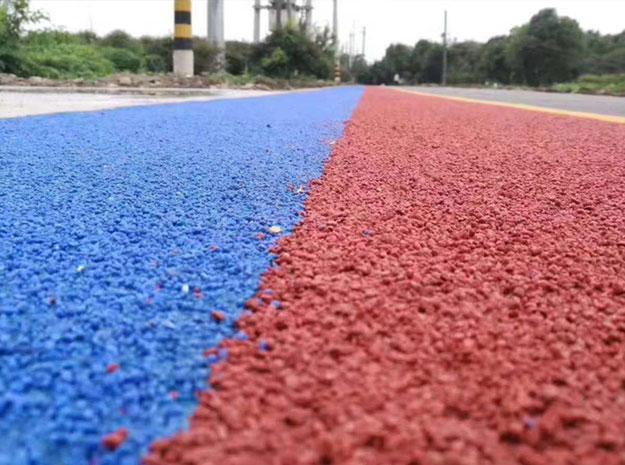
Colored pavement is widely applied in park walkways, jogging tracks, cycling paths, playground zones, plazas, and scenic corridors. Compared with traditional gray surfaces, colored systems bring clear visual separation between different functional areas. This helps visitors easily understand where to walk, run, cycle, or rest, improving overall spatial organization and user experience.
Safety is one of the most important advantages. Parks often have mixed users, including children, elderly people, and cyclists. By using different colors for different zones, movement can be guided more effectively, reducing confusion and potential accidents. Bright and contrasting colors also improve visibility in low-light conditions or shaded areas under trees.
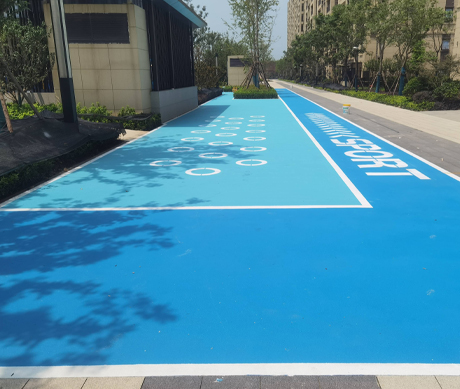
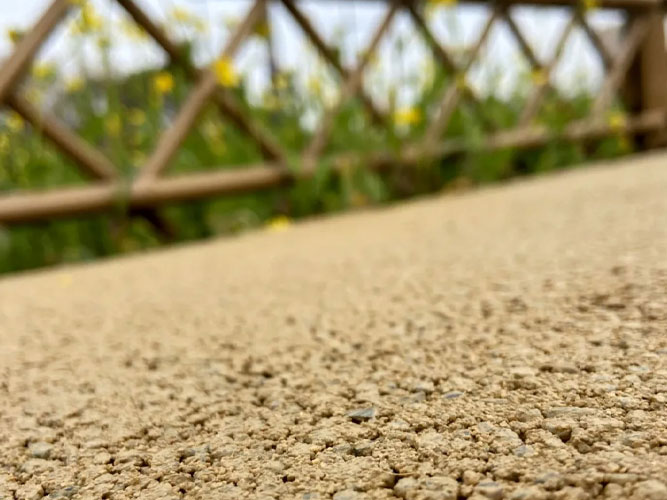
Anti-slip performance is another critical feature. Modern colored pavement systems use high-friction aggregates, polymer-modified binders, or resin-based coatings to enhance surface grip. This is especially valuable in outdoor environments where rain, moisture, or leaf coverage may increase slip risks.
Durability also plays a major role. Recreational areas are exposed to constant foot traffic, UV radiation, temperature changes, and seasonal weather. Advanced systems such as color emulsified micro-surfacing, MMA resin coatings, and polymer slurry systems help maintain color stability and structural integrity over time, reducing maintenance frequency and long-term costs.
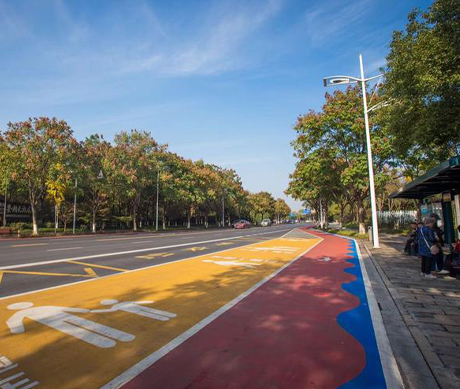
From a design perspective, colored pavement adds strong landscape value. It can be used to create themed walking routes, fitness circuits, children’s activity zones, or scenic trails. Designers can also use color to enhance natural surroundings, guide visitor flow, and improve the overall aesthetic harmony of park environments.
In conclusion, colored pavement is not just a surface material but a multifunctional solution that improves safety, organization, and visual quality in parks and recreational areas. Its application continues to expand as cities invest in more user-friendly and attractive public spaces.