Road Anti-Skid Materials for High-Traffic Urban Roads Explained
High-traffic urban roads face constant pressure from heavy vehicles, frequent braking, dense intersections, and unpredictable driving behavior. In these environments, Road anti-skid materials are essential for maintaining surface safety, improving friction, and reducing accident risks.
Urban roads are different from highways because they involve more stop-and-go traffic, pedestrians, bicycles, and public transport. This means the road surface must provide consistent grip under all conditions, especially during rain, oil contamination, and peak-hour congestion.
Why High-Traffic Urban Roads Need Anti-Skid Materials
In busy city environments, traditional asphalt surfaces can become polished over time due to continuous tire wear. This polishing effect reduces surface texture and makes roads slippery. When combined with wet conditions, the risk of skidding and rear-end collisions increases significantly.
Road anti-skid materials solve this issue by restoring and maintaining high surface friction, even under extreme traffic loads.
How Road Anti-Skid Materials Work in Urban Roads
The performance of road anti-skid materials in urban settings relies on three key functions:
First, high-friction surface structure. Hard aggregates such as ceramic particles, basalt, or quartz are embedded into the surface layer, creating strong micro-texture that improves tire grip during acceleration and braking.
Second, durable binding systems. Resin-based or polymer-modified binders lock the aggregates tightly in place, ensuring that the anti-skid effect remains stable even under heavy bus and truck traffic.
Third, continuous friction performance. Unlike paint or temporary coatings, advanced anti-skid systems maintain their texture over long periods, resisting wear caused by constant traffic flow.
Common Types Used in Urban Roads
Different road sections require different solutions:
High-friction surfacing systems for intersections and pedestrian crossings
Resin-based anti-skid coatings for bus lanes and sharp curves
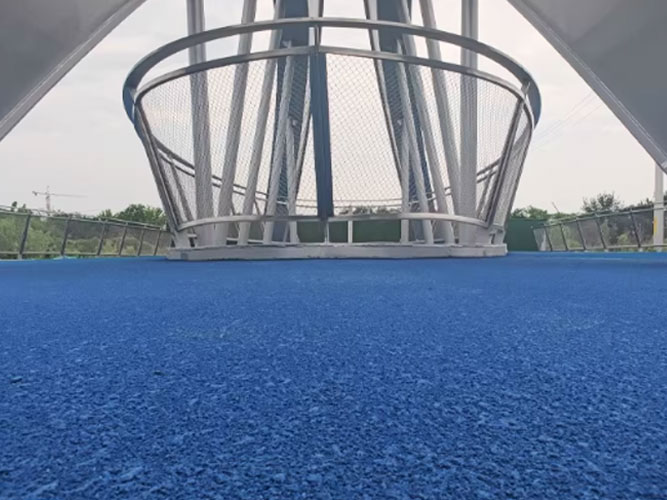
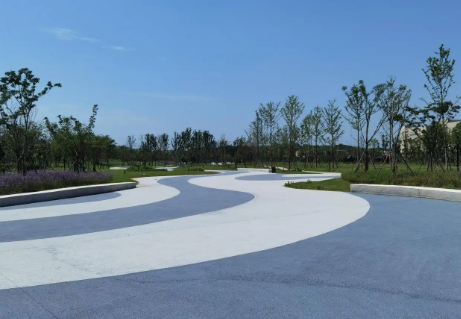
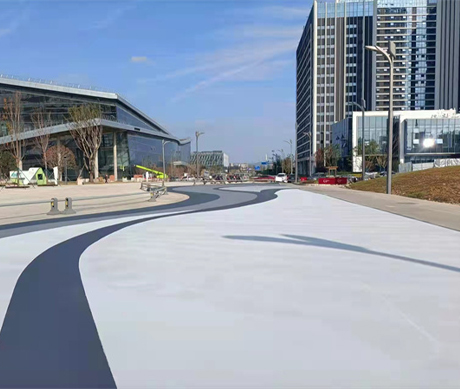
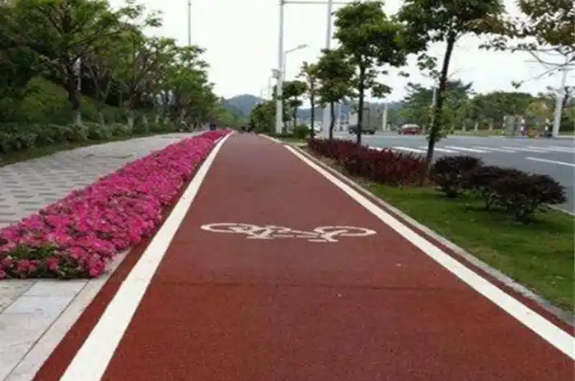
Ceramic aggregate colored pavements for visibility and safety zoning
Polymer micro-surfacing for large-scale municipal road maintenance
Key Benefits for Urban Traffic
Using road anti-skid materials in high-traffic cities provides several advantages:
Improved safety at intersections, where sudden braking is common
Shorter braking distance for vehicles in congested areas
Better protection for pedestrians and cyclists in shared spaces
Enhanced visibility when combined with colored surface systems
Reduced long-term maintenance costs due to higher durability
Application Areas in Cities
Road anti-skid materials are widely used in:
Busy intersections and traffic signals
Urban expressways and ramps
Bus rapid transit (BRT) lanes
Bicycle lanes and shared pathways
School zones and commercial districts
Conclusion
Road anti-skid materials play a critical role in making high-traffic urban roads safer and more efficient. By increasing surface friction, improving durability, and enhancing visibility, these systems help reduce accidents and support smoother traffic flow in complex city environments. As urban mobility continues to grow, their use is becoming a standard requirement in modern road engineering.