You’ve Been Driving on Dangerous Roads Without This Technology
For decades, road design focused mainly on durability and load-bearing capacity. Asphalt and concrete were considered sufficient as long as they could withstand traffic and weather. However, as traffic density increased and driving environments became more complex, engineers began to recognize a critical gap in traditional road systems: they provide structure, but not enough safety communication or skid resistance. This gap is exactly what modern colored anti-skid surfacing is designed to solve.
The idea may sound simple, but the impact is significant. Roads are not just physical surfaces—they are communication systems. Drivers constantly rely on visual cues, friction levels, and lane definitions to make split-second decisions. Traditional black asphalt offers limited contrast and can become slippery under rain, oil contamination, or heavy braking conditions. This combination increases risk in areas like intersections, ramps, pedestrian crossings, and downhill sections.
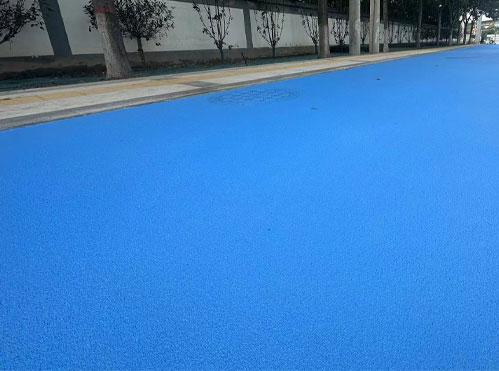
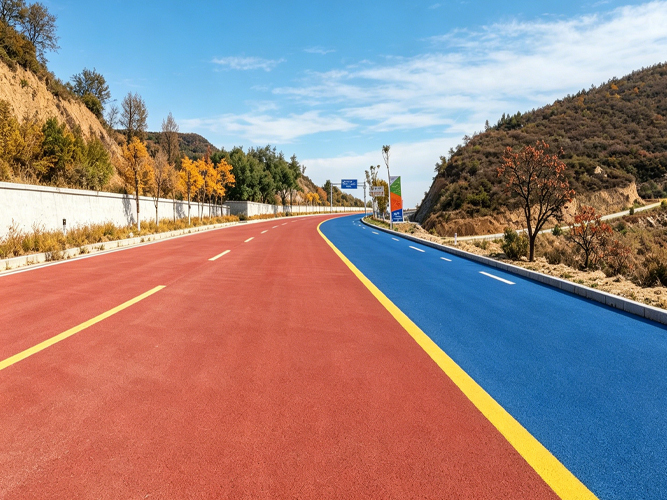
Colored anti-skid surfacing addresses both visibility and traction at the same time. By integrating high-friction aggregates such as ceramic particles or crushed mineral materials into a resin or polymer binder, the road surface gains a rough micro-texture. This texture dramatically improves tire grip, especially in wet conditions where hydroplaning risks are higher. At the same time, durable pigments create high-contrast colored zones that visually separate different traffic functions.
Engineers are increasingly using systems such as resin-based colored coatings, color emulsified micro-surfacing, and water-based EAU colored anti-slip pavement systems to achieve these results. Each system is designed for specific conditions, but they all share three key advantages: improved skid resistance, strong visual guidance, and fast installation performance. In busy urban environments, fast curing is particularly important because it minimizes road closure time and reduces disruption to traffic flow.
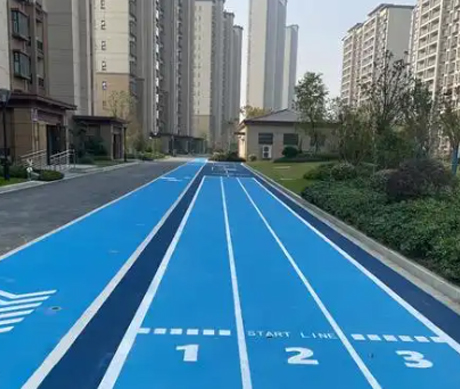
Another widely adopted solution is MMA resin colored pavement. Known for its rapid curing and strong bonding strength, MMA systems are often used in high-stress zones such as highway ramps, toll stations, and sharp curves. These areas require surfaces that can maintain performance under repeated braking and acceleration forces. Similarly, color emulsified micro-surfacing is commonly applied for large-scale road maintenance projects, offering both surface renewal and functional color coding in a single layer.
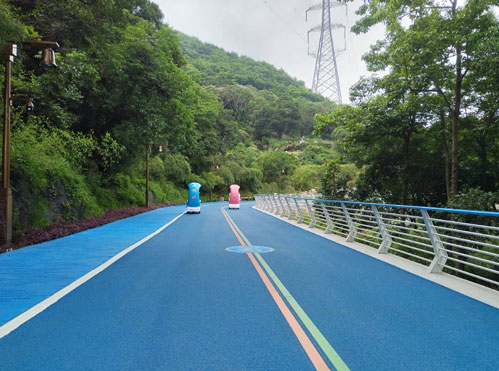
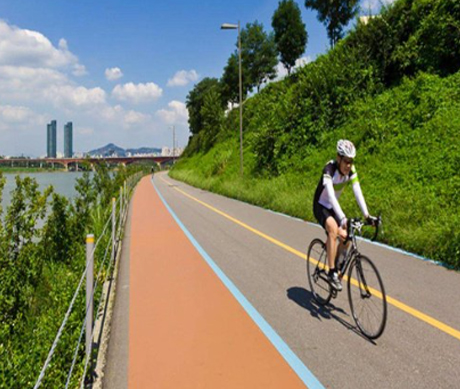
What makes this technology especially important is its role in preventing accidents before they happen. Instead of relying only on signs, signals, or road markings, colored anti-skid surfacing becomes part of the driving experience itself. A red or green textured surface immediately signals caution or guidance. A high-friction approach zone alerts drivers to reduce speed. A visually distinct bicycle lane improves separation between vehicles and vulnerable road users. This passive communication system reduces cognitive load for drivers and improves reaction time.
Environmental performance is another reason this technology is gaining global attention. Many modern systems are water-based or low in volatile organic compounds, reducing harmful emissions during installation. In addition, lighter-colored surfacing can reflect more sunlight than traditional asphalt, helping reduce heat absorption in urban areas. This makes it not only a safety solution but also a step toward more sustainable infrastructure design.
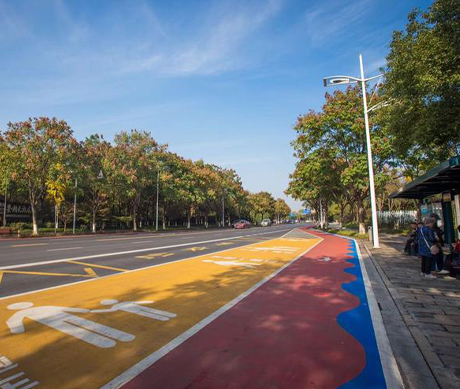
Despite its advantages, colored anti-skid surfacing is still underutilized in many regions. Some road networks continue to rely heavily on traditional asphalt markings, which degrade over time and offer limited functional performance. As urban mobility becomes more complex—with increasing bicycles, electric scooters, and mixed traffic types—the need for clearer and safer road communication systems becomes more urgent.
In conclusion, the shift toward colored anti-skid surfacing represents a fundamental change in road engineering philosophy. Roads are no longer viewed as passive structures but as active safety systems that guide behavior, improve traction, and reduce risk. While many drivers may not realize it yet, this technology is already redefining modern road safety standards around the world—and quietly replacing outdated approaches that no longer meet today’s demands.