Colored Anti-Skid Road Surfacing: The Upgrade Every City Needs Now
Cities around the world are under increasing pressure to make roads safer, more efficient, and better suited to modern traffic conditions. Traditional asphalt and concrete systems were designed primarily for structural strength, but today’s urban environments demand more than durability alone. They require surfaces that actively improve safety, guide traffic behavior, and perform reliably under diverse conditions. This is where colored anti-skid road surfacing is rapidly becoming a critical infrastructure upgrade.
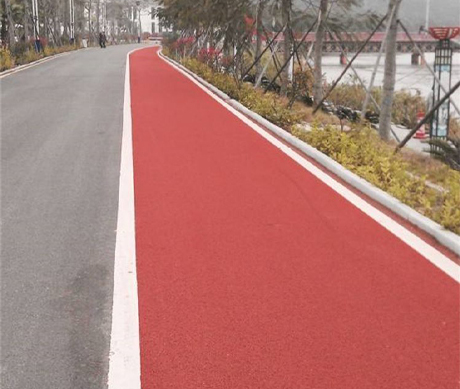
At its foundation, colored anti-skid surfacing is a high-performance road treatment that combines visibility enhancement with improved friction. Unlike conventional road surfaces, which are visually uniform and often slippery in wet conditions, this technology introduces both color differentiation and textured aggregates into the surface layer. The result is a road system that communicates more clearly and grips more effectively.
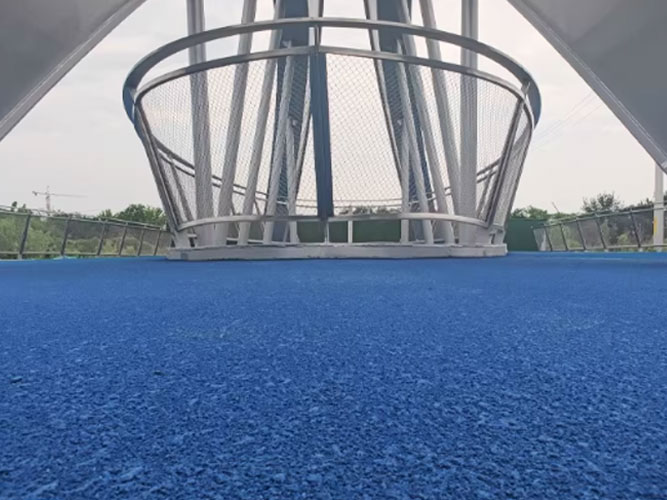
One of the most important technical foundations behind this system is high friction surfacing. High Friction Surfacing uses specially selected aggregates—such as ceramic particles or hard mineral stones—bonded to the pavement using advanced binders. These aggregates create a rough micro-texture that significantly increases tire grip, especially during rain, braking, or sharp turns. This reduction in skid risk is one of the key reasons transportation engineers are adopting this technology for intersections, ramps, tunnels, and high-risk corridors.
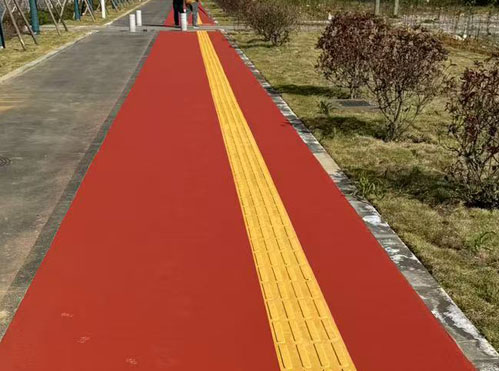
Another important innovation is color-based surface structuring. Instead of relying solely on painted road markings, colored surfacing integrates pigments directly into the upper pavement layer. This allows entire functional zones—such as bus lanes, bicycle lanes, pedestrian crossings, and warning areas—to be visually distinguished in a durable and long-lasting way. Unlike paint, which fades and wears quickly, colored surfacing maintains visibility and function over a longer service life.
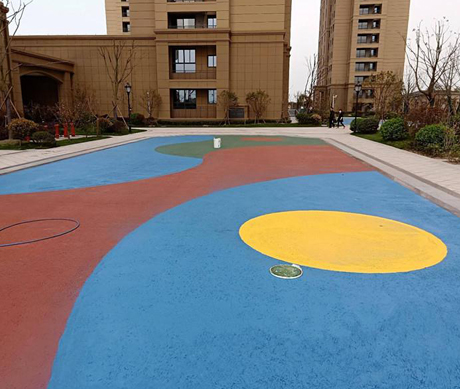
Modern systems also include advanced maintenance technologies such as Color Emulsified Micro-Surfacing. This approach allows engineers to restore road surfaces while simultaneously adding functional color and improving skid resistance. It is particularly useful for urban road rehabilitation projects, where minimizing traffic disruption is a priority. Fast curing and thin-layer application make it ideal for high-traffic environments.
Engineers are also increasingly using water-based and polymer-modified systems to improve environmental performance and construction efficiency. These materials reduce volatile emissions during installation and support faster curing times, allowing roads to reopen quickly. In dense urban areas, this is a major advantage because road closure time directly affects traffic congestion and economic productivity.
Safety improvement is the most direct benefit of colored anti-skid surfacing. By combining visual contrast with high friction performance, the road becomes a more intuitive environment for drivers and pedestrians. For example, a brightly colored approach zone immediately signals caution, while a textured bicycle lane clearly separates vulnerable users from vehicles. This dual-function design reduces cognitive load and improves reaction time, especially in complex intersections.
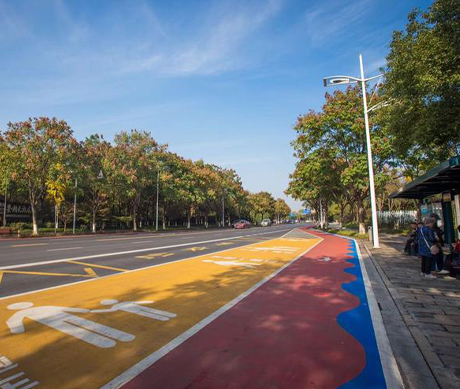
Beyond safety, cities also benefit from long-term cost efficiency. Although initial installation may be higher than traditional asphalt marking, the extended lifespan, reduced maintenance frequency, and lower accident-related costs make it a more economical solution over time. In addition, the durability of modern resin- and polymer-based systems reduces the need for frequent repainting or resurfacing.
Sustainability is another reason this technology is gaining global adoption. Many modern formulations are water-based and low in VOC emissions, supporting cleaner construction practices. Some lighter-colored surfaces also help reduce heat absorption in urban environments, contributing to mitigation of the urban heat island effect. As cities move toward greener infrastructure, these environmental benefits are becoming increasingly important.
In conclusion, colored anti-skid road surfacing represents a major upgrade in how cities design and manage transportation networks. It is no longer just about building stronger roads, but about creating intelligent surfaces that actively improve safety, communication, and sustainability. As urban mobility continues to evolve, this technology is quickly becoming an essential standard rather than an optional enhancement for modern cities worldwide.