How This Simple Surface Technology Reduces Road Accidents Dramatically
At first glance, colored anti-skid road surfacing may look like a simple upgrade—just a layer of color added to the road. In reality, it is a highly engineered safety system that directly reduces accident risk by improving two critical factors: friction and visual communication. These two elements are exactly what most traditional road surfaces fail to provide at a high enough level, especially in modern traffic environments.
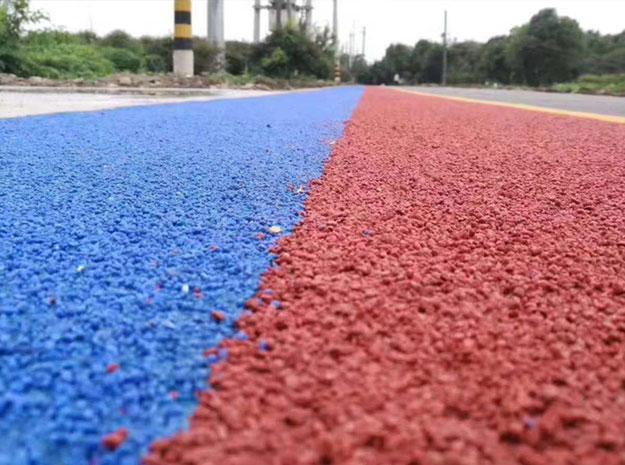
The first and most important safety mechanism is improved skid resistance. Conventional asphalt becomes significantly more dangerous under wet, oily, or high-speed braking conditions because the surface texture is relatively smooth at a microscopic level. Colored anti-skid surfacing changes this completely by embedding high-friction aggregates into the surface layer. This is the principle behind High Friction Surfacing, where hard mineral or ceramic particles create a rough texture that increases tire grip.
This increased friction directly reduces braking distance. In emergency situations, even a small reduction in stopping distance can be the difference between a near miss and a serious collision. It also improves vehicle stability on curves, downhill sections, and intersections where lateral force is high. For cyclists and motorcyclists, this added grip is even more critical, as they are more vulnerable to surface slipperiness.
The second major safety improvement comes from visual guidance. Roads are not just physical structures—they are decision-making environments. Drivers constantly interpret color, contrast, and markings to understand where to go and how to behave. Traditional asphalt offers limited visual differentiation, especially in complex urban areas.
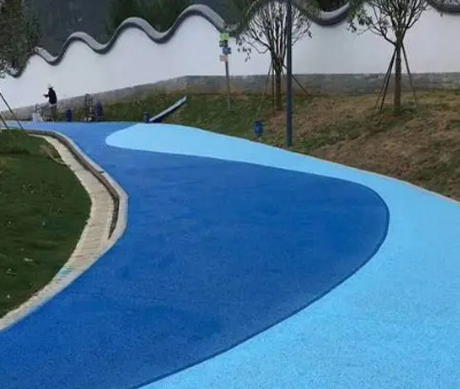
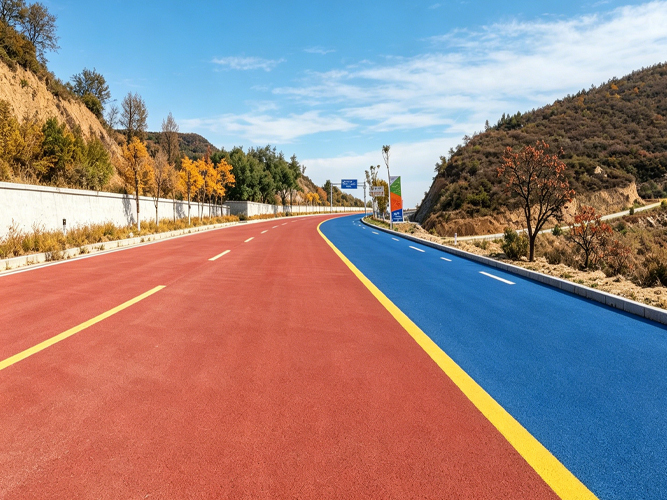
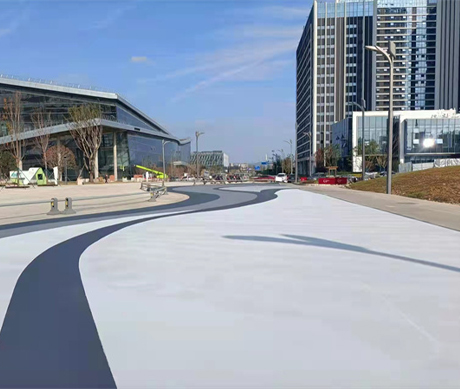
Colored anti-skid surfacing solves this by turning the road into a clear visual communication system. Different colors are used to define functional zones such as bus lanes, bicycle lanes, pedestrian crossings, and hazard warning areas. This reduces confusion and improves driver reaction time. When a driver immediately recognizes a high-risk zone through color alone, they begin adjusting speed and behavior earlier, which significantly lowers accident probability.
Another key contributor is improved performance in wet conditions. Rain is one of the leading factors in road accidents due to reduced friction and poor visibility. With textured, high-traction surfaces, water is dispersed more effectively, reducing the risk of hydroplaning. At the same time, colored surfaces increase contrast visibility during rain, fog, or low-light conditions, making lane structures and crossing areas easier to identify.
Modern construction technologies also enhance safety effectiveness. Systems such as Color Emulsified Micro-Surfacing allow engineers to renew road surfaces while simultaneously improving both friction and color-based guidance. This is especially valuable in urban maintenance projects where roads must remain open or reopen quickly. Fast curing materials reduce downtime while still delivering high-performance safety improvements.
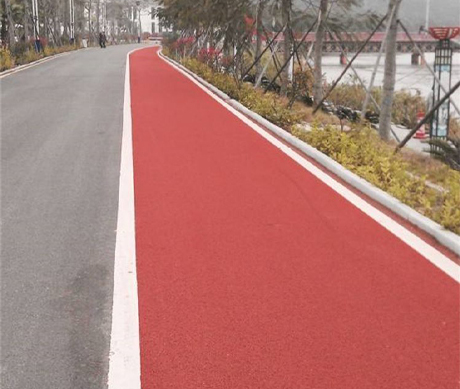
Beyond technical performance, psychological behavior also plays a major role in accident reduction. Colored road zones subconsciously influence driver behavior. For example, bright red or high-contrast warning zones encourage speed reduction, while clearly defined bicycle lanes discourage vehicle encroachment. This behavioral influence reduces conflict between different types of road users without requiring constant enforcement.
Importantly, these systems are not limited to highways. They are widely used in intersections, school zones, tunnel entrances, bridges, bus corridors, and parking structures—anywhere that requires enhanced safety control. In these environments, accidents often occur due to sudden decision-making or poor visibility, both of which are addressed by colored anti-skid surfacing.
In conclusion, this technology reduces road accidents dramatically because it improves both physical road performance and human decision-making at the same time. By increasing friction, enhancing visibility, and guiding behavior through color-coded design, colored anti-skid surfacing transforms roads from passive infrastructure into active safety systems. What appears to be a simple surface upgrade is actually one of the most effective modern tools for preventing accidents before they happen.