The Future of Safer Roads Is Already Here—And It’s Colored
For years, the idea of “safer roads” was tied mainly to stronger materials, better signage, and improved enforcement. But modern traffic challenges have pushed engineers to rethink that approach entirely. Today, safety is no longer just about building roads that last longer—it’s about building roads that actively prevent accidents. And one of the clearest signs of this shift is the rise of colored anti-skid road surfacing.
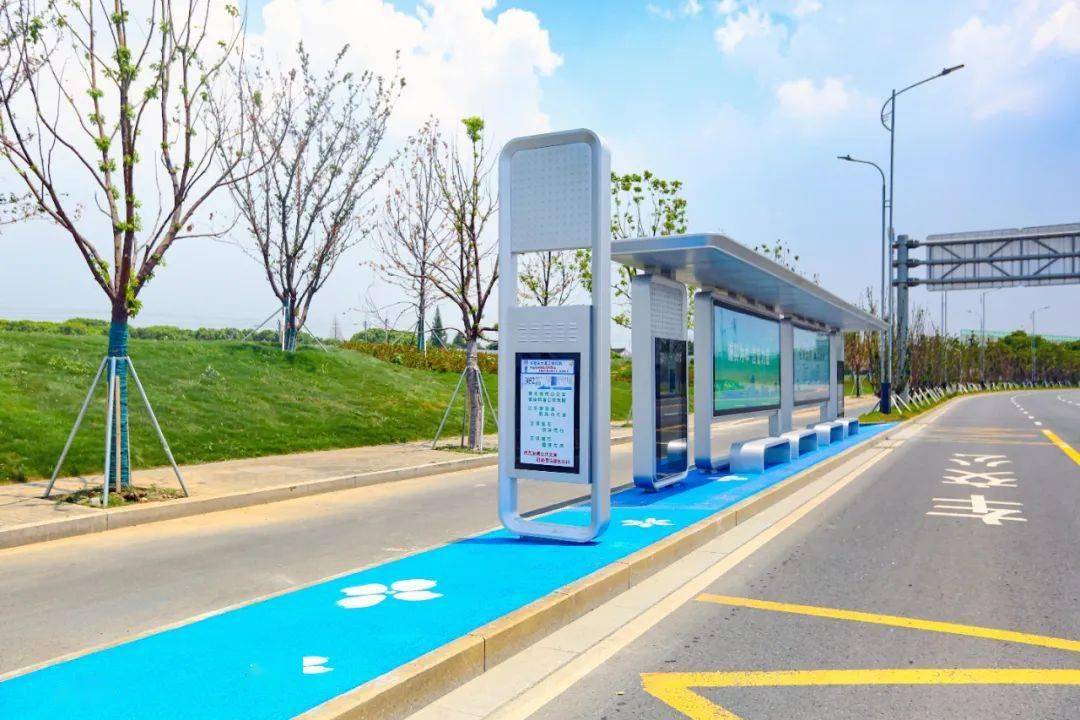
What makes this technology different is that it turns the road surface itself into a safety system. Instead of being a passive layer that vehicles simply travel on, the surface becomes an active participant in guiding behavior, improving control, and reducing risk in real time. This is a major shift in how road infrastructure is designed and understood.
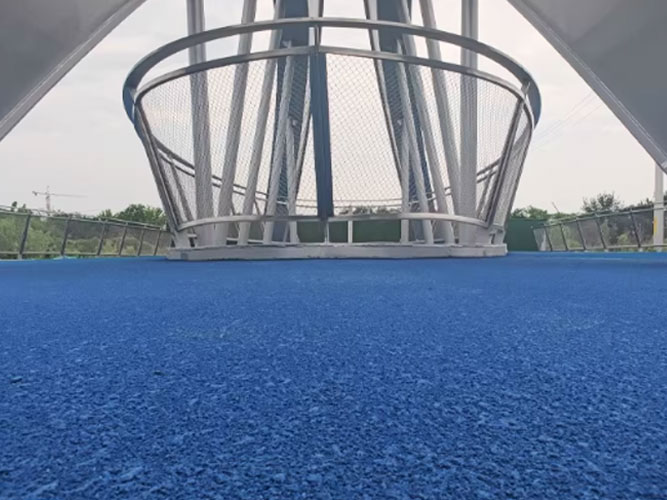
At the heart of this transformation is high-performance friction engineering. Systems based on High Friction Surfacing enhance tire grip by embedding durable, rough-textured aggregates into the surface layer. These materials maintain strong friction even under rain, heavy braking, and sharp turning conditions—exactly the moments when most serious accidents occur. By improving grip at critical locations such as intersections, curves, and ramps, this technology directly reduces loss-of-control incidents.
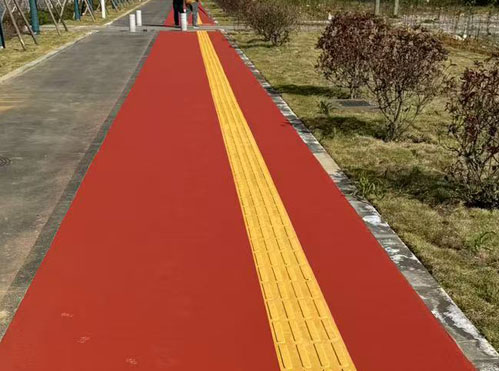
But friction alone is not enough for modern road environments. Today’s traffic is more complex than ever, involving cars, bicycles, electric scooters, buses, and pedestrians sharing the same space. This is where color becomes a powerful safety tool. Colored surfacing transforms roads into visual communication systems. Different zones can be instantly recognized—warning areas, bicycle lanes, pedestrian crossings, and priority corridors—without requiring drivers to interpret multiple signs or markings.
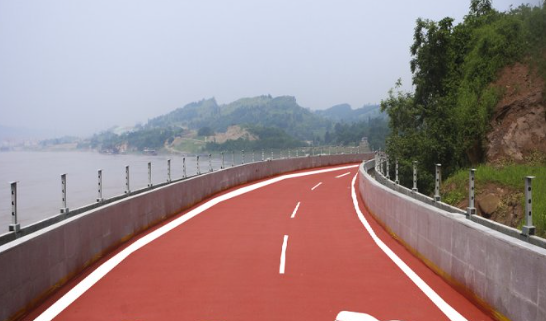
This visual clarity has a direct impact on human behavior. When drivers can immediately understand road function through color and texture, their reaction time improves. Decisions become faster and more intuitive. In dense urban environments where every second matters, this reduction in cognitive delay can significantly lower accident risk.
Another key advantage is performance consistency in real-world conditions. Rain, fog, and nighttime driving all reduce visibility and increase danger. Colored anti-skid surfaces maintain better contrast than standard asphalt markings, making lane structures and hazard zones easier to identify in poor lighting. At the same time, the textured surface continues to provide grip even when wet, reducing hydroplaning risk and improving overall stability.
Modern construction technologies such as Color Emulsified Micro-Surfacing also make this upgrade more practical for cities. These systems allow engineers to restore worn roads while simultaneously adding color and improving skid resistance. Fast curing and efficient application mean roads can be upgraded quickly, with minimal disruption to traffic flow.
What is especially important is that this is not just a material innovation—it is a design philosophy shift. Roads are no longer seen as simple transport corridors, but as intelligent systems that actively communicate with users. Color becomes language. Texture becomes protection. The surface becomes an interface between infrastructure and human behavior.
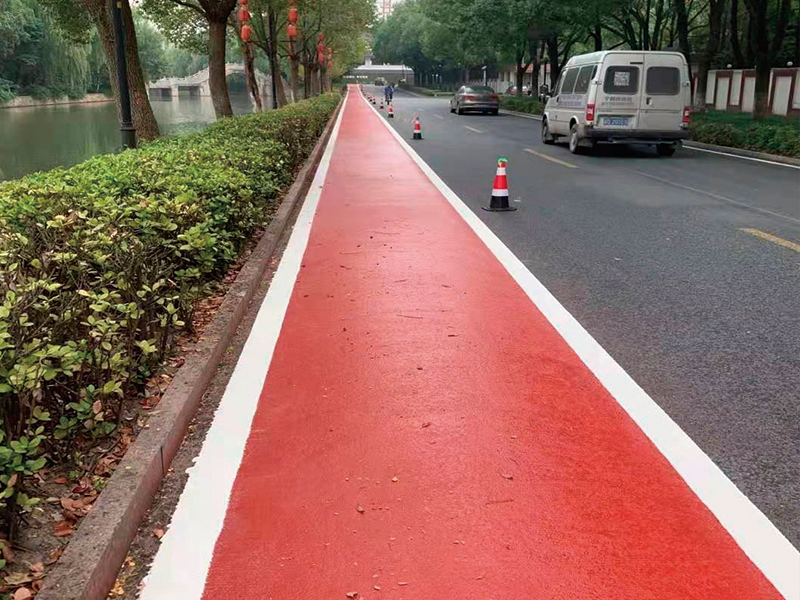
From a city planning perspective, this opens new possibilities. Dangerous zones can be visually reinforced. Traffic flow can be guided more naturally. Vulnerable users like cyclists and pedestrians can be better protected through clear spatial separation. Instead of relying only on enforcement and signage, safety is built directly into the road itself.
There is also a long-term economic logic behind this shift. While colored anti-skid systems may require higher initial investment than traditional asphalt markings, they reduce accident rates, lower maintenance frequency, and extend service life. Over time, this leads to lower total lifecycle costs for cities and transportation agencies.
In conclusion, the future of safer roads is not a distant concept—it is already being built and deployed worldwide. Colored anti-skid road surfacing represents a new generation of infrastructure where safety, visibility, and performance are integrated into a single system. It reflects a simple but powerful idea: the road should not just carry traffic, it should help prevent danger.