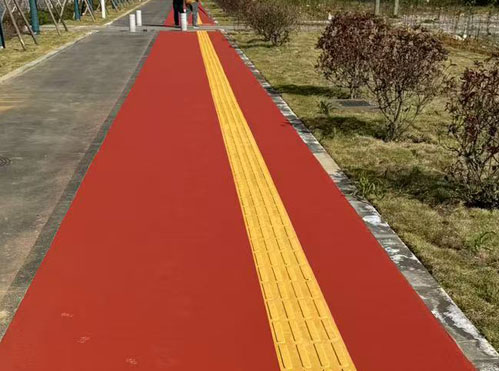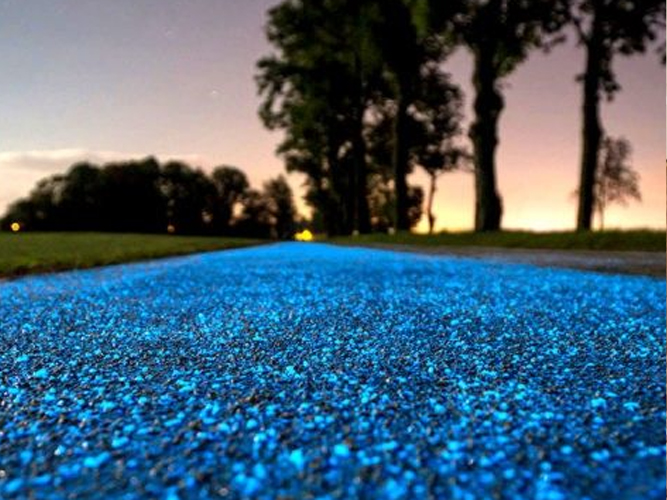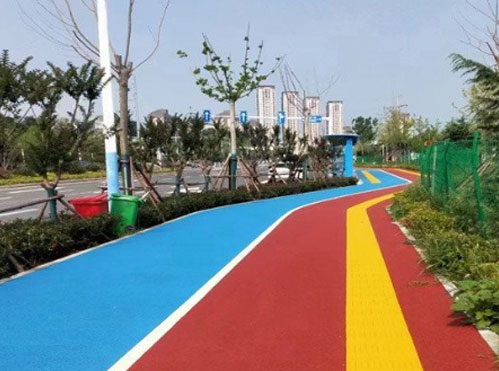
Colored pavement systems are widely used in modern road engineering, urban design, and industrial infrastructure to improve safety, visibility, and traffic organization. However, the long-term performance of these systems depends not only on material quality but also on proper construction practices. Following standardized best practices ensures durability, skid resistance, and consistent color performance throughout the service life.
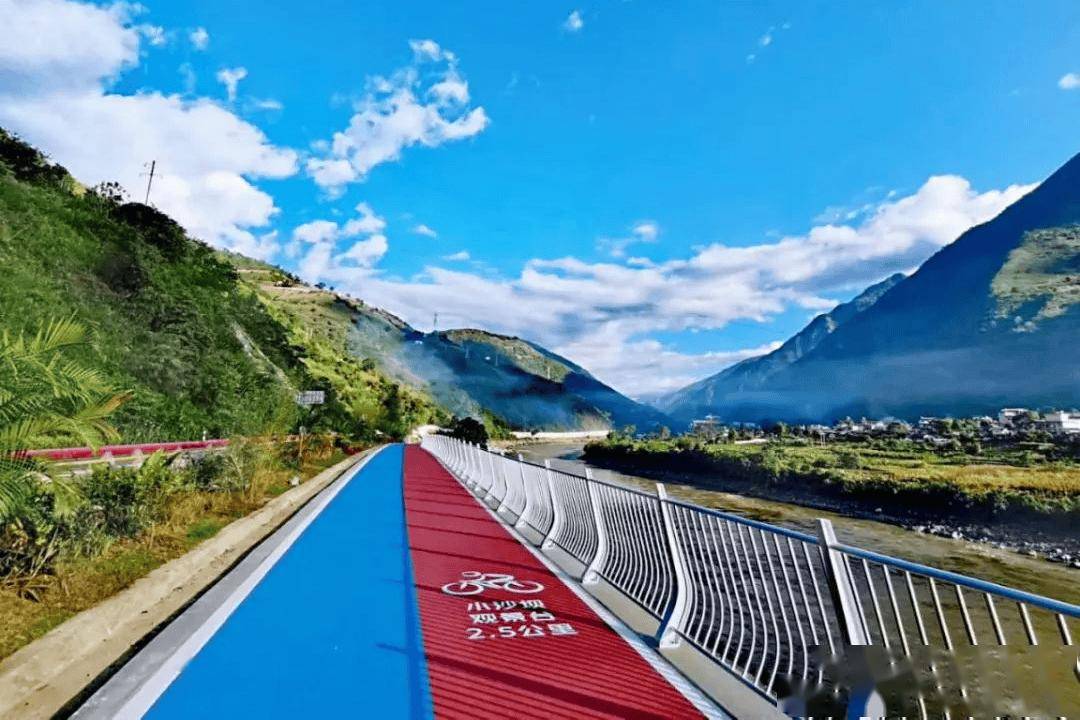
Surface preparation is the foundation of any successful colored pavement installation. The existing asphalt or concrete surface must be clean, dry, and structurally sound. All dust, oil stains, loose particles, and weak surface layers should be removed before application. In some cases, mechanical grinding or shot blasting is required to create a suitable bonding profile. Proper preparation ensures strong adhesion between the base pavement and the colored layer.
Before construction begins, the condition of the existing pavement must be carefully evaluated. Cracks, potholes, or structural damage should be repaired in advance. Applying colored pavement on unstable surfaces can lead to premature failure, cracking, or delamination. A stable and uniform base significantly improves the final performance and lifespan of the system.
Weather conditions play an important role in construction quality. Colored pavement should ideally be installed under dry conditions with moderate temperature. Excess humidity, rain, or extremely low temperatures can negatively affect curing, bonding, and surface texture formation. Proper scheduling of installation work helps ensure consistent results.
For multi-component systems such as resin-based or polymer-modified colored pavements, accurate mixing ratios are essential. Improper mixing can lead to uneven color distribution, reduced bonding strength, or inconsistent surface texture. Materials should be mixed thoroughly using appropriate equipment and applied within the recommended working time.
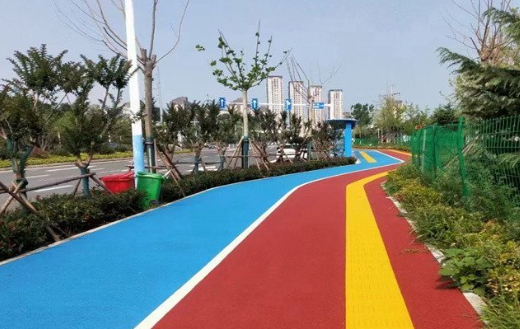
Maintaining consistent application thickness is critical for both performance and appearance. Uneven layers may cause patchy color, weak spots, or reduced skid resistance. Controlled spreading techniques should be used to ensure uniform coverage across the entire surface. In high-traffic areas, sufficient thickness must be maintained to withstand mechanical wear.
One of the key performance features of colored pavement is skid resistance. High-friction aggregates must be evenly distributed to ensure consistent surface texture. Poor aggregate distribution can result in slippery zones and reduced safety performance. Proper embedding of aggregates into the binder layer is essential for long-term friction stability.
After application, sufficient curing time must be provided before opening the surface to traffic. Premature loading can damage the newly installed layer and reduce its service life. Depending on the system used, curing time may vary, but it should always follow manufacturer recommendations. Temporary protection measures may be required to prevent contamination during curing.
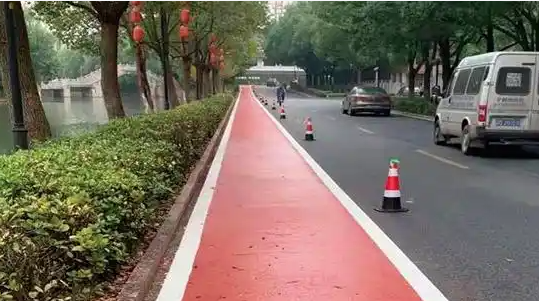
Continuous quality control during construction ensures that the final surface meets performance standards. Key factors such as adhesion strength, surface texture, color uniformity, and skid resistance should be checked. Any defects should be corrected immediately to avoid long-term performance issues.
Even well-constructed colored pavement systems require periodic maintenance to maintain optimal performance. Regular cleaning helps preserve color brightness and surface friction. In high-wear areas, localized repairs or re-coating may be necessary to extend service life and maintain safety performance.
Successful colored pavement construction depends on careful surface preparation, correct material handling, controlled application, and proper curing procedures. By following these best practices, contractors and project owners can achieve durable, high-visibility, and high-friction pavement systems that deliver long-term safety and performance benefits in a wide range of applications.