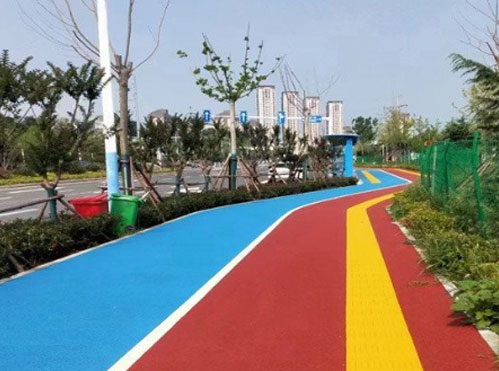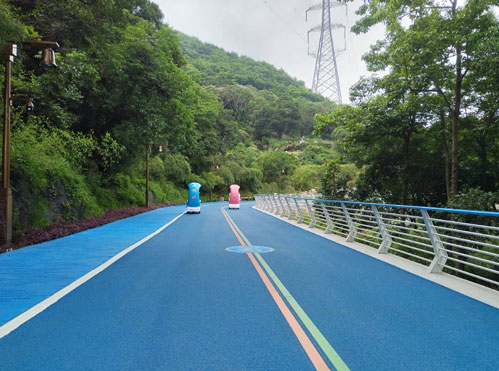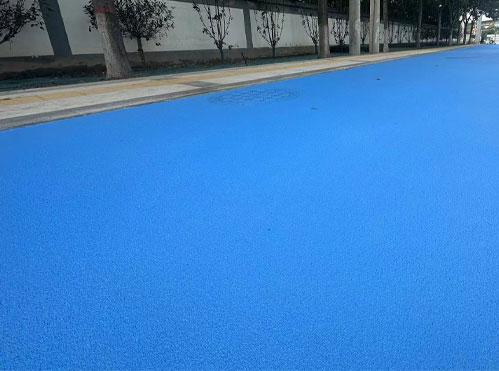
As cities continue to expand and transportation systems become more complex, improving road safety has become a major priority for governments, engineers, and urban planners. Traditional gray pavement provides basic transportation functions, but modern infrastructure requires smarter solutions that improve visibility, reduce accidents, and create safer environments for all road users. Colored pavement has emerged as a critical technology for modern road safety projects by combining high-friction performance, visual guidance, and long-lasting durability.
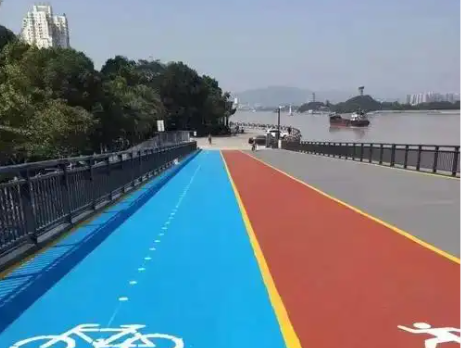
One of the most important advantages of colored pavement is its ability to improve visual recognition. Different colors can be used to clearly define road functions, including bicycle lanes, pedestrian crossings, bus lanes, emergency zones, parking areas, and traffic separation zones.
In busy urban environments, clear visual communication helps drivers and pedestrians quickly understand road layouts and make safer decisions. Colored pavement systems create a more organized transportation environment by reducing confusion and improving awareness.
Road safety is strongly influenced by pavement friction. Wet surfaces, sharp turns, braking zones, and high-traffic areas can increase the risk of slipping and skidding.
Colored anti-skid pavement materials are designed with high-friction aggregates and advanced bonding technologies to improve surface grip. These systems provide better traction for vehicles, bicycles, and pedestrians, especially in areas where safety risks are higher.
Applications such as intersections, ramps, bridges, tunnels, and bicycle paths benefit significantly from high-friction colored pavement solutions.
Modern cities are placing greater emphasis on sustainable transportation, including cycling and walking. Colored pavement plays an important role in creating safer spaces for non-motorized transportation.
By using different colors and surface textures, cities can separate bicycle lanes from vehicle lanes and highlight pedestrian areas. This encourages safer mobility while improving the overall user experience.
Today’s colored pavement systems use advanced materials designed for different application requirements. Common technologies include:
MMA Resin Colored Pavement
MMA pavement systems provide rapid curing, strong adhesion, and excellent wear resistance. They are widely used in high-traffic areas requiring long service life and fast construction.
Water-Based EAU Colored Anti-Slip Pavement
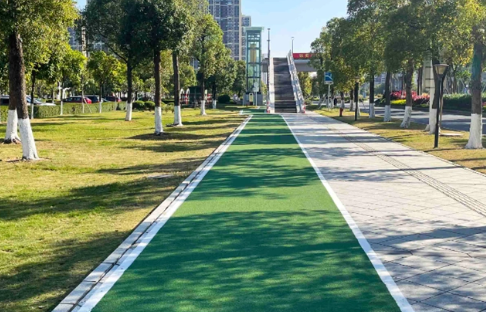
Water-based EAU systems provide an environmentally friendly solution with low VOC emissions and good anti-slip performance. They are suitable for bicycle lanes, parks, pedestrian areas, and urban renewal projects.
Water-Based SP Colored Pavement Systems
These systems offer reliable performance and cost-effective solutions for municipal roads and public infrastructure.
Ceramic Aggregate Anti-Skid Pavement
Ceramic particle surfaces provide excellent durability, color stability, and high friction performance for demanding road safety applications.
Colored pavement is widely used in many modern infrastructure projects, including:
Urban roads and intersections
Bicycle lanes and cycling networks
Pedestrian walkways
Bus rapid transit lanes
Bridges and tunnels
Parking facilities
School zones
Commercial streets
Scenic and recreational areas
Each application can benefit from improved visibility, better friction, and enhanced traffic organization.
Beyond safety, colored pavement contributes to modern urban design and sustainability goals. Attractive pavement colors can improve public spaces, support green transportation, and create more comfortable environments.
Many water-based colored pavement systems feature environmentally friendly formulations, making them suitable for sustainable infrastructure development.
Although colored pavement systems may require a higher initial investment compared with traditional pavement markings, their long-term benefits make them a valuable choice. Durable materials reduce maintenance needs, improve safety performance, and extend pavement service life.
For municipalities and contractors, selecting the right colored pavement system helps achieve a balance between safety, aesthetics, durability, and project cost.
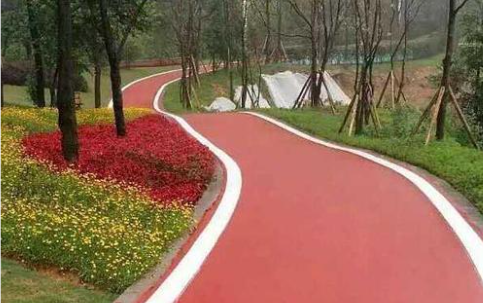
Colored pavement has become a critical component of modern road safety projects because it provides more than visual improvement. Through advanced anti-skid technology, high visibility, and durable performance, colored pavement systems help create safer roads, better traffic management, and more sustainable urban environments.
As transportation needs continue to evolve, colored pavement will remain an essential solution for building safer and smarter infrastructure worldwide.