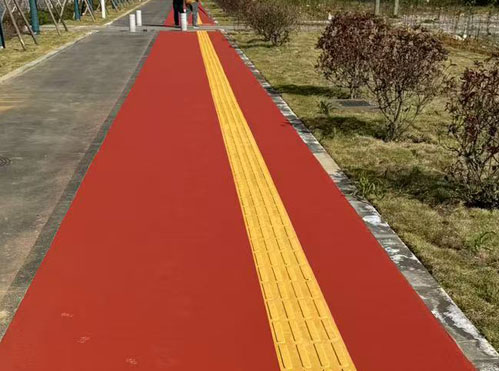
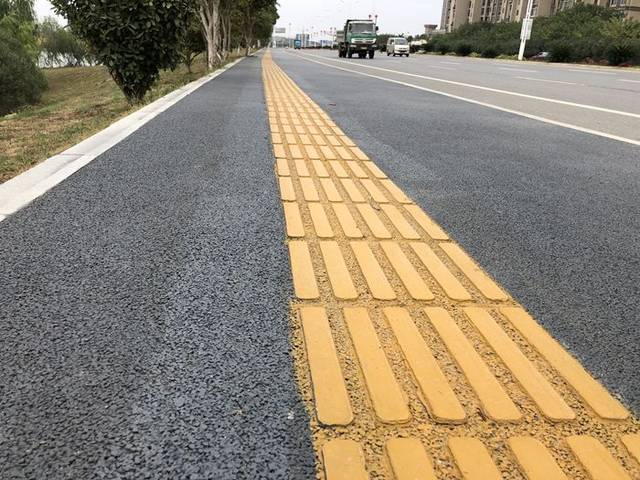
Cast-in-place diamond tactile paving is a type of in-situ surface treatment designed to provide guidance and safety cues for visually impaired pedestrians. It is formed directly on-site (“cast-in-place”) using specialized materials, creating a durable, integrated tactile surface with a diamond-shaped texture pattern.
It is widely used in sidewalks, pedestrian crossings, transit stations, ramps, and public spaces where accessibility and safety are critical.
Unlike prefabricated tactile tiles, cast-in-place diamond tactile paving is constructed directly on the existing concrete or asphalt base. The surface is formed using:
Polymer-modified resin or cementitious binder
Anti-slip aggregates or ceramic particles
Pigments for color differentiation
Molding tools that create a raised diamond pattern
The result is a seamless, integrated tactile surface that is firmly bonded to the pavement structure.
The surface features a repeating diamond-shaped pattern. These raised textures serve two main functions:
Provide tactile feedback underfoot for visually impaired users
Improve slip resistance for all pedestrians
The diamond geometry is widely recognized as a universal warning or directional texture in accessibility design standards.
Because it is cast directly onto the substrate, it forms a strong bond with the pavement, reducing the risk of lifting, cracking, or displacement compared to modular tiles.
The textured diamond pattern and embedded aggregates increase friction, making walking safer in wet or high-traffic conditions.
Cast-in-place systems eliminate gaps between tiles, reducing tripping hazards and improving long-term stability.
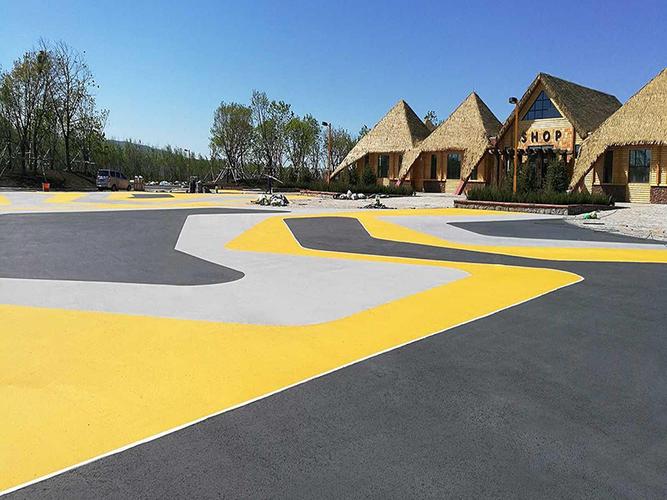
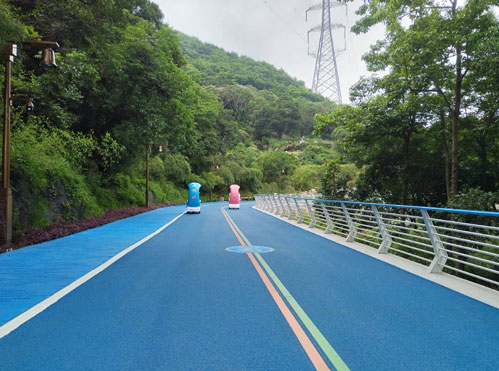
Color and pattern customization allow it to be used for different functional zones such as warning areas, guidance paths, or crossing indicators.
Cast-in-place diamond tactile paving is commonly used in:
Urban sidewalks and pedestrian corridors
Railway and metro station platforms
Bus stops and transit hubs
Road crossing ramps and curb edges
Public buildings and accessibility routes
In modern cities, tactile paving is a core part of inclusive infrastructure design. Cast-in-place systems improve navigation for visually impaired pedestrians by providing continuous, reliable guidance surfaces.
They also contribute to safer pedestrian environments by combining accessibility with anti-slip performance and long-term durability.
Cast-in-place diamond tactile paving is a durable, integrated accessibility solution that enhances pedestrian safety and mobility. With its textured diamond pattern, strong bonding performance, and wide application in public infrastructure, it plays an essential role in building more inclusive and accessible urban environments.