Urban accessibility has become an essential part of modern infrastructure development. As cities continue improving pedestrian environments, high-strength cast-in-place tactile blind path systems are widely used to provide safe and reliable guidance for visually impaired pedestrians in public spaces.
Compared with traditional prefabricated tactile paving, cast-in-place systems offer superior durability, seamless integration, and long-term performance for high-traffic urban environments.
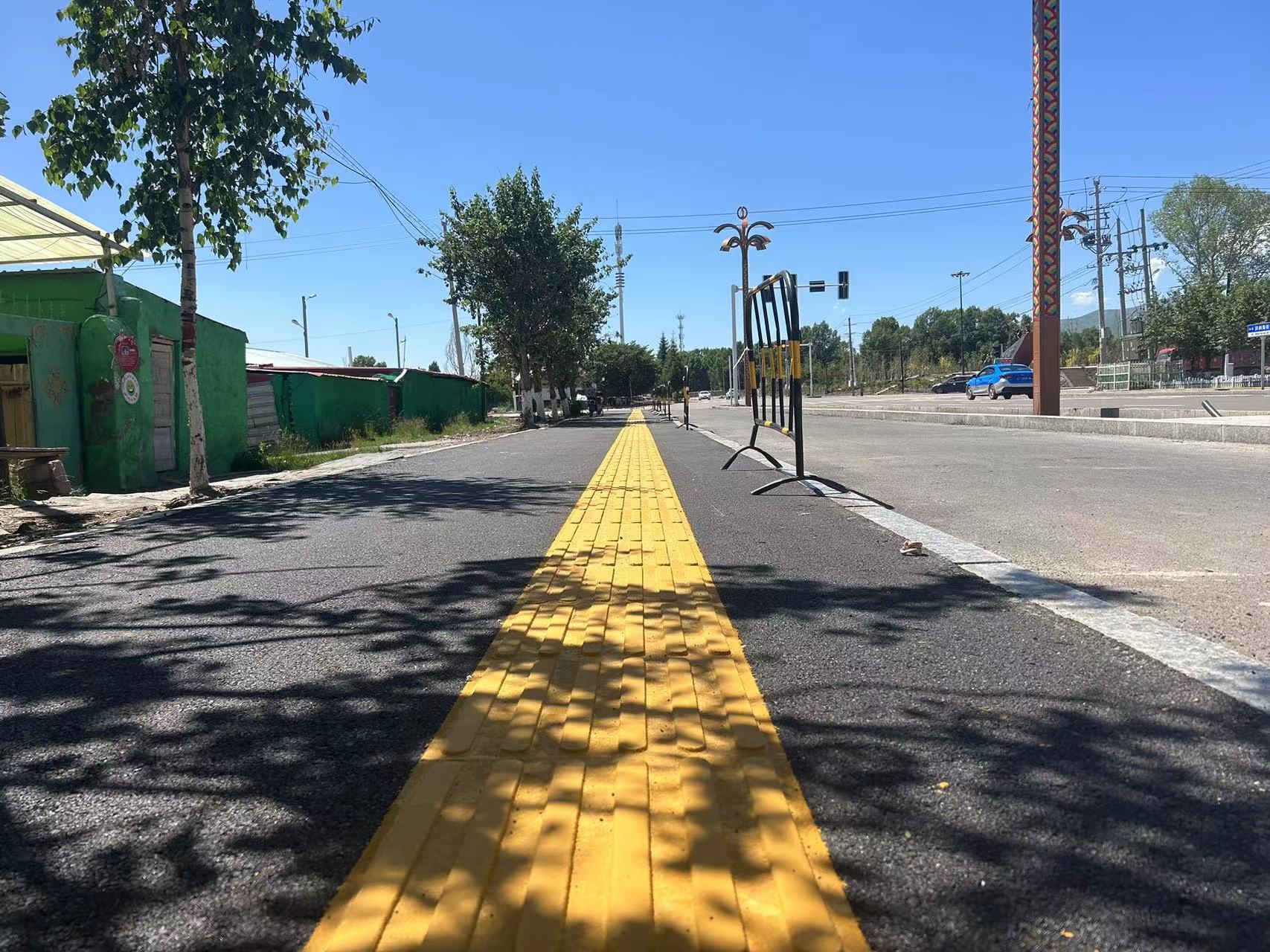
A cast-in-place tactile blind path system is a specially designed tactile paving solution constructed directly on-site using high-strength materials. The surface includes raised directional bars and warning dots that help visually impaired individuals navigate safely through sidewalks, transit stations, plazas, and public facilities.
These systems are typically manufactured using:
High-strength polymer concrete
Modified cement materials
MMA resin systems
Wear-resistant aggregates
Anti-slip surface coatings
The integrated construction method creates a seamless and highly durable tactile surface with excellent adhesion to the pavement base.
Cast-in-place tactile paving is designed to withstand heavy pedestrian traffic, weather exposure, and long-term urban use without cracking, loosening, or significant wear.
The textured surface improves traction during rainy conditions, reducing slip risks for both visually impaired users and general pedestrians.
Unlike glued or prefabricated tiles, cast-in-place systems form a continuous structure directly with the pavement, minimizing detachment and maintenance problems.
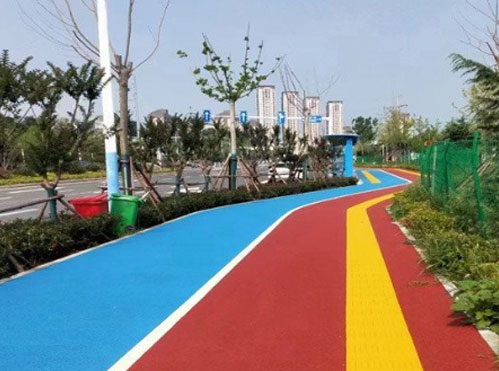
Bright color options such as yellow, gray, red, and green improve visual recognition and support universal accessibility design standards.
The integrated structure reduces repair frequency and extends service life, making it a cost-effective solution for municipalities and infrastructure projects.
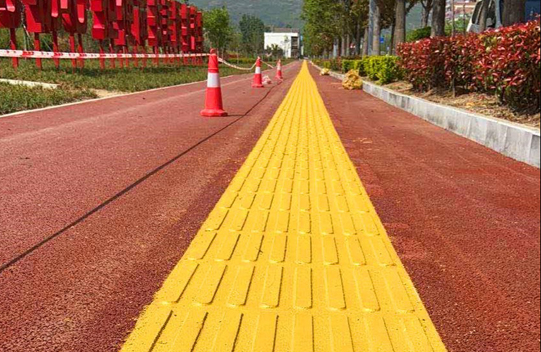
High-strength cast-in-place tactile blind path systems are widely used in:
Urban sidewalks
Subway and railway stations
Airports
Bus terminals
Public plazas
Hospitals
Schools and universities
Shopping centers
Government facilities
Pedestrian crossings
These systems help cities comply with accessibility regulations while improving pedestrian safety and mobility.
Traditional tactile tiles often experience issues such as cracking, edge lifting, water penetration, and adhesive failure over time. Cast-in-place systems solve these problems through integrated construction and stronger bonding performance.
Additional advantages include:
Better load resistance
Longer service life
Cleaner appearance
Faster maintenance
Improved weather resistance
Greater design flexibility
This makes cast-in-place tactile paving especially suitable for large-scale municipal and transportation infrastructure projects.
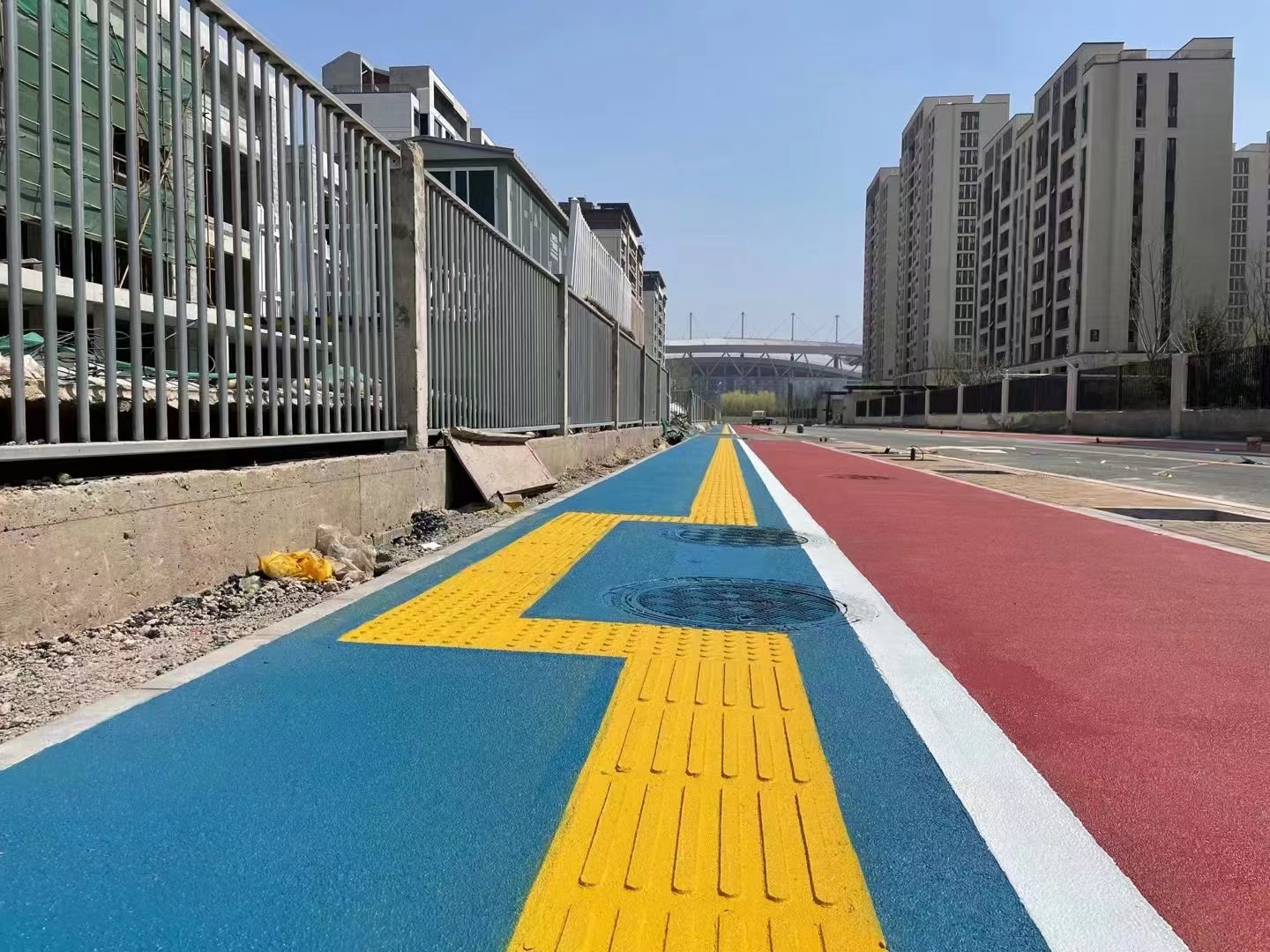
Modern smart cities focus on inclusive infrastructure and barrier-free transportation systems. High-strength tactile blind path systems contribute to these goals by improving accessibility, safety, and pedestrian navigation.
Combined with durable anti-slip technology and sustainable construction materials, cast-in-place tactile paving supports long-term urban development and enhances the quality of public spaces.
High-strength cast-in-place tactile blind path systems provide a durable, safe, and visually effective accessibility solution for modern cities. Their seamless construction, anti-slip performance, and long service life make them an ideal choice for urban sidewalks, transportation hubs, and public infrastructure projects.
As accessibility standards continue to evolve worldwide, cast-in-place tactile paving will play an increasingly important role in creating safer and more inclusive urban environments.