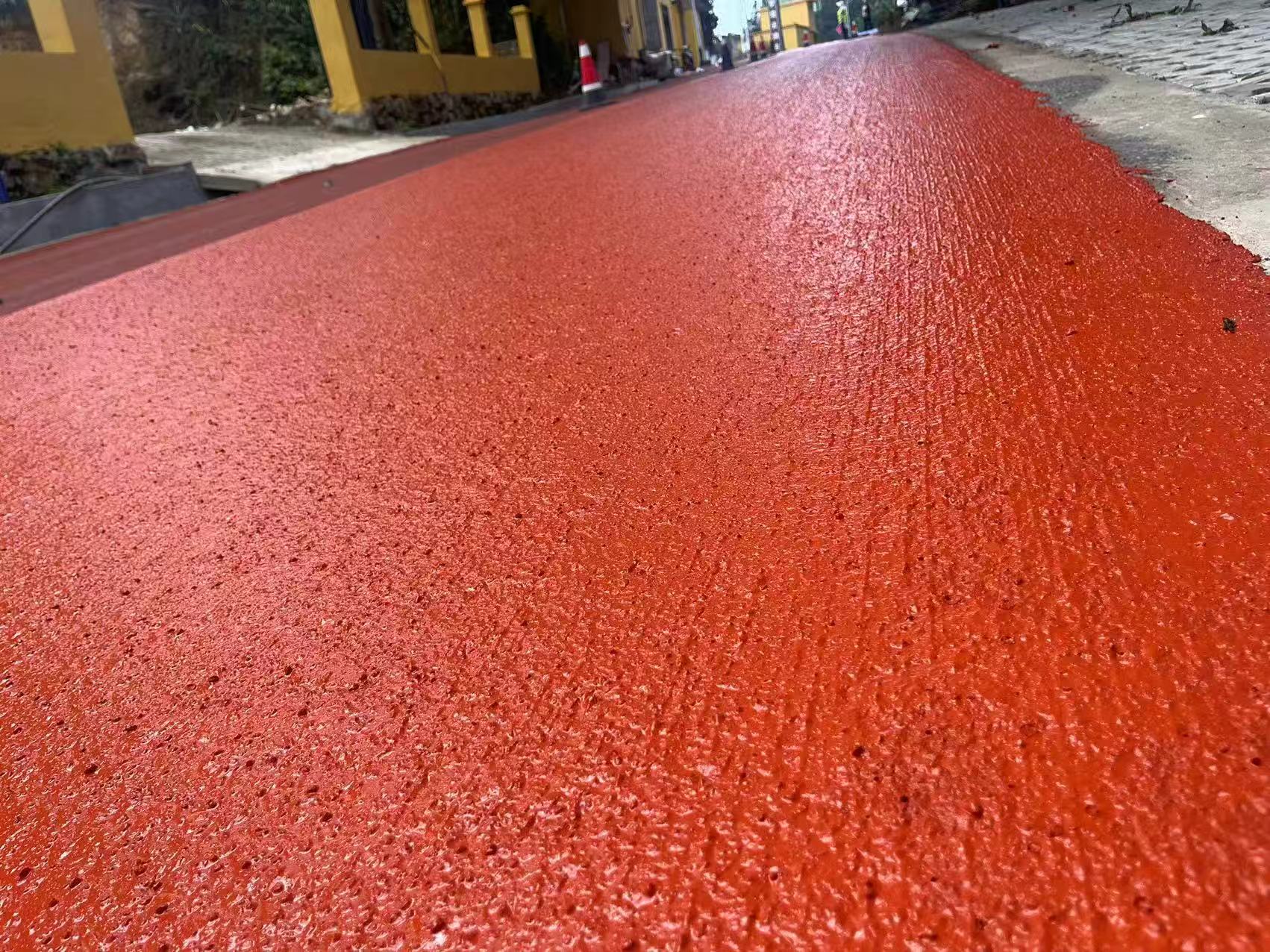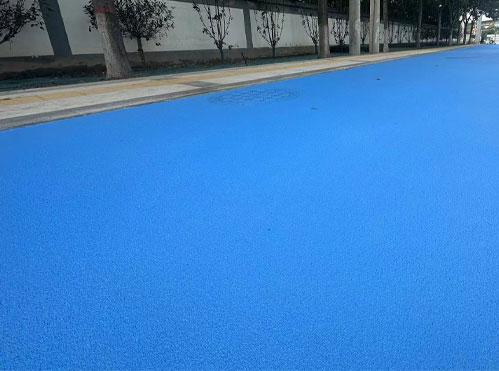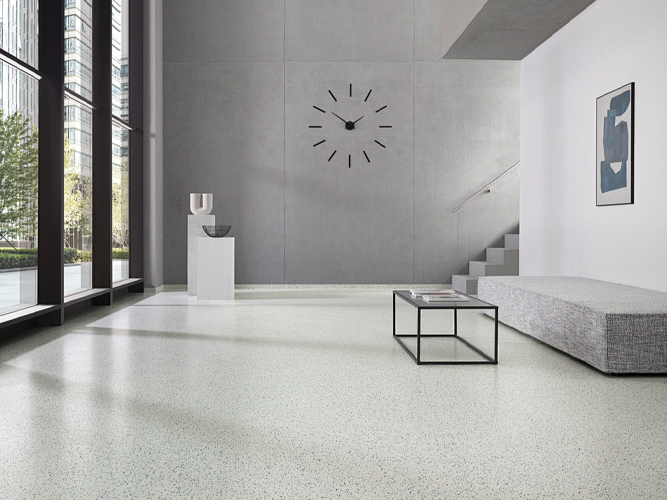
Colored anti-slip pavement is a modern surface solution designed to improve safety, visibility, and durability on roads and walkways. It is widely used in urban streets, pedestrian crossings, bicycle lanes, parking areas, ramps, bridges, school zones, and public squares where both vehicle and pedestrian safety are critical.
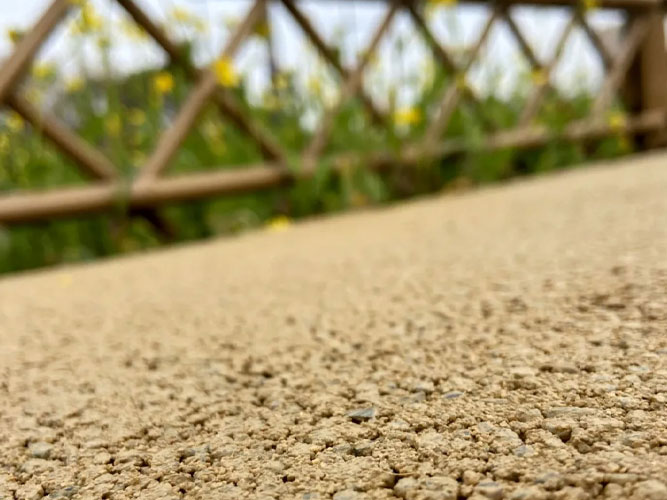
The main function of colored anti-slip pavement is to increase surface friction and reduce the risk of slipping or skidding. It is typically made by combining high-performance resin binders with hard aggregates such as ceramic particles, quartz sand, or silica. These materials create a rough, textured surface that significantly improves grip for tires and footwear, especially in wet, rainy, or oily conditions.
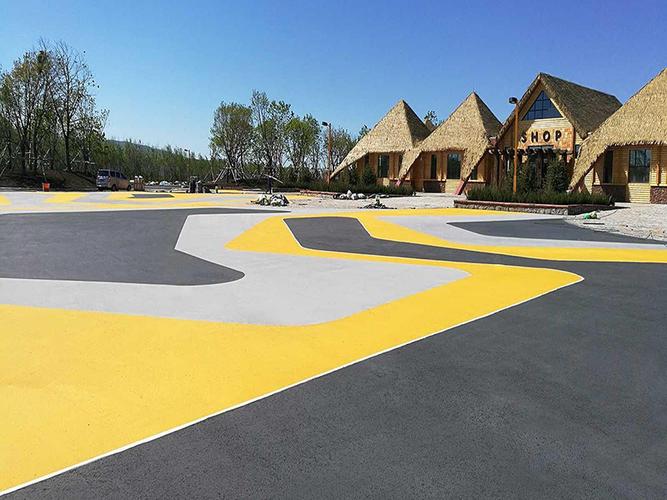
Color is another important feature that enhances road safety. Bright colors such as red, green, blue, and yellow are used to clearly define different traffic zones. For example, green is often used for bicycle lanes, red for bus lanes or warning areas, and yellow for caution zones. This visual separation helps guide road users, improves awareness, and reduces traffic conflicts in complex environments.
Durability is a key advantage of modern colored anti-slip systems. Advanced resin technologies such as MMA, epoxy, and polyurethane provide strong adhesion, UV resistance, and excellent wear performance. As a result, the pavement maintains both its color and skid resistance even under heavy traffic and long-term outdoor exposure.
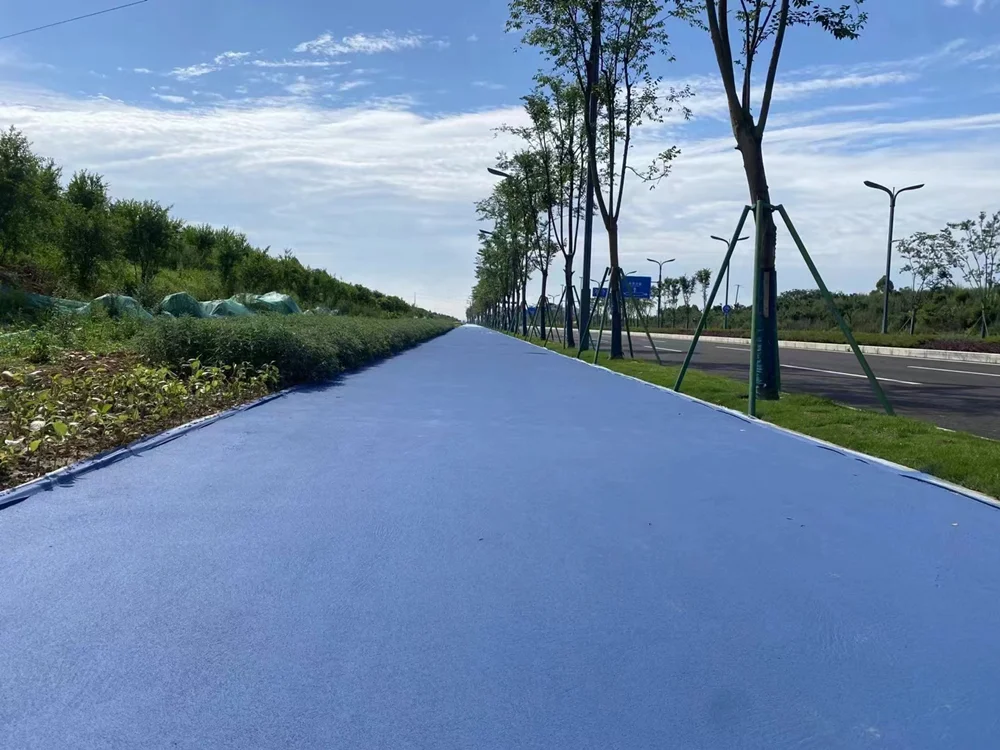
These systems also support fast installation and quick curing, allowing roads and walkways to reopen in a short time. This reduces construction downtime and minimizes disruption in busy urban areas. In addition, many modern formulations are water-based and environmentally friendly, helping reduce emissions during application.
Colored anti-slip pavement plays an important role in accident prevention. By combining high-friction surfaces with clear visual guidance, it improves braking safety for vehicles and walking stability for pedestrians. This is especially effective in high-risk areas such as intersections, school zones, and steep walkways.
Overall, colored anti-slip pavement is a practical and sustainable solution for building safer roads and walkways. It enhances safety, improves visibility, and supports modern urban transportation systems.