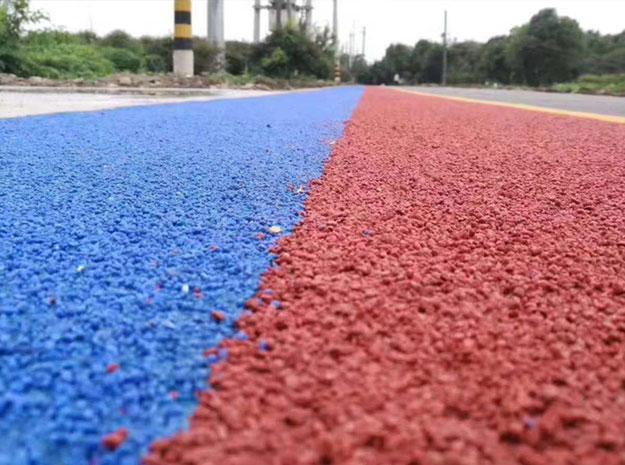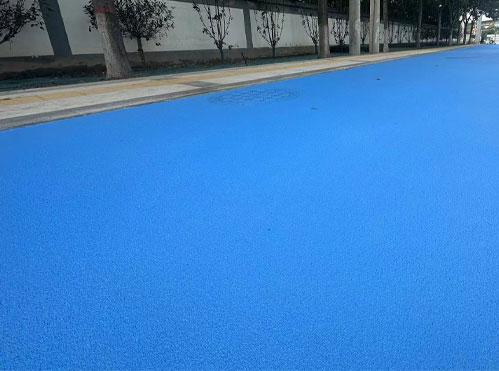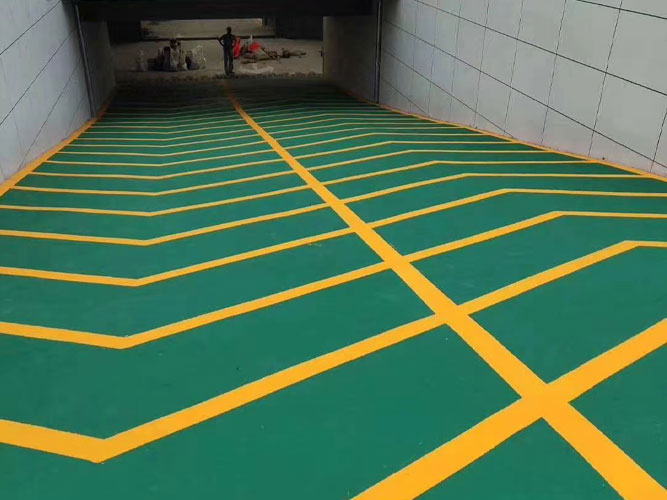
Colored anti-skid road surfaces are engineered pavement systems designed to improve road safety, enhance visibility, and provide long-lasting decorative effects. These surfaces are widely used on bike lanes, pedestrian crossings, bus lanes, intersections, parking areas, and traffic-calming zones. Their performance depends on a combination of specialized materials that provide color, durability, and skid resistance.
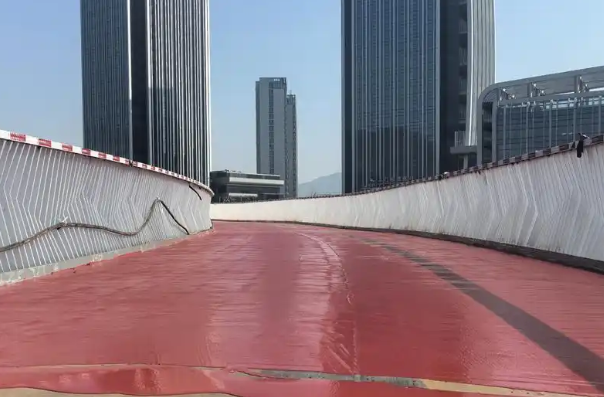
The binder is the core material that holds the anti-skid surface together. Common resin systems include:
MMA (Methyl Methacrylate) Resin – Known for rapid curing, excellent adhesion, and high durability. MMA systems can often be opened to traffic within a few hours.
Epoxy Resin – Provides strong bonding strength and chemical resistance, making it suitable for heavy-traffic areas.
Polyurethane Resin – Offers flexibility, UV resistance, and long-term weather durability.
Water-Based Acrylic Resin – An environmentally friendly option with low VOC emissions and good color retention.
These binders securely bond aggregates to the pavement while resisting wear from traffic and environmental conditions.
Anti-skid performance is achieved through the use of durable aggregates embedded in the resin layer. Common materials include:
Calcined Bauxite – One of the most widely used high-friction aggregates due to its exceptional hardness and skid resistance.
Ceramic Particles – Offer excellent durability and can be manufactured in various colors.
Colored Quartz Sand – Provides both decorative appearance and slip resistance.
Emery Aggregate – Known for high wear resistance in demanding traffic environments.
These aggregates create a textured surface that improves tire grip, especially during wet weather.
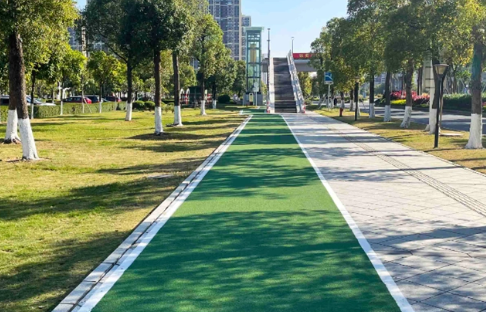
Specialized pigments are added to create bright, long-lasting colors. Common colors include:
Red for bus lanes and cycle tracks
Green for bicycle lanes
Blue for special traffic zones
Yellow for caution areas
Other customized colors for urban design projects
UV-resistant pigments help prevent fading and maintain visibility over time.
A primer layer is often applied before the colored anti-skid coating. Primers improve adhesion between the existing pavement and the resin system, increasing the lifespan of the installation and reducing the risk of delamination.
Some systems include a protective topcoat or sealer to enhance durability, weather resistance, and color retention. Sealers can also improve resistance to oil, water, and chemical contamination.
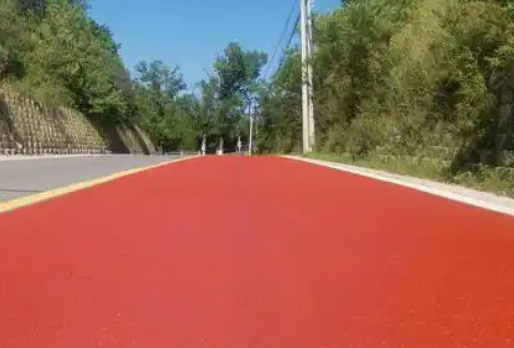
By combining high-performance resins, durable aggregates, quality pigments, and protective coatings, colored anti-skid road surfaces provide:
Enhanced skid resistance
Improved traffic safety
Excellent color visibility
Long service life
UV and weather resistance
Reduced maintenance costs
Attractive urban appearance
As cities focus on safer and more sustainable transportation infrastructure, colored anti-skid road surface materials continue to play an important role in modern road construction and pavement maintenance projects worldwide.