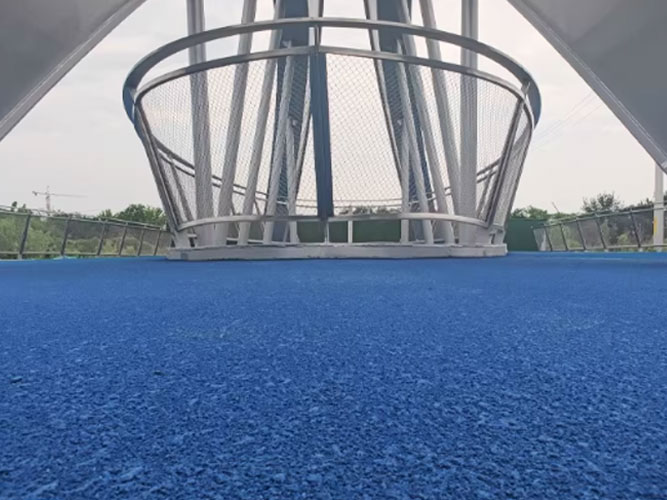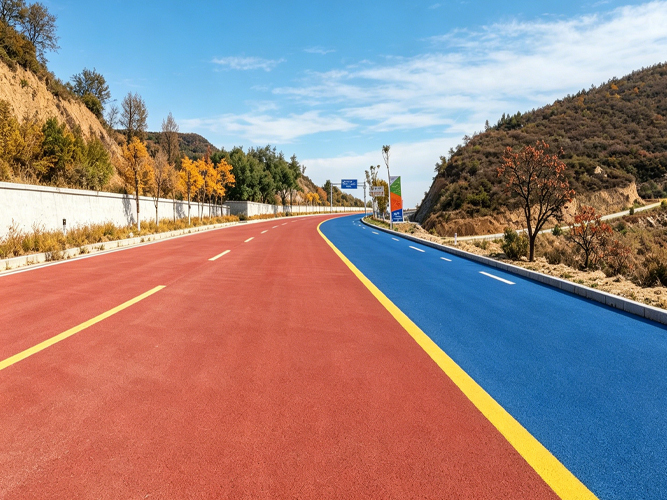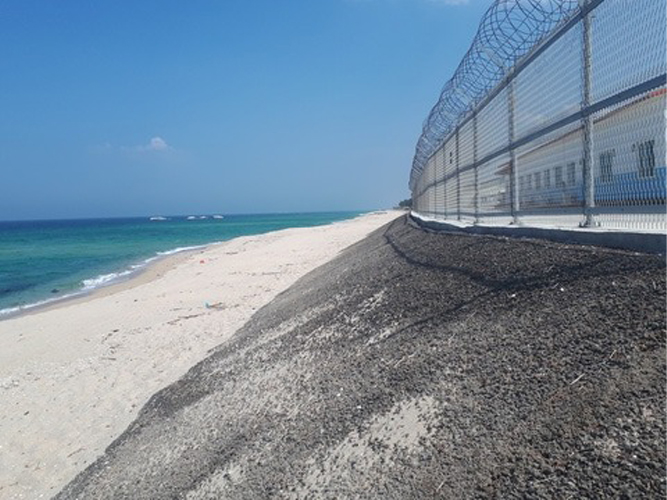
Colored polymer slurry mixture is a thin-layer pavement material made by combining polymer-modified emulsions, fine aggregates, pigments, and additives. It is mainly used for road surface maintenance and functional enhancement, especially where improved skid resistance, color marking, and surface renewal are required.
This material is commonly applied as a slurry seal or micro-surfacing layer on asphalt or concrete roads to extend pavement life and improve road safety.
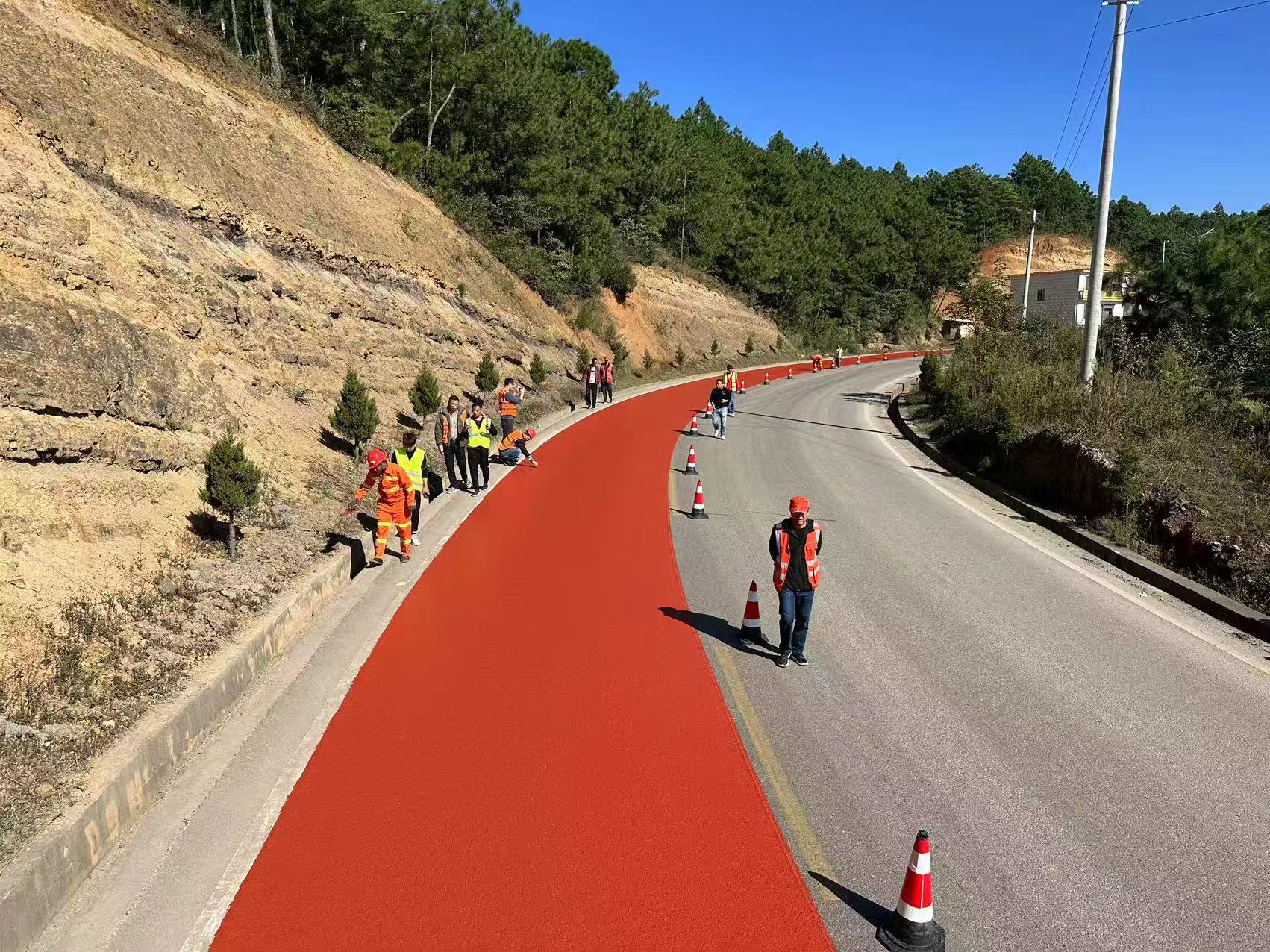
A typical colored polymer slurry mixture includes:
Polymer-modified emulsified asphalt (binder)
Fine aggregates such as crushed stone or sand
Mineral fillers for stability
Color pigments for visual identification
Additives to improve setting time and performance
These components work together to form a durable and flexible surface layer.
The mixture is applied in a thin layer, usually a few millimeters thick, making it suitable for quick road surface treatment.
The textured surface improves friction, helping reduce vehicle slipping, especially in wet conditions.
Different pigments allow the pavement to be produced in colors such as red, green, blue, or gray for traffic guidance and visual enhancement.
The polymer-modified binder improves bonding with the existing pavement and enhances resistance to cracking.
The slurry mixture can be applied quickly and opened to traffic after short curing time, reducing road closure impacts.
Colored polymer slurry mixtures are widely used in:
Urban roads
Bicycle lanes
Bus lanes
Parking lots
Airport service roads
Pedestrian crossings
Bridge decks
Tunnel entrances
Commercial and residential areas
It helps restore worn road surfaces and delays the need for full reconstruction.
The anti-skid texture reduces accident risks in wet and high-traffic conditions.
Color differentiation improves lane visibility and road organization.
Compared with full pavement replacement, slurry treatment is more economical and efficient.
Colored polymer slurry mixture is a practical and efficient road surfacing material that combines functional performance with visual improvement. It is widely used in modern road maintenance projects due to its durability, safety benefits, and fast application characteristics.