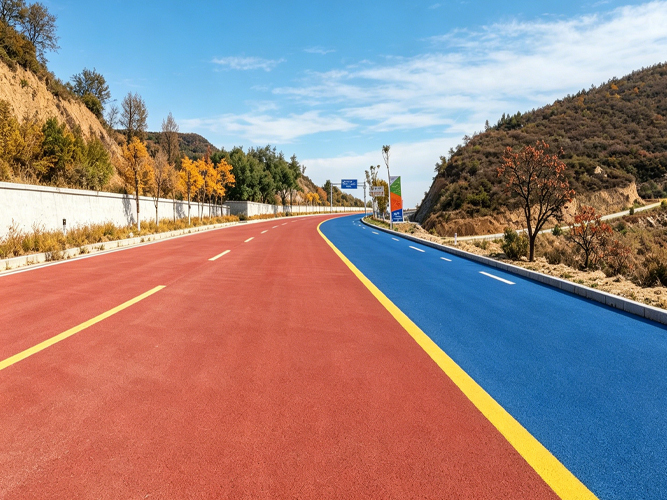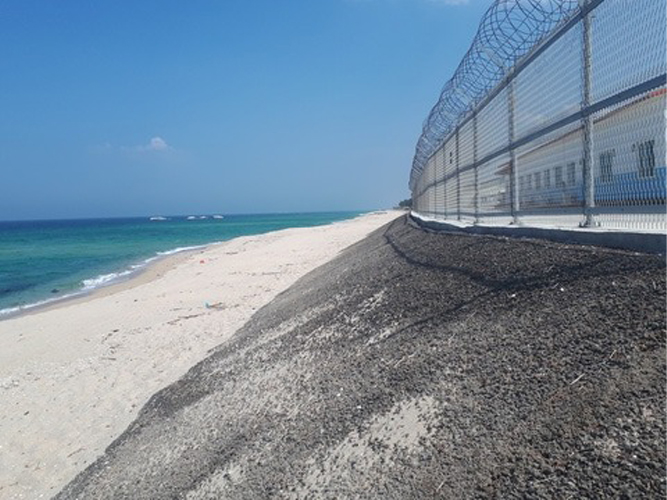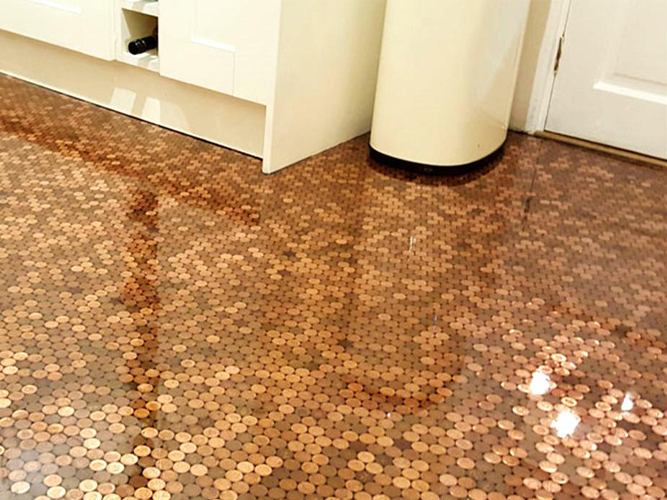
Color emulsified micro-surfacing systems are advanced pavement treatments designed to improve safety, durability, and visibility on bicycle lanes and pedestrian areas. By combining modified emulsified asphalt with colored aggregates and functional additives, this system creates a thin, high-friction surface that enhances both traffic guidance and surface performance.
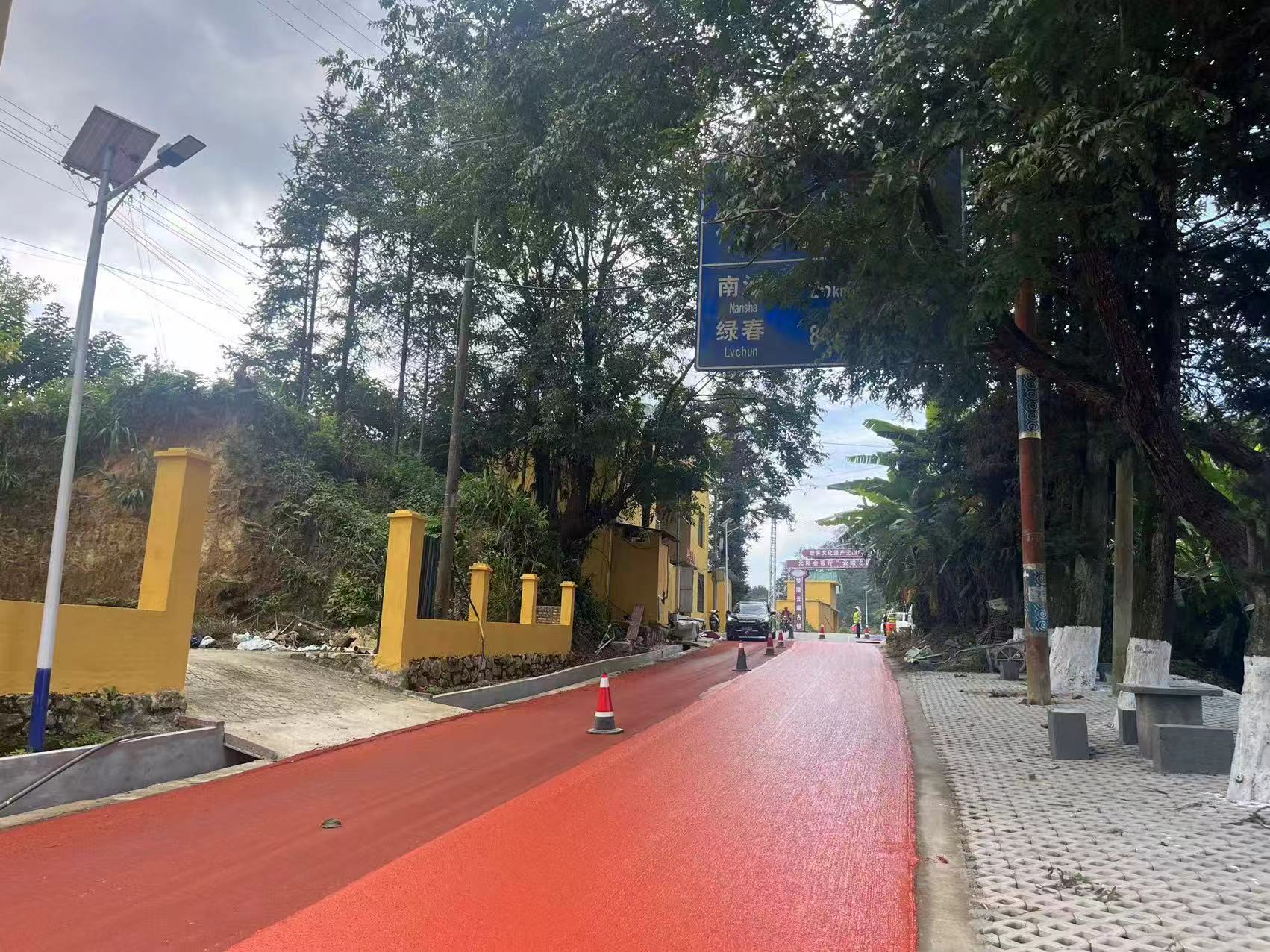
One of the key advantages of this system is improved safety for cyclists and pedestrians. The textured micro-surfaced layer provides excellent anti-skid performance, increasing traction in both dry and wet conditions. This helps reduce slipping risks for cyclists, especially during braking, turning, or riding in rainy weather.
Color is another important feature. Bright and durable pigments allow bicycle lanes and pedestrian zones to be clearly distinguished from vehicle lanes. This visual separation helps guide road users more effectively, reducing conflicts between cyclists, pedestrians, and vehicles. In busy urban environments, this improved clarity significantly enhances overall traffic organization.
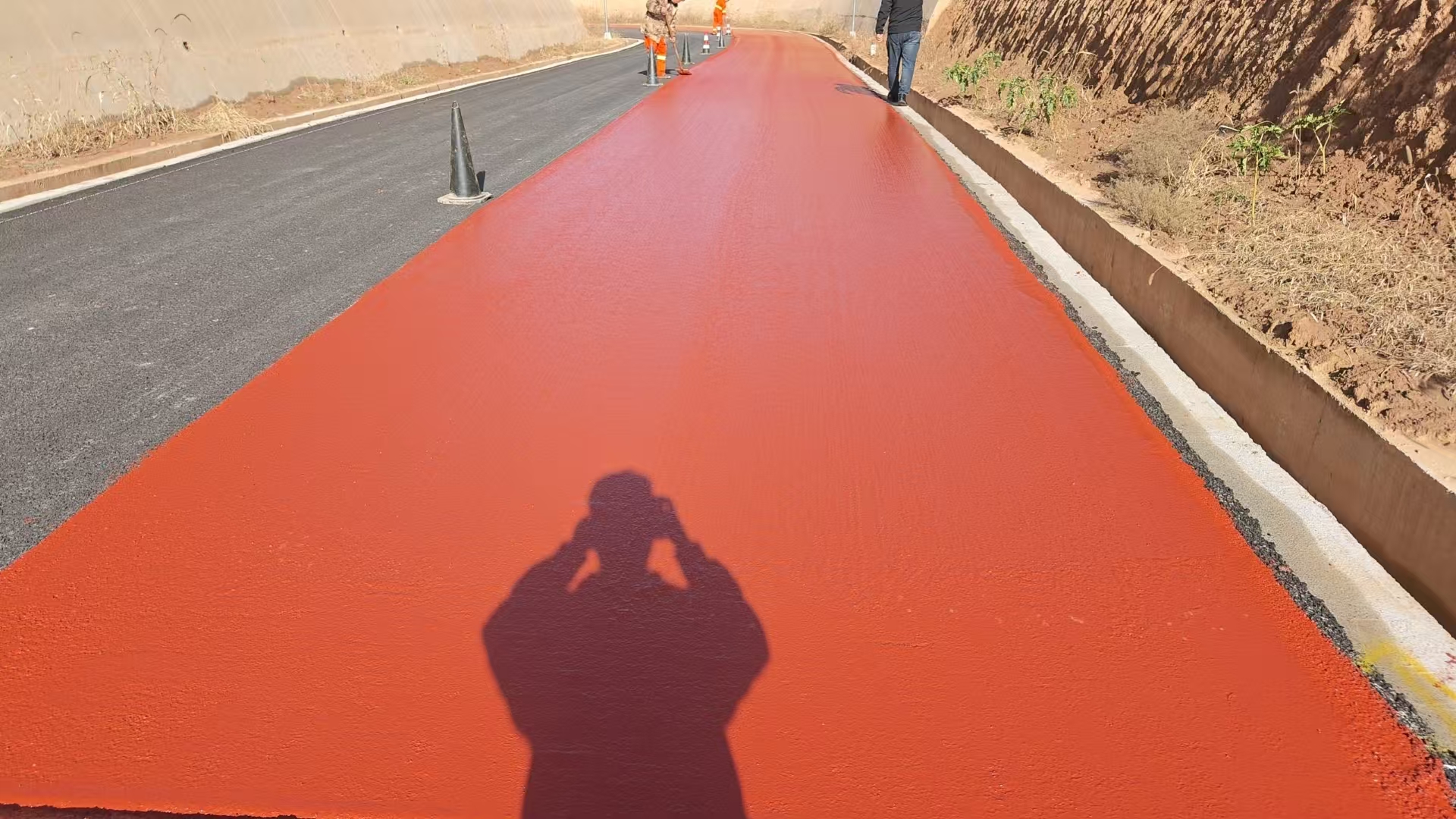
The micro-surfacing structure also improves road durability. It forms a strong bond with the existing pavement, creating a wear-resistant surface that can withstand moderate traffic loads and environmental stress. This helps extend pavement life while reducing maintenance frequency and costs.
In addition, color emulsified micro-surfacing systems offer fast construction and minimal traffic disruption. Because the application layer is thin and quick to cure, roads can often be reopened shortly after installation, making it ideal for urban improvement projects.
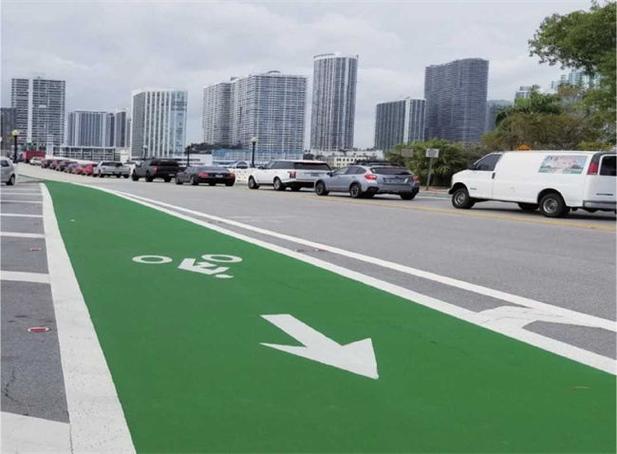
These systems are also environmentally friendly in many cases, using water-based or low-emission emulsions that reduce environmental impact during construction. This supports modern sustainable infrastructure goals.
Overall, color emulsified micro-surfacing systems provide an effective solution for enhancing bicycle lane safety and pedestrian protection. They combine skid resistance, clear visual guidance, durability, and sustainability, making them a strong choice for modern urban road design and active transportation infrastructure.