Colored Pavement Applications in Residential Communities
As residential communities continue to evolve toward safer, greener, and more visually appealing environments, colored pavement has become an increasingly popular solution in modern neighborhood design. It combines functionality, safety, and aesthetics, helping transform ordinary residential spaces into well-organized and comfortable living environments.
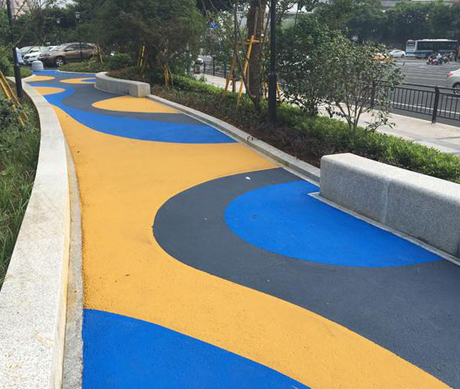
Colored pavement is widely used in community walkways, internal roads, jogging paths, children’s play areas, parking zones, leisure squares, and entrance plazas. Compared with traditional gray asphalt or concrete, colored surfaces help clearly define different functional areas within a residential community, improving both navigation and visual identity.
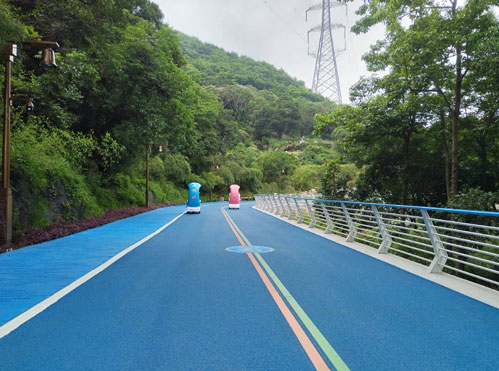
One of the most important applications is traffic and pedestrian separation. In residential areas where vehicles, bicycles, and pedestrians share limited space, colored pavement can visually distinguish lanes and zones. For example, pedestrian walkways may use warm or earthy tones, while bicycle lanes often use red or green coloring. This clear separation helps reduce conflicts and improves overall safety for residents.
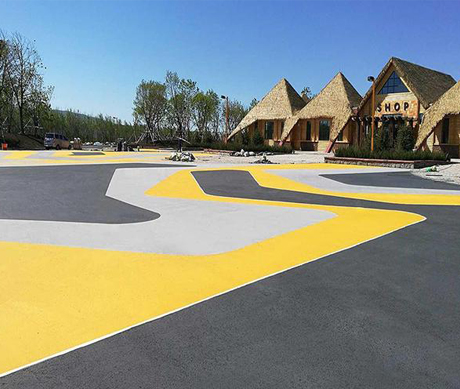
Safety is a key priority in community environments. Colored pavement systems often incorporate anti-slip technologies such as high-friction aggregates or resin-based coatings, which enhance grip in both dry and wet conditions. This is particularly important in areas frequented by children and elderly residents, where slip prevention is essential.
Another major application is in children’s activity and recreation zones. Brightly colored surfaces can be used to create playful, engaging environments that encourage outdoor activities while also defining safe boundaries for play. These vibrant designs contribute to a more enjoyable and family-friendly atmosphere.
Colored pavement also plays a role in parking management within residential communities. Different colors can be used to indicate parking directions, reserved spaces, emergency lanes, or visitor zones. This improves traffic flow and reduces confusion in underground or surface parking areas.
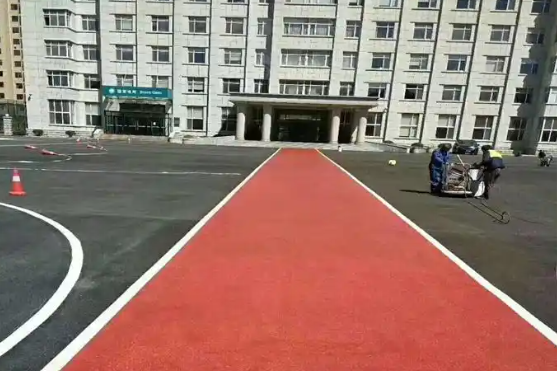
Durability is equally important in residential applications. Modern systems such as color emulsified micro-surfacing, MMA resin coatings, and polymer-modified pavement layers provide long-lasting color stability, UV resistance, and wear resistance. This ensures that community roads and walkways maintain their appearance and performance over time with minimal maintenance.
From a design perspective, colored pavement enhances the overall identity of residential communities. It allows developers to create unique visual themes, improve landscape harmony, and increase property value by making neighborhoods more attractive and well-organized.
In conclusion, colored pavement is becoming an essential element in residential community planning. It improves safety, strengthens spatial organization, and enhances the visual quality of living environments, making communities more comfortable and modern for residents.