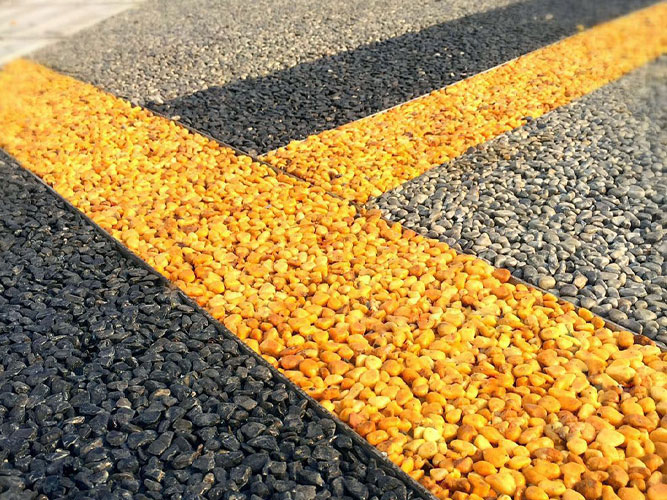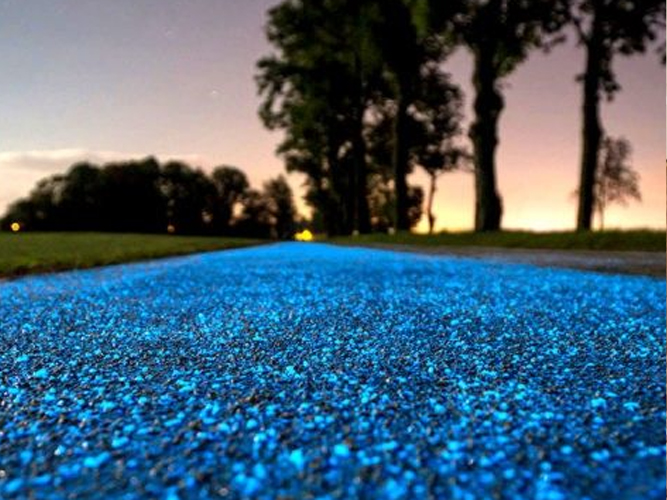
High Performance Colored Pavement for Urban Roads
Urban roads are under increasing pressure from growing traffic volumes, safety requirements, and the need for more sustainable and visually organized city environments. In this context, high performance colored pavement has emerged as an advanced solution that combines durability, functionality, and modern urban design.
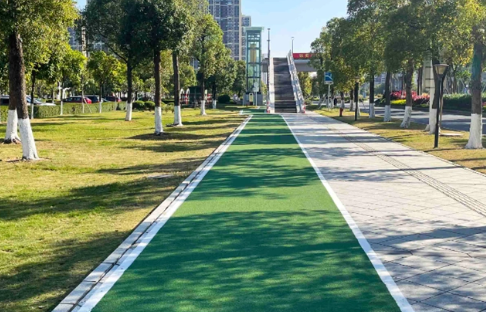
Colored pavement systems are widely applied in bus lanes, bicycle lanes, pedestrian crossings, intersection zones, traffic calming areas, and urban plazas. Unlike traditional asphalt, these systems introduce color-coded road surfaces that improve visibility and help structure complex urban traffic networks.
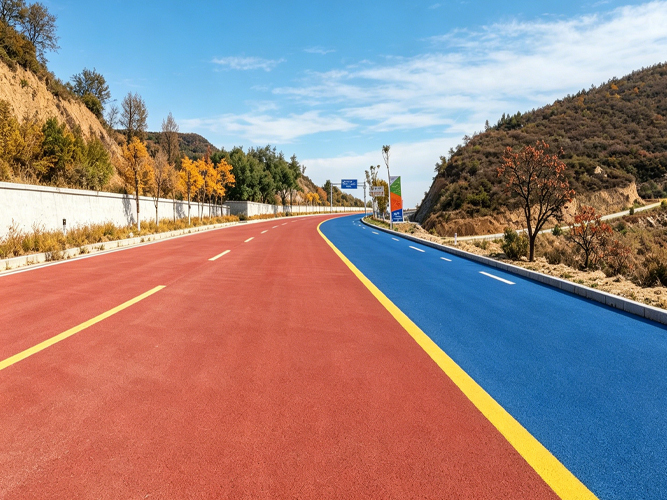
One of the key advantages is enhanced road safety. High performance colored pavement improves driver awareness by clearly distinguishing different functional zones. Bright and contrasting colors help identify bus-only lanes, bike lanes, and pedestrian crossings, reducing conflicts between vehicles and vulnerable road users. This is especially important in dense urban environments where traffic interaction is constant.
Another major benefit is anti-skid performance. Modern systems are engineered with high-friction aggregates, polymer-modified binders, or MMA resin technology to significantly increase surface grip. This improves braking stability and reduces accident risks, particularly in wet weather conditions or high-speed urban corridors.
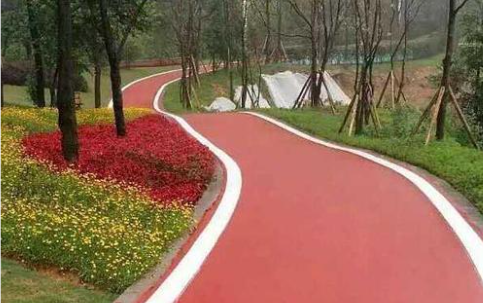
Durability is also a critical feature. Urban roads require materials that can withstand heavy traffic loads, frequent braking, UV exposure, and temperature changes. High performance colored pavement systems such as color emulsified micro-surfacing, resin-based coatings, and polymer slurry systems are designed to resist wear, fading, and surface deformation over long service cycles.
From a traffic management perspective, colored pavement improves road organization and efficiency. Color coding helps guide traffic flow intuitively, reduces driver confusion, and supports smart city planning strategies. It also enhances the visibility of road regulations without relying solely on signage or paint markings.
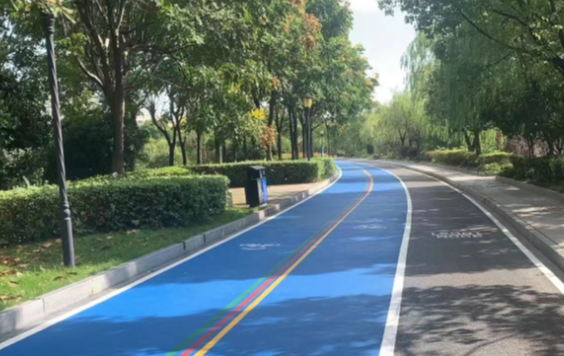
In addition to functionality, colored pavement contributes to urban aesthetics. It transforms ordinary gray road surfaces into structured and visually engaging cityscapes. This supports modern urban design goals, improves public space quality, and strengthens the identity of different districts within a city.
In conclusion, high performance colored pavement is an essential innovation for modern urban roads. It improves safety, strengthens traffic organization, enhances durability, and contributes to a more visually coherent and efficient city environment.