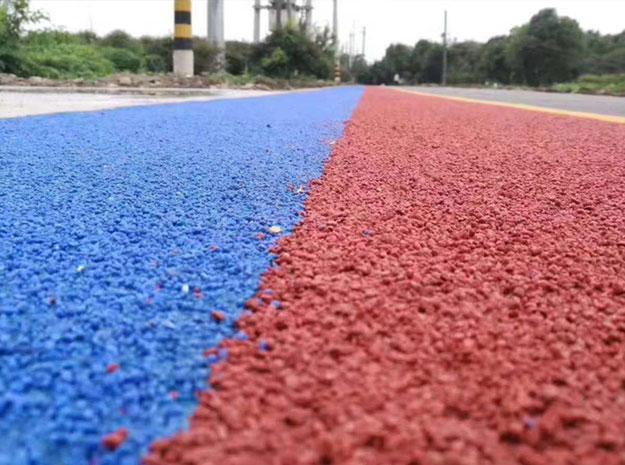
High Visibility Colored Pavement for Traffic Control
High visibility colored pavement plays a crucial role in modern traffic management systems, helping guide drivers, cyclists, and pedestrians with clear visual cues. As urban areas become more complex and traffic density increases, the need for effective, durable, and instantly recognizable road markings has never been greater. Colored pavement provides an efficient solution by combining functional safety with visual communication.
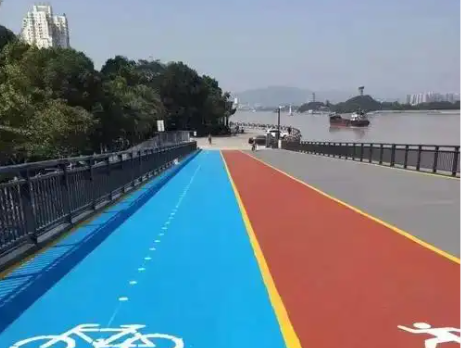
The primary purpose of high visibility colored pavement is to enhance road awareness. Unlike standard asphalt, colored surfaces create immediate contrast between different traffic zones. For example, red pavement is often used for bus lanes or restricted areas, green for bicycle lanes, and bright yellow or blue for special crossings or warning zones. This color differentiation helps road users quickly interpret traffic rules without relying solely on signage.
One of the most widely used technologies in this field is resin-based colored anti-skid pavement. These systems use durable binders combined with high-friction aggregates to create a textured surface that improves both visibility and safety. The rough surface increases tire grip, reducing braking distance and lowering accident risk, especially in wet or high-speed conditions.
Ceramic aggregate pavement is another advanced solution for high visibility traffic control. These materials are engineered through high-temperature sintering, producing extremely hard particles with excellent color stability and wear resistance. Even under heavy traffic loads and UV exposure, the color remains vibrant for years, ensuring long-term visibility without frequent maintenance.

Water-based colored pavement coatings are also gaining popularity in urban projects. These eco-friendly systems use low-VOC formulations, making them safer for workers and more sustainable for the environment. They are particularly suitable for pedestrian crossings, school zones, and urban intersections where safety and environmental impact are equally important.
High visibility colored pavement is not only about aesthetics—it directly improves traffic safety. Studies have shown that clear visual road zoning reduces driver confusion, improves reaction time, and helps prevent lane violations. In complex environments such as highway exits, roundabouts, and urban intersections, colored pavement acts as a silent but highly effective traffic guide.
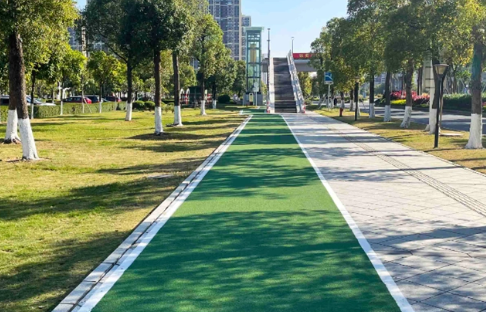
Another important advantage is improved night-time visibility. When combined with reflective aggregates or glass beads, colored pavement can significantly enhance visibility under headlights. This is especially beneficial in rainy or low-light conditions, where traditional road markings may become difficult to see.
From a traffic control perspective, colored pavement is also a cost-effective solution. Instead of relying solely on physical barriers or extensive signage systems, road authorities can use color-coded surfaces to communicate rules more efficiently. This reduces infrastructure clutter while improving compliance among road users.
In conclusion, high visibility colored pavement is a key innovation in modern traffic control systems. By combining durability, skid resistance, and strong visual differentiation, it enhances road safety and improves traffic flow in both urban and highway environments. As cities continue to grow and traffic demands increase, colored pavement will remain an essential tool for smarter, safer, and more efficient transportation networks.