Colored Anti-Slip Road Surface for Bridge Deck Safety Protection
Colored anti-slip road surface plays a critical role in bridge deck safety protection, where high friction performance, structural durability, and environmental resistance are essential. Bridges are high-risk transportation zones due to elevated structures, wind exposure, rapid weather changes, and frequent braking or acceleration, making surface skid resistance extremely important.
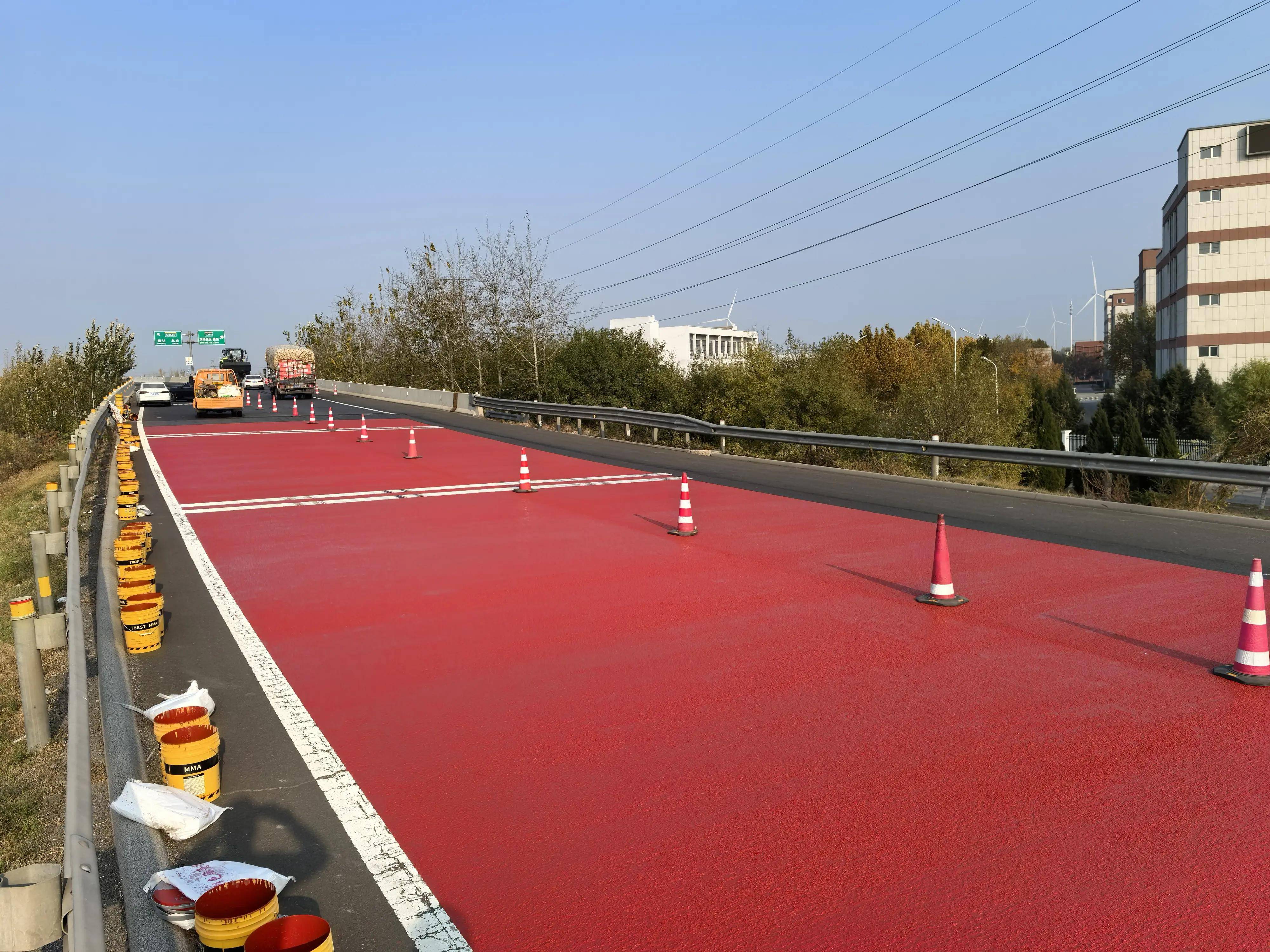
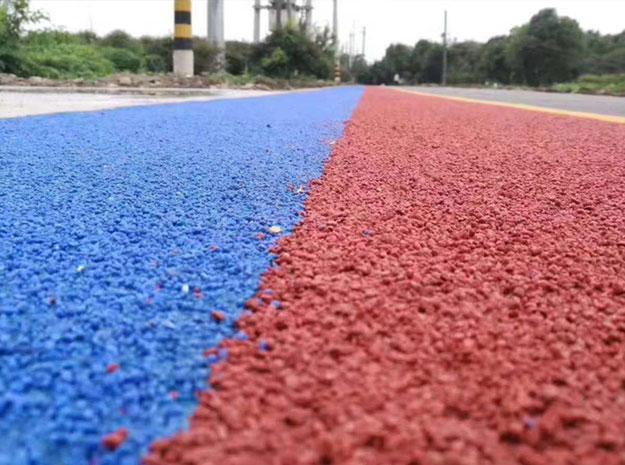
One of the key functions of colored anti-slip surfacing on bridge decks is improving friction safety. Bridge surfaces often become slippery due to rain, condensation, or temperature variations. By using high-friction aggregates such as ceramic particles or hard mineral stones embedded in durable resin or polymer binders, the surface texture is significantly enhanced. This improves tire grip, reduces braking distance, and helps prevent vehicle skidding, especially in wet or windy conditions.
Another important benefit is lane visibility and traffic guidance. Colored surfacing can be applied to clearly define driving lanes, emergency lanes, shoulder zones, and warning areas. This is especially important on bridges where spatial perception is limited and drivers need stronger visual cues to maintain safe driving behavior.
In bridge engineering, durability is a key requirement. The surface must withstand continuous vehicle loads, vibration, wind pressure, temperature expansion and contraction, and long-term UV exposure. High-quality colored anti-slip systems are designed to maintain stable adhesion and surface texture, preventing aggregate loss, cracking, or delamination over time.
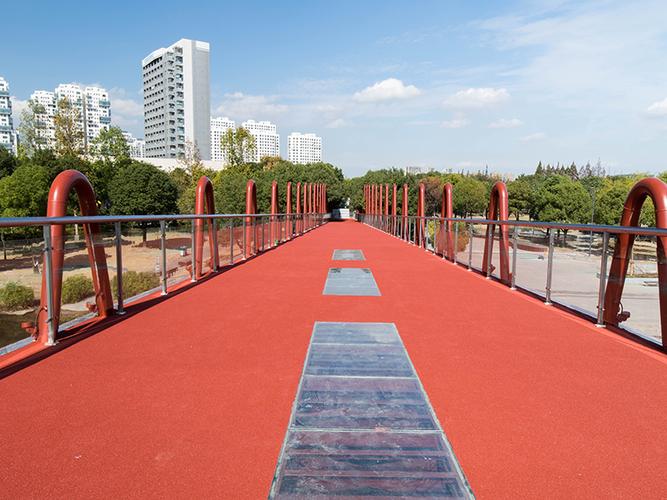
Modern systems such as Bridge Deck Colored Anti-Slip Surfacing System are widely used because they provide strong bonding strength and long-lasting skid resistance under extreme structural conditions. These systems can be applied on both steel bridge decks and concrete bridge decks, depending on engineering requirements.
Another important advantage is water management support. The textured surface helps improve drainage performance at micro-level, reducing water film buildup and minimizing hydroplaning risk during heavy rainfall. This is particularly important for long-span bridges exposed to open environments.
Fast construction and maintenance efficiency are also important. Many resin-based or MMA systems allow rapid installation and short curing times, reducing traffic disruption during bridge maintenance or renovation projects. This helps ensure that critical transportation corridors remain operational with minimal downtime.
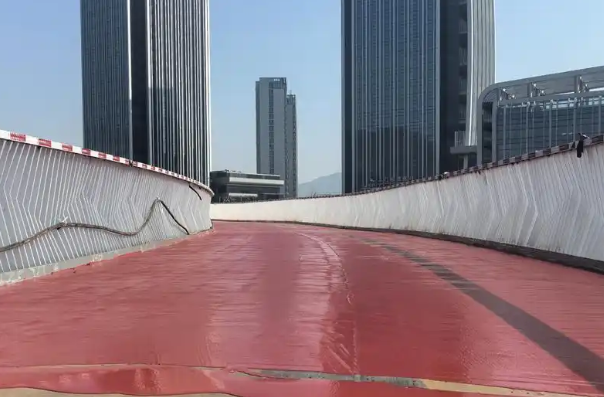
Environmental and corrosion resistance performance is also essential in bridge applications. Advanced materials are often designed with low-VOC or environmentally friendly formulations while also resisting chemical corrosion from de-icing salts and moisture exposure.
Overall, colored anti-slip road surface for bridge deck safety protection provides a comprehensive solution that enhances friction safety, improves visual guidance, and strengthens long-term structural performance. It is an essential material for modern bridge engineering and highway safety systems.