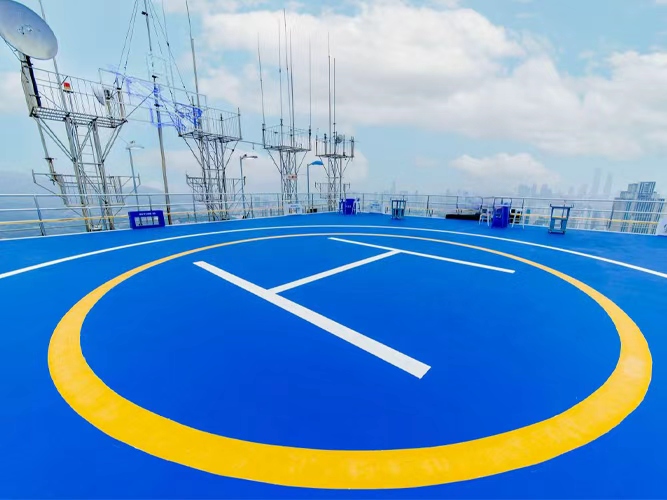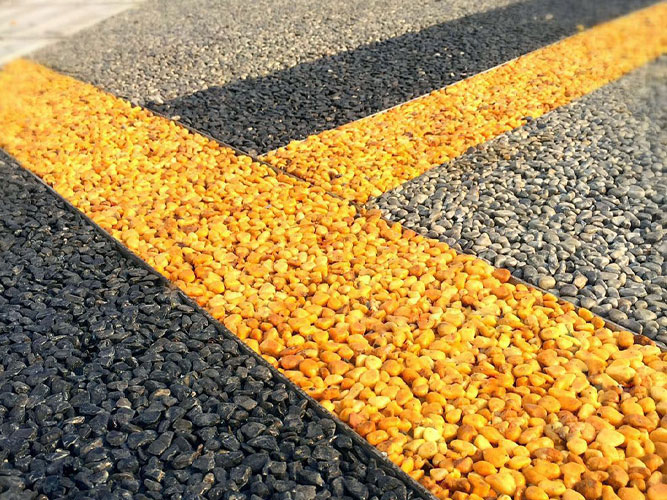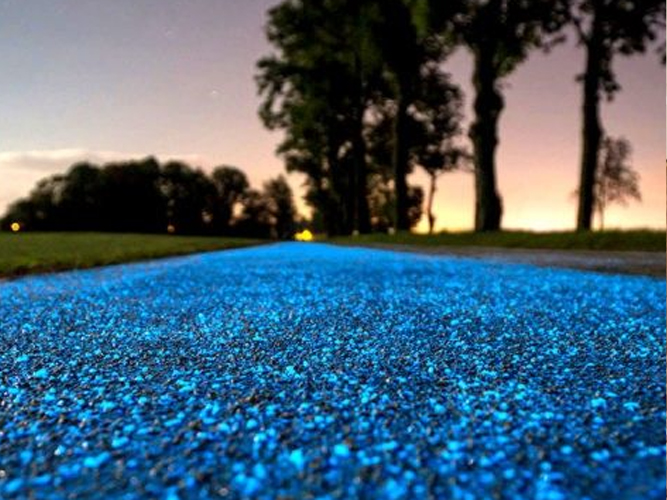
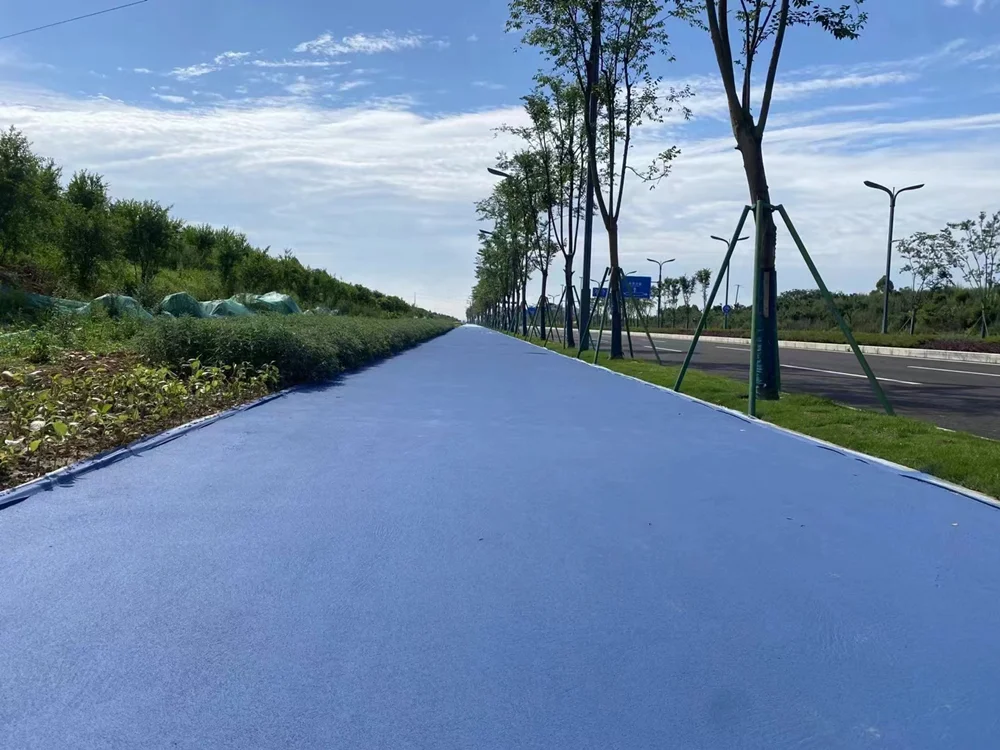
Colored anti-skid pavement is a functional road surfacing system designed to improve driving stability, reduce accident risk, and enhance traffic guidance. It combines high-friction aggregates (such as ceramic or mineral particles) with colored resin binders to create a textured, visible, and durable surface.
It is widely used on bicycle lanes, pedestrian crossings, intersections, school zones, bus lanes, and highway ramps—areas where safety demands are especially high.
The most important safety function of colored anti-skid pavement is increasing friction between tires (or shoes) and the road surface.
The rough texture created by embedded aggregates:
Improves tire grip on the road
Reduces wheel slippage
Enhances braking efficiency
Stabilizes vehicle turning performance
This is especially critical during:
Rainy conditions
Wet braking situations
Sharp turns
Downhill slopes
Higher friction directly translates into shorter stopping distances and fewer skid-related accidents.
On smooth asphalt or concrete, vehicles need more distance to stop—especially when the surface is wet or contaminated.
Colored anti-skid pavement helps:
Increase braking force
Prevent tire hydroplaning
Maintain consistent road contact
As a result, drivers can stop more quickly and safely in emergency situations.
The colored surface improves visual recognition of road zones, helping drivers and pedestrians quickly understand traffic rules.
Common safety color functions include:
Red: high-risk or alert zones (e.g., intersections, conflict areas)
Green: bicycle lanes or priority routes
Blue/Yellow: guidance or special traffic zones
This visual differentiation helps:
Reduce lane confusion
Improve driver reaction time
Organize traffic flow more effectively
Colored anti-skid surfaces are commonly used in pedestrian crossings and bicycle lanes.
They improve safety by:
Increasing foot traction (reducing slips and falls)
Clearly marking crossing areas
Separating cyclists from motor vehicles
Making vulnerable road users more visible
This is especially important in urban environments with mixed traffic.
Water, oil, and dust can make traditional pavement dangerously slippery.
Anti-skid colored coatings reduce this risk by:
Maintaining surface roughness under wet conditions
Channeling water through surface texture
Resisting oil film buildup
Providing consistent grip in changing weather
This helps prevent accidents caused by sudden loss of traction.
Color and texture work together as a warning system. Drivers instinctively slow down when they see:
Bright colored pavement
Textured surface changes
Contrasting road markings
This is commonly used in:
School zones
Tunnel entrances
Bridge decks
Sharp curves
Toll approaches
The visual cue encourages safer driving behavior.
Clear road differentiation reduces mental workload for drivers. When lanes and danger zones are visually obvious:
Decision-making becomes faster
Lane discipline improves
Risk of sudden maneuvers decreases
This helps lower accident probability, especially in dense urban traffic.
Unlike painted markings that fade quickly, colored anti-skid pavements:
Maintain texture over time
Retain color visibility longer
Require less frequent maintenance
This ensures consistent safety performance throughout the pavement’s service life.
Colored anti-skid pavement improves road safety through a combination of physical friction enhancement and visual traffic guidance. By increasing grip, reducing braking distance, improving visibility, and clearly defining traffic zones, it significantly lowers the risk of accidents for drivers, cyclists, and pedestrians.
Its dual function—safety + guidance—makes it an essential solution for modern urban road systems and high-risk traffic environments.