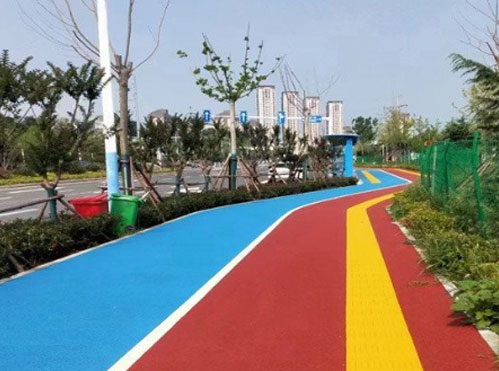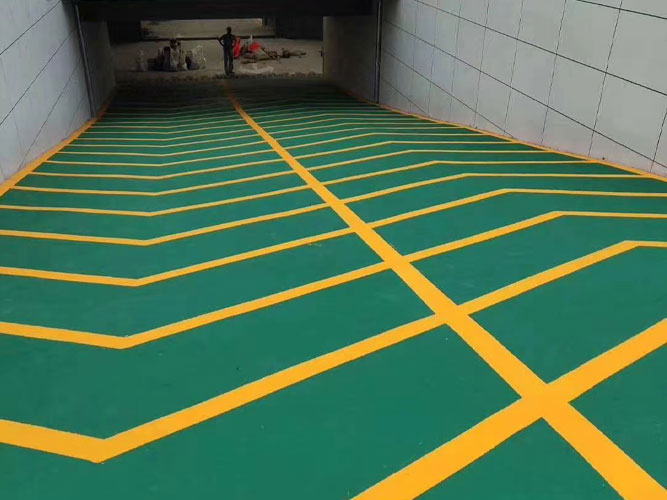
Freight transportation plays a critical role in global logistics, but it also places extreme stress on road surfaces. Heavy trucks generate high vertical loads, strong shear forces during braking, and continuous tire polishing effects that can significantly reduce pavement friction over time. In this context, road anti-skid materials are engineered to maintain safety performance under demanding heavy-load conditions.

Freight trucks exert far greater pressure on pavement compared to standard passenger vehicles. This leads to several challenges:
High contact pressure at tire–road interface
Repeated braking and acceleration stress
Surface polishing from continuous tire friction
Micro-cracking and gradual texture loss
Water film risk in wet conditions due to smoother surfaces
Without high-friction surfacing, these conditions can quickly reduce skid resistance and increase accident risk, especially at intersections, ramps, and downhill sections.
Modern road anti-skid materials are designed with high mechanical strength and abrasion resistance to withstand freight traffic.
Resin-based binders (such as epoxy, polyurethane, or MMA systems) provide strong adhesion to asphalt or concrete substrates. Under heavy loads, these binders:
Maintain structural integrity under pressure
Resist deformation and cracking
Prevent aggregate loss under shear stress
This ensures the anti-skid layer remains stable even under continuous truck traffic.
The surface texture is created by hard aggregates such as:
Calcined bauxite
Ceramic particles
High-hardness mineral aggregates
These materials are highly resistant to polishing, meaning they maintain micro-texture even after long-term tire abrasion from heavy freight vehicles.

One of the key performance advantages of anti-skid systems is their ability to retain friction even in heavily trafficked corridors such as:
Logistics routes and freight corridors
Highway ramps and toll stations
Industrial zones and ports
Urban delivery routes
Bridge approaches with frequent braking
Even when subjected to continuous heavy loads, properly installed high-friction surfacing can maintain stable skid resistance and reduce braking distance.
Wet weather combined with heavy loads presents one of the most dangerous driving scenarios. Anti-skid materials help mitigate this risk by:
Breaking up water film between tire and pavement
Improving drainage through surface texture
Increasing tire contact area with the road
Reducing hydroplaning risk under load
This is especially important for downhill ramps, bridge decks, and curved sections where freight trucks require longer stopping distances.
High-quality anti-skid systems are designed not just for surface friction, but also for load distribution.
Flexible binders absorb micro-movements from traffic loads
Strong adhesion prevents delamination under shear forces
Textured surfaces distribute tire pressure more evenly
Multi-layer systems enhance long-term structural stability
This combination ensures that the pavement system remains intact even under repeated heavy axle loads.
When properly installed and maintained, road anti-skid materials can provide long service life under heavy-load environments. Key durability factors include:
Resistance to rutting and surface deformation
High abrasion resistance from tire wear
UV and weather stability for outdoor exposure
Strong bonding performance over time
Routine maintenance such as cleaning and periodic inspection further extends service life and preserves skid resistance.

Road anti-skid materials are specifically engineered to perform under demanding freight truck conditions. Through high-strength binders, durable aggregates, and optimized surface texture, these systems maintain friction performance even under heavy loads, continuous braking, and harsh environmental conditions.
As global logistics traffic continues to grow, high-friction surfacing technologies are becoming essential for highways, industrial corridors, and transportation hubs. They provide a reliable solution for improving safety, reducing accidents, and ensuring long-term pavement performance under heavy freight traffic.