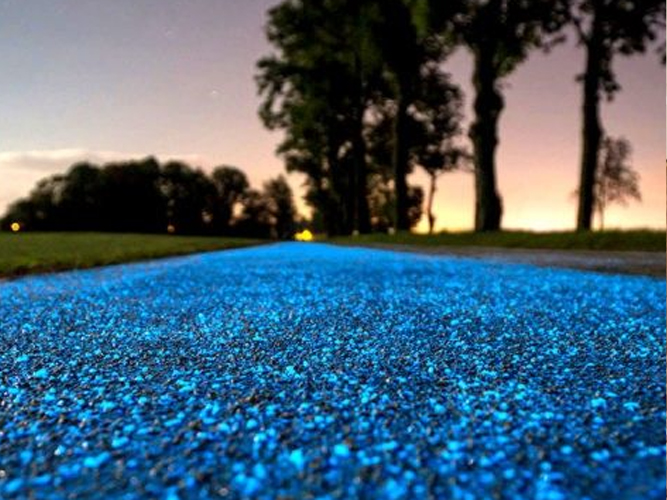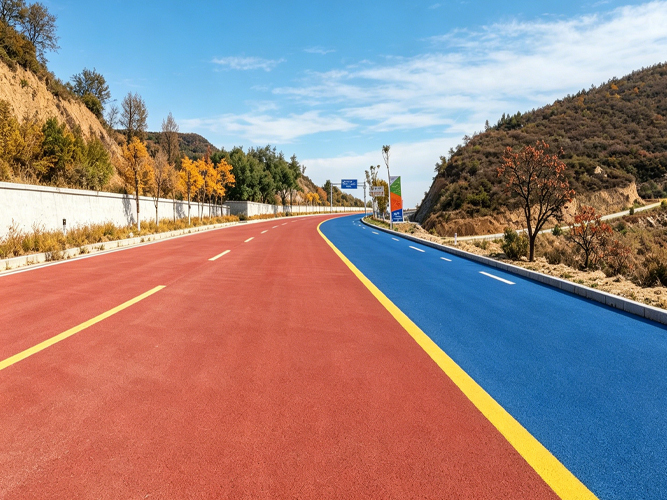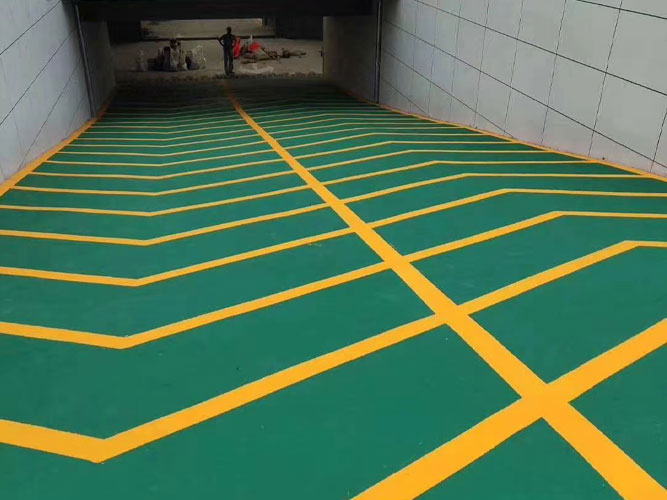
Urban infrastructure is no longer designed with functionality alone in mind. Today’s cities demand road systems that are safer, more efficient, and visually appealing. This shift has led to the rapid rise of colored asphalt, a modern pavement solution that combines engineering performance with design flexibility. By introducing color into road surfaces, cities are transforming ordinary streets into organized, safe, and visually engaging transportation networks.
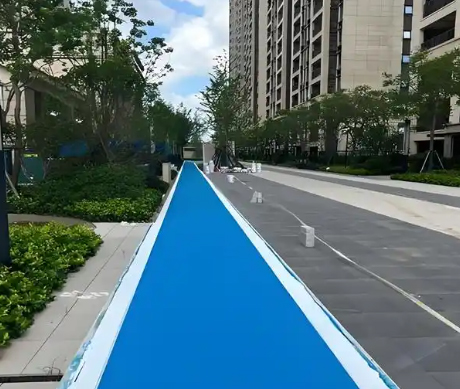
Traditional asphalt is effective but visually uniform, which can make it difficult to distinguish different traffic zones. Colored asphalt solves this issue by introducing clear visual differentiation across road spaces.
Its growing popularity is driven by:
Improved road safety
Enhanced traffic organization
Better visibility for all road users
Urban beautification
Support for smart city planning
Increased infrastructure efficiency
As cities expand, the need for clearer and more intuitive road systems becomes increasingly important.
Colored asphalt is unique because it does not sacrifice performance for appearance. Instead, it integrates both aspects into a single solution.
From an aesthetic perspective, it allows designers to:
Create visually distinct road environments
Highlight key transportation zones
Improve city identity and branding
Enhance public space design
From a functional perspective, it provides:
Strong skid resistance
Durable surface performance
High visibility in traffic environments
Clear separation of road functions
This dual advantage makes colored asphalt highly valuable for modern infrastructure projects.
Safety is one of the most important benefits of colored asphalt. Bright and contrasting road surfaces help drivers quickly recognize critical areas and adjust their behavior accordingly.
Key safety improvements include:
Better recognition of pedestrian crossings
Clear identification of bicycle lanes
Increased driver awareness in high-risk zones
Reduced traffic conflicts at intersections
Improved guidance in complex road layouts
Many systems also incorporate anti-slip aggregates that improve traction and reduce accident risks, especially in wet conditions.
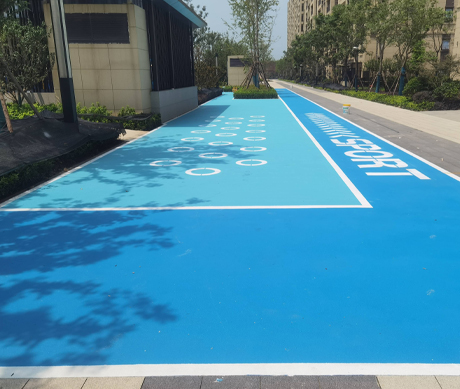
Colored asphalt plays a key role in modern urban planning by helping cities organize space more effectively. It is widely used in areas where multiple transportation modes intersect.
Common applications include:
Bicycle lanes
Bus rapid transit corridors
Pedestrian crossings
School zones
Parking facilities
Public squares and plazas
By visually structuring road environments, colored asphalt makes cities easier to navigate and safer to move through.
Many modern colored asphalt systems are designed with sustainability in mind. Water-based binders and long-lasting materials help reduce environmental impact while extending pavement lifespan.
Sustainability benefits include:
Reduced maintenance frequency
Lower material consumption over time
Longer service life
Improved resource efficiency
Support for eco-friendly construction practices
These features align with global trends toward greener and more sustainable cities.
Several advanced pavement systems are widely used in colored asphalt applications.
An environmentally friendly system offering excellent adhesion, vibrant color stability, and reliable skid resistance for urban environments.
Designed for high-traffic areas requiring strong durability and enhanced safety performance.
A fast-curing solution ideal for projects requiring minimal traffic disruption and long-term durability.
A cost-effective method for renewing aging asphalt while improving appearance and surface performance.
A high-friction solution that provides superior skid resistance for ramps, intersections, and high-risk traffic zones.
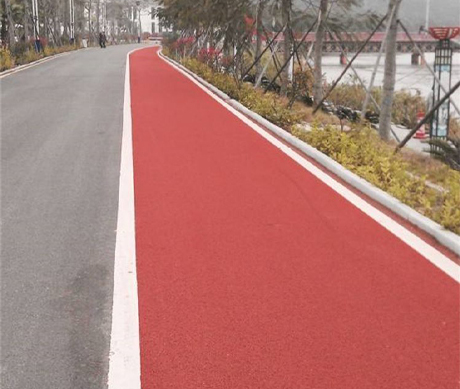
As smart city development continues, colored asphalt will play an increasingly important role in integrated transportation systems. Its ability to combine visual communication with physical performance makes it suitable for advanced mobility networks.
Future applications may include:
Smart mobility corridors
Autonomous vehicle guidance systems
Data-driven traffic management zones
Sustainable urban transportation networks
The rise of colored asphalt represents a major shift in urban road design, where aesthetics and functionality work together rather than separately. By improving safety, enhancing traffic organization, and contributing to more attractive cityscapes, colored asphalt is redefining modern infrastructure. With advanced technologies such as Water-Based EAU systems, Water-Based SP systems, MMA Colored Pavement, Color Emulsified Micro-Surfacing, and Ceramic Particle Anti-Slip Pavement, cities are building roads that are not only functional but also visually dynamic and future-ready.